
In Goal wo Bukkowase, Hironobu Kageyama looks back over forty years of music to ask what is left of a dream once it comes true.
Hironobu Kageyama opens his autobiography in the bright country of teenage ambition, and the book finds its real voice only after that brightness burns off. Goal wo Bukkowase, a title that translates roughly as Wreck the Goal, spends surprisingly little time on how an Osaka teenager became the singer of "CHA-LA HEAD-CHA-LA", the theme that opens Dragon Ball Z. Its subject is what happened to him after the industry decided he was finished.
Chuo Koron Shinsha published the book in January 2018, in the Chuko Shinsho Rakure paperback line, timed to Kageyama's fortieth year in the business. It mixes memoir, oral history, professional reflection and a kind of underground account of how the Japanese entertainment industry works.
Kageyama did not write it alone in any strict sense. In the afterword he thanks Michio Suzuki for turning his endless anecdotes, the ones fans call his "old man mode", into a book. The phrase gives the game away. What survives on the page is the rhythm of a man telling stories after a show: one memory pulls up the next, funny bits sit beside painful admissions, famous names turn up without ceremony, and the philosophical conclusions come out of construction sites, cramped vans, improvised dressing rooms and half-empty houses rather than out of theory.
The result lacks the introspective polish of a literary memoir, and in its place it offers something rarer, which is the texture of work. Kageyama cares less about explaining his personality than about showing how an artistic career gets manufactured. Talent is part of the process, certainly, along with repetition, relationships built on trust, accidents, lucky breaks, humiliations and sheer physical stamina.
The first band and the price of wanting more
The early chapters follow an Osaka boy who finds in music a language for things he cannot yet put into words. The young Kageyama enjoys playing, and it is Akira Takasaki, later the guitarist of the metal band Loudness, who first grasps that enjoying it is not enough. Kageyama still thinks of the group as an extension of friendship and fun while Takasaki already treats it as a career.
The gap between them surfaces in a morally uncomfortable episode. Convinced that the original lineup had no future, the two decided to replace the keyboard player and the drummer with Shunji Inoue and Munetaka Higuchi, and they gathered the men they were cutting in a park to tell them so. Kageyama admits that it looked a great deal like abandoning his friends.
The scene sets up a tension that runs through the whole book, which is that every artistic choice costs somebody something and triumphal narratives tend to hide the bill. The classic lineup of Lazy did not come together simply because five gifted teenagers found one another. It required a break and a cold judgment about who was ready to go on, and Kageyama lets the discomfort stand rather than dissolving it in sentiment.
By February 1977 the new Lazy was in place, and the members soon passed a television audition that took them to Tokyo. Their parents objected almost unanimously, on the grounds that show business was dangerous and the adventure would probably end badly. Producers traveled to Osaka to talk the families around, promising that the boys would finish high school.
The departure has a cinematic quality: long-haired teenagers in the heeled boots of British hard rock, carrying a confidence their parents did not share, leaving Osaka for the Tokyo record business. Kageyama declines to leave the moment standing as pure myth. From the first day, what those boys wanted to play was on a collision course with the image the industry intended to sell.
Lazy wanted to play hard rock, and the market turned them into an idol act instead, handing each member a character, a nickname and a look aimed at teenage girls. Kageyama, the singer billed as "Michell", met fame, television and fan devotion very early, and he also learned what it feels like to perform a commercially convenient version of yourself.
By the time the band got close to the music it wanted to make, the split between its public identity and its ambition had hardened. The breakup, four years after the debut, ended more than a group, and for Kageyama it wrecked an entire identity. He was in his early twenties, he had already lived the thing many musicians chase for a lifetime, and he had discovered that having been famous protects nobody from being forgotten.
Life after "that guy is finished"
The third chapter holds the moral center of the book: after Lazy and a solo career that went nowhere, Kageyama found himself surrounded by a sentence that worked like a verdict, "That guy is finished."
He was no unknown trying to break in. He had to keep working inside an industry that had already filed him under expired goods, which is what makes his position so cruel: people still recognized the former star, and the recognition no longer produced enough work to live on.
For fifteen years, from the age of twenty-two to thirty-seven, Kageyama worked on construction sites. He rose to supervising crews and learned to fall deeply asleep anywhere within minutes, including on top of a concrete pillar during the lunch break. He tells it as a joke, and it measures the exhaustion of a man holding down heavy labor and a relentless music schedule at once.
In one of the harshest passages, a Lazy fan spotted him on a site and began coming by at break time with drinks, her generosity arriving with a look of pity. The "Michell" she had loved was hard to reconcile with the man standing there under a coat of construction dust.
Kageyama understood that his situation ruined the picture his fans had been keeping, and his conclusion was never that he should have hidden the fall. It was that no musician survives while held prisoner by an old public image, and that the construction worker was the real person who had to exist so that the singer could go on existing.
Another memorable figure is "O", the pseudonym given to an aggressive, almost military site foreman who shouted and threw things when the job ran late. On New Year's Eve he pushed the crew to finish so that the men who had come from other regions could get home. Later he told Kageyama that he loved music, and he said something the singer never forgot: the men around them were doing work they had never wanted any part of, and Kageyama still had something worth fighting for.
The scene stops the book from treating art as the noble calling and ordinary work as the thing anyone would want to escape, since what Kageyama found on those sites was solidarity, discipline and a concrete understanding of collective responsibility. An artistic dream is a privilege even during the years when it pays no bills.
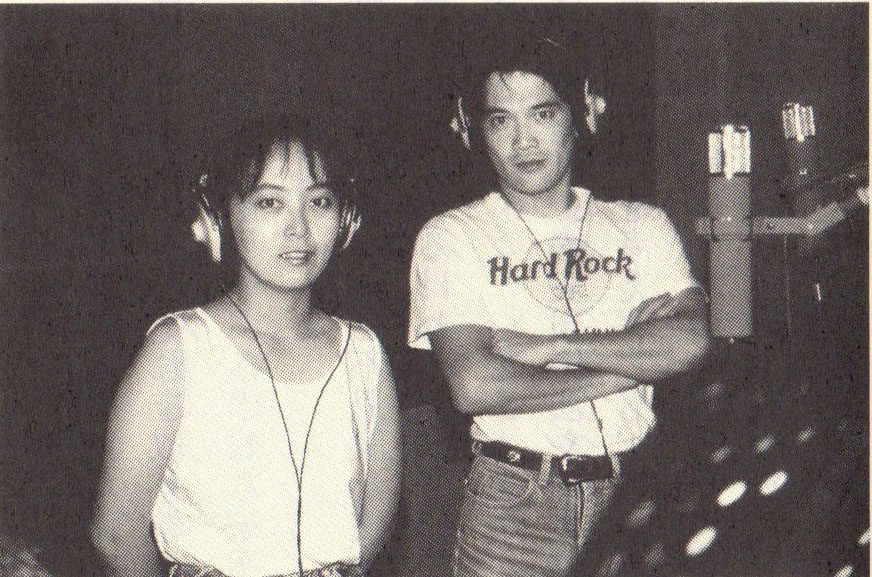
Alongside the day job he was playing more than a hundred shows a year. The logistics were rudimentary: an old van, lodging skipped whenever possible, public baths, clothes washed at coin laundries and cheap izakaya dinners before the drive to the next town. The smallest crowd at one of those shows was five people, and in his worst year music brought in seventy thousand yen, a sum in the neighborhood of five hundred dollars.
This section could easily slide into romanticizing poverty, and at moments the book does drift toward the idea that suffering manufactures authenticity, though its most valuable observation lies elsewhere: singing through those years changed the artist in material ways.
In Lazy he had been a performer of other people's material, and somewhere in those tours he decided that singing other people's songs was no longer enough. He started asking what he himself wanted to say, taught himself to write lyrics, build melodies and cut demos, and produced clumsy first attempts in which his own feelings finally had a musical shape to sit in.
The voice changed too, as the boyish lightness of "Michell" gave way to the rough, muscular tone that anyone can identify within a bar. He credits the endless touring, ten straight days of singing, then twenty, then longer stretches, and now and then his throat simply stopped working and he kept going.
None of this should be read as technique, since wrecking your throat is terrible vocal pedagogy. Within the story it explains why Kageyama treats his voice as a piece of his body reshaped by labor rather than as a gift he was born with, and the voice on "CHA-LA HEAD-CHA-LA" was built in half-empty rooms years before it reached Dragon Ball Z.
The job that still needed his voice
About five years into that routine, Nippon Columbia called and asked him to sing the opening theme of Dengeki Sentai Changeman, the newest entry in Super Sentai, the Toei team-hero series that American television would later rebuild as Power Rangers.
His manager hesitated, since Kageyama still wanted to reconstruct a rock career and attaching his name to children's music could damage it. The label proposed billing him as KAGE, a screen that would keep the rock singer apart from the man singing for tokusatsu, the Japanese term for live-action hero shows built on costumes, wire work and practical effects.
Kageyama was overjoyed. The press had stopped calling, the crowds had stopped growing, and he had begun to suspect that the country no longer had any use for his voice, so the offer proved that somebody still did.
The first session was no triumph. Kageyama walked in ready to sing at full power, and the director disliked the result, which came out sounding too much like rock, while the effects and the instructions coming back at him sounded childish. He came close to tears when he was told to more or less recite the lines into the microphone.
He understood the problem only later. The director had not been asking for a lesser or deliberately babyish performance; he wanted the singer to think about who was on the other end, since the song had to carry rock energy to a seven-year-old with clarity, feeling and proportion. Singing well was the easy part, and the work was imagining the listener and deciding what that listener should feel.
This is the decisive discovery of the book. Anisong, the Japanese shorthand for songs written for anime and other genre television, turns out to be a performing discipline, one that forces the singer out of his own head. For the first time the question stopped being "what kind of artist do I want to look like" and became "who am I singing to".
More work followed Changeman, and with "Soldier Dream", from Saint Seiya, Kageyama noticed a visible change in the room. The audiences he had inherited from Lazy were overwhelmingly female, and little by little men began turning up, raising their fists and answering the songs in low voices, as though the venue were a stadium full of warriors.
The shift released him from having to keep up the old idol charm, and he felt he could finally sing without trying to please anyone. For a while he still suspected that children's music would never earn him standing as a "real singer".
Mitsuko Horie, the singer whose voice defined Japanese children's television for a generation, was the one who confronted him: he needed to sing more anisong. He could want to play rock all he liked, and those songs already belonged to the fans. The remark corrected an idea of artistic ownership that Kageyama had carried since his twenties, since a song stops being the exclusive property of the performer once the audience folds it into their own lives.
When he decided to give half of each set to anime and tokusatsu themes, the response beat every expectation, with crowds that grew, sang along, put their arms up, cried and laughed. The singer who had been afraid of vanishing found in anisong something a market cannot supply, which is a community.
A song that knows which story it belongs to
The passages on the nature of anisong are the most intellectually solid in the book, and Kageyama starts from a problem of definition. Anisong is not a musical genre in the way jazz, rock or classical music are genres, since it has no characteristic harmonic structure, no required instrumentation and no single historical period.
The umbrella covers rock, pop, children's songs, dramatic scoring, symphonic writing and electronic experiment, and its identity lives in the relationship with the work it serves, never in the shape of the sound itself.
For Kageyama, a true anime or tokusatsu song exists in order to take part in the story: the opening lifts the viewer's energy before the episode starts and the ending reorganizes whatever the adventure stirred up. The song fights beside the hero, shares the danger and works as support for the protagonist.
That word, support, is the load-bearing one. A song should not compete with the work for attention and should not treat it as a promotional platform, because once it wants to be seen more than the anime it serves, it loses its dramatic function and becomes an image song or a marketing asset.
The position carries an implicit criticism of the celebrity culture that produced him, since in Lazy the system put the performers' image at the center and shaped the music around it. In the anisong Kageyama describes, the individual voice stays strong while remaining subordinate to the story, and the artist arrives at authenticity at the moment he stops singing only about himself.
Kageyama insists that anisong lives in the "soul", a term with very little theory in it that still suits what he means. Fidelity does not have to be literal, and a good song is under no obligation to repeat the hero's name or summarize the plot, though it does have to carry the emotional weight of the world the work built.
This helps explain "CHA-LA HEAD-CHA-LA", which matters for more than its global sales, since it demonstrates that the oddity, the humor and the near-insolent energy of Dragon Ball Z could be converted into a vocal performance. Kageyama never had to give up rock in order to sing anisong, because he found in anisong the kind of rock his voice had been reaching for.
The job that did not look like a job
Kageyama says he was only able to introduce himself proudly as an anisong singer in the twenty-first century, because for decades the work carried almost no prestige. Performers could be sent to the gates of a stadium to sing through megaphones at the people waiting in line. In a line from Mitsuko Horie that the book recalls, the singers existed so that their names could appear in the closing credits.
That memory makes the later transformation more striking: Budokan, the Tokyo Dome, Saitama Super Arena and the Animelo Summer Live festival; composers such as Yoko Kanno and Yuki Kajiura known by name to the public; "Zankoku na Tenshi no Thesis", the Neon Genesis Evangelion opening, still selling decades after its release; young singers entering the industry with the declared goal of recording anisong.
Kageyama credits much of the change to the internet. A listener used to be able to love a song for years without ever learning who sang it, since finding out meant telephoning a record company or a broadcaster. Search, online video and fan communities gave the performers their names back and revealed that audiences abroad had known those songs for years.
The book is unusually clear-eyed about the economics of the job. Common sense assumes that the singer of a famous theme grows rich on royalties, when the performer normally takes a much smaller share than the composer and the lyricist, and compact discs alone rarely sustain a career. A big concert can raise the financial risk, given the sets, costumes, lighting, backing musicians, crew and security it requires, and in many cases the merchandise sold at the venue, the shirts, towels and recordings, earns more than the tickets.
Lantis, the label run by his old bandmate Shunji Inoue, gets credit for changing the model. Instead of pouring everything into immediate record sales, the company set out to build a durable relationship between artist and audience, so regular concerts created attachment, fans came back, bought merchandise and financed the next production. The value lay less in extracting the maximum from a single night and more in producing an experience the audience wanted to repeat.
These passages keep the book from settling for a celebration of how anisong makes people feel, since Kageyama knows that an artistic community also runs on contracts, merchandise, production costs and business models. The dream requires infrastructure.
When success threatened to erase the genre
The chapter titled "Has anisong really grown stronger?" opens the most complicated historical argument in the book.
In the second half of the 1990s, record labels and J-pop artists noticed the promotional power of anime, since a song placed over the opening of a popular show collected weekly television exposure without any conventional campaign. That produced the boom in tie-ups, songs written with no thought of the anime and attached to it afterward.
Kageyama does not deny that many of those songs were excellent, or that a pop star can understand a series and add something to it, and his objection is to the dominance of promotional logic. A song could be called anisong purely because it played during an anime, having been imagined for no particular world at all.
The situation produced a paradox: the market around anime kept growing while the anime song itself looked endangered, with the success flowing from the fame of the performer rather than from the cultural strength of anisong. Inside the industry, compositions that "sounded like anisong" were treated as a liability.
That sense of crisis produced JAM Project in 2000, and the initials stand for Japan Animationsong Makers. The last word carries the weight: the members would write, compose and take part in manufacturing the music of a production, which is a long way past assembling singers to perform together.

The personalities were deliberately outsized, and Kageyama compares the early concerts to old Toei pictures in which several stars fought for the frame. The group turned the collision between them into the show itself instead of smoothing it down.
Over time the lineup took in Hiroshi Kitadani, Yoshiki Fukuyama and Masami Okui, along with the Brazilian singer Ricardo Cruz, and Kageyama describes each voice as an instrument with its own weight, range and temperament. The combination allowed shifts of key and scale that one singer could never manage alone.
JAM Project functions in these pages as Kageyama's answer to the problem of tradition and modernity, since the group would preserve the song written for the work while refusing the notion that doing so required old-fashioned music. Anime, games, tokusatsu and giant-robot shows had grown faster and more visually sophisticated, and the music had to match that intensity.
That openness explains his admiration for LiSA, angela, ALI PROJECT and Linked Horizon, who last because they build worlds of their own rather than obeying a fixed anisong template. The future, in his account, belongs to artists whose identity is strong enough to serve a story without disappearing inside it.
"Come to Brazil. There will be no fee."
In 2003 Kageyama received an email written in strange Japanese: "You, come to Brazil. There will be no fee." He assumed at first that it was spam, and then recognized something genuine in the invitation.
He traveled with the singer Akira Kushida and the actor Hiroshi Watari, and more than twenty-four hours and several connections later they landed at Guarulhos, the international airport that serves Sao Paulo. When the automatic doors opened, a crowd was screaming and holding up signs, and Kageyama jokes that famous soccer players might have been walking behind them, though by that point he could no longer tell. Those people were waiting for the Japanese singers.
The stage they had built looked far too big, and he worried that nobody would come, until Ricardo Cruz assured him that Brazilians loved them. Thousands turned up.
Brazil amounted to a second debut. In Tokyo he had walked into an industry that intended to invent an image for him, and in Sao Paulo he met an audience that had already built a relationship with his voice without telling him. Before the internet there was no way for a singer to measure how far Changeman, Saint Seiya or Dragon Ball Z had traveled, and he learned his own importance from the faces of people living on the other side of the planet.
Even Shunji Inoue suspected at first that Kageyama was exaggerating, until video and photographs of the crowds convinced him that a cultural reality was sitting there. What had looked like a string of isolated invitations started turning into strategy.
In 2008 JAM Project released "No Border" and ran its first world tour: eight countries, ten cities, economy-class flights and improvised production, with some venues still down to two microphones a few minutes before the doors opened. Kageyama sang in near darkness and collided with Masaaki Endoh on stage, and Masami Okui nearly fainted in the altitude of Mexico City. In Brazil something like ten thousand people waited through a two-hour delay.
These episodes preserve the handmade character of the expansion. No grand cultural-export policy was clearing the road ahead, and artists, local promoters and fans built the network with limited means. Anisong did not go global only because the Japanese government recognized the value of anime or because large corporations mapped foreign markets, and in many places it started with strange emails, incomplete equipment and people willing to wait.
From the hero song to an ethics without borders
The closing pages widen the book's ambition, as Kageyama comes to see the anisong singer as a kind of cultural bridge. Anyone who travels abroad to perform should love the countries he visits, respect the people who live there and refuse to pass along prejudice.
He is disturbed by musicians who play overseas and then run down the host country or post discriminatory remarks, which in his reading betrays the message of the hero songs they were singing a week earlier.
The argument can sound idealistic, and it grows out of concrete observation: Brazilian fans meet Korean fans in Yokohama and go out to dinner together; a woman in a hijab sings his songs back to him; Indigenous communities in Peru dance to "CHA-LA HEAD-CHA-LA"; audiences separated by language, religion and political history recognize the same chorus.
Kageyama carries the experience into a passage about democracy, which, he writes, cannot mean that 99 percent win and the remaining 1 percent stops mattering. Its foundation should be respect for people whose values and ways of living differ from your own.
Justice, a word anime and tokusatsu repeat constantly, stops being a property of the hero alone, and in a world where everyone defends "my own justice" and nothing else, the difficult work is recognizing the legitimacy of someone who sees justice differently. Yesterday's enemy can become today's ally.
It is one of the most unexpected passages in the book. The memoir of a man known for songs about warriors, robots and transformations arrives at a defense of pluralism. Kageyama presents pop culture as a space where politically separated people can feel one emotion at the same time, which is a long way from an escape hatch out of politics.
His hope that music can "change the world" is grand and probably impossible to measure, and he states it modestly himself: if someone in pain could smile a little while hearing a song, something would already have changed.
David Foster and the dream at fifty-four
The last chapter opens with a dream that ought to have been absurd. Shunji Inoue asked Kageyama whether anything was left that he still wanted to do, and what came up was the possibility of working with David Foster, the Canadian producer behind records by Celine Dion and Whitney Houston.
Foster had been an influence on Kageyama, Inoue and Takasaki since the last years of Lazy. His work with Airplay showed them a road past hard rock, toward adult, sophisticated writing that could open up without leaning on guitar weight alone.
Decades later Inoue called to say that Foster had agreed, and at fifty-four Kageyama walked into a Universal studio in Los Angeles wearing a visitor badge. Foster greeted him by saying that stars do not need badges, a line that handed the old "Michell" the vocabulary of fame again, this time without the teenage manufacturing of the 1970s.
The experience produced an album called A.O.R. The initials stand for Adult Oriented Rock, and Kageyama proposes a second reading: Always On the Road.
The pun holds his idea of maturity, since growing older means staying in transit rather than arriving at a final shape. Fulfilling the David Foster dream closed nothing that had begun in adolescence, and it opened a new beginning.
The trap of the finish line
As a young man, Kageyama wanted to be a star, play Budokan and sing abroad, and he got all three. JAM Project reached Budokan, the music carried him to more than twenty countries, and the singer once posted at the stadium gates was met by crowds in the thousands.
That is where the title comes clear: wrecking the goal has nothing to do with giving up on goals, and it means destroying the idea that a goal you reach is an ending.
Asked about his next dream, Kageyama says he wants to make the best album of his life. Even a perfect record would stop being perfect the moment he finished it, because he would start seeing other possibilities: a different arrangement, a better vocal, a direction he had not tried.
That restlessness keeps the career from turning into a monument, and it also separates the book from anniversary memoirs that rearrange the past until success looks like destiny. Kageyama goes back over the forty years in order to show how rarely he knew where any of it was going.
His life kept getting diverted. He wanted hard rock and was turned into an idol, he wanted to protect a rock career and was asked to sing for children, and he feared that anisong would ruin his image and found that it saved his voice. He assumed those songs were known only in Japan and walked into crowds in Brazil, and he dreamed of Budokan, reached it, and understood that a stage could not be a final destination.
That structure gives the book its force and exposes its weakness, since Kageyama's philosophy is inseparable from the fact that he survived. Other musicians just as stubborn never found their Changeman, their "Soldier Dream" or their invitation to Brazil. The book never examines that survivorship bias with any depth, and at times it comes close to converting an exceptional case into a rule that says persistence is enough.
The narrative itself supplies a richer reading, because refusing to quit is only part of what happened: Kageyama survived because he changed. He learned to compose when singing other people's material stopped being enough, he changed how he sang once he found a new audience, and he accepted a professional identity he had been afraid of. He built collective structures when a solo career no longer answered the way the industry was moving, and he traveled without guarantees once he understood that the world was listening.
Persistence, in this book, means holding on to a commitment while wrecking the old shape that commitment used to take.
In the afterword Kageyama runs through the faces: the members of Lazy, producers, directors, the pioneers of anisong, the men from the construction sites, his colleagues in JAM Project. There were fights and arguments, and what stays in his memory are the smiles. He imagines the song "Motto Motto" as a kind of Genki Dama, the Spirit Bomb of Dragon Ball that a hero assembles from energy donated by everyone around him, gathered here out of voices from many countries.
It is a fitting image for a book that opens with teenagers deciding who gets to come with them to Tokyo and closes with an attempt to build music without borders. The wrecked goal leaves no hole behind it; it leaves a road.