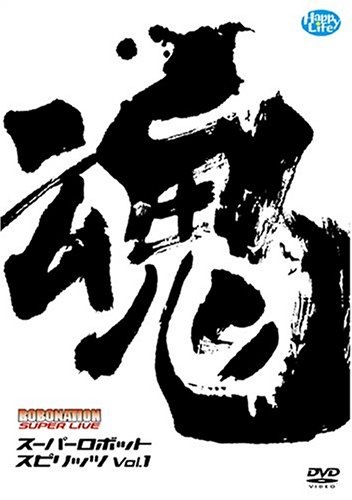
Ichiro Mizuki was 49 years old and had no record deal when he walked onto the stage of the Akasaka Blitz in Tokyo on the night of August 17, 1997. A 22-piece band hit the opening bars of "Mazinger Z" in front of about 2,000 people on their feet, and when the song ended a single word rolled through the hall: Aniki, Japanese for big brother. The nickname stuck. Mitsuko Horie, Hironobu Kageyama and MIO split the night's 22 songs with him, the first time the four had ever sung on the same bill.
The show was called ROBONATION SUPER LIVE, and it existed to sell a video game. Banpresto was about to release Super Robot Taisen F for the Sega Saturn and built a campaign around it: an album, a TV commercial and one night of live music. The night outlived the game. In 1998 it was renamed Super Robot Spirits and became an annual event. In 1999 it spun off Super Hero Spirits, an edition devoted to the songs of tokusatsu, Japan's live-action hero shows, and in 2000 two of the singers from that stage founded JAM Project. The concert circuit that sustains anime music in Japan today was sketched out that evening.
The horns
Shocker Ohno watched Mizuki's entrance from the wings, where he was hosting the show alongside voice actress Yuko Miyamura, the voice of Asuka in Evangelion. Ohno now runs Super Sentai Spirits, the annual concert of Super Sentai songs, and he described that opening in an interview with Kyoudai Express published on September 19.
"When I heard the horns I just started crying, right there in the wings. Ichiro Mizuki walked out to a huge ovation. When the song ended, the applause would not stop, and people were shouting."
Shocker Ohno, host of the show, to Kyoudai ExpressOhno said as much into the microphone a few minutes later, to the crowd. "When I saw the trumpet and trombone players right next to me, the tears came. My eyes got hot," he said. The band had a name, the ROBONATION Super Robot Band, and it had been put together months earlier to record the campaign album. According to Ohno, the musicians showed up at the studio saying they too had grown up on the melodies of Chumei Watanabe, the composer of "Mazinger Z." He kept their names to himself: "If I told you who's playing up here, you'd be shocked."
Mizuki went straight into "Sora Tobu Mazinger Z," an insert song from the 1972 series, and the theme from Combattler V, from 1976, without leaving his spot. He was wearing pants he had bought for the show that would not close at the waist, as he would admit later that night, and that had put him on a diet until opening night. Ohno reminded the hall that Mazinger Z had premiered on Fuji TV in December 1972 and was turning 25, and introduced the next singer as "the prince of anison," the Japanese shorthand for anime songs.
Hironobu Kageyama was 36 and had been the voice of "Cha-La Head-Cha-La," the Dragon Ball Z opening, since 1989. That night he sang "Getter Robo!" first, the 1974 opening originally recorded by Isao Sasaki, and then one of his own, "Flying in the Sky," the G Gundam opening he had cut three years earlier. Mizuki came back for the duet "Neppuu! Shippuu! Cybuster," the song the two had shared on the campaign album, and that closed the first block of the show.
Mizuki took the microphone after the duet and made a point of saying who the night was for. "Tonight there are four singers up front, and with them is everyone who's on this stage, the whole crew, and all of you who came," he said. "We started this to build it together, so if you're here tonight you're already one of us." He then announced that the show was being streamed over the internet to viewers outside Japan, an unusual thing to hear from a stage in 1997. If the signal was reaching Italy, he joked, he had better not try his Italian. On the duet, he said the two had divided the verses in the studio with the recording director, and that Kageyama had gone and sung his part anyway.
Aniki
Until that night the crowd called Mizuki teacher and master, and many students from his singing school were on the floor of the Akasaka Blitz. Ohno decided to try another form of address as soon as "Mazinger Z" ended, as he told Kyoudai Express. "Isn't Ichiro Mizuki the big brother of all of us?" he asked into the microphone. The hall answered, he led the chant, and Mizuki shot back from the stage: "I'm Aniki, zeeeeetto!"
The hosts came back to it during the first break, in a conversation about how far Japanese songs had traveled. Ohno listed the versions of "Mazinger Z" in English, in Korean and even in the dialect of the Tohoku region, and Mizuki said he had bought a bootleg Korean edition of his own record in Seoul. "Kids all over the world listen to this, and this is Japanese culture," Ohno said, before asking permission to call him Aniki too. Mizuki granted it and joked that, coming from Yuko Miyamura, he would rather hear onii-chan, the way a little sister says it.
Mizuki explained the phenomenon 19 years later, in a 2016 interview with the news site The Page. "I walked out with Mazinger Z and it turned into a singalong. And the fans were shouting Aniki," he said. "Why Aniki? My theory is that when the guy who sang the cartoon songs you heard as a kid shows up, people expect him to be an old man by now. Except neither the look nor the voice had changed."
MIO and Horie
MIO, who now performs as MIQ, took the stage with Mizuki for the first time in 15 years and sang "Dunbine Tobu" and "Elgaim -Time for L-Gaim-," the openings she recorded in 1983 and 1984 for two series by Yoshiyuki Tomino. Ohno said his first anime job, 13 years earlier, had MIO as its guest, and that she had not changed. Mitsuko Horie followed with "Voltes V no Uta," from 1977, and called Mizuki up for "Cross Fight," the Dangaioh theme and the only duet of the two on the setlist.
The four stood side by side for the first time after that duet, and Ohno repeated that the pictures were going out to the whole world. "Let's spread this around the globe and carry Japanimation into the 21st century," Mizuki answered. In the same conversation he asked Kageyama to hold the fort if he dropped along the way, and heard back that the memorial concert was guaranteed. Then he left instructions in front of everyone. "When I die, it's going to be a farewell party," he said. "No burning incense. I'm going to be scattered at sea."
Horie apologized to the audience for her partner of 28 years. Mizuki explained that he could speak freely beside her because she was the one who cut him off when he went too far. "Micchi stops me right away. Correcting course is Micchi's job," he said. He pointed out Eizo Sakamoto on the floor, the singer of Animetal, a band that played anime themes as heavy metal, and asked the crowd to let him watch in peace. Three years later, Sakamoto would be one of the five founding members of JAM Project.
Chumei Watanabe
Chumei Watanabe walked onstage two days short of his 72nd birthday, and the hall greeted him with a chant of Chumei-sensei, Professor Chumei. He had written "Mazinger Z," "Voltes V no Uta," "Cross Fight" and much of what had already been sung that night, and the first thing he said into the microphone was that the heat in the room was more than he had expected.
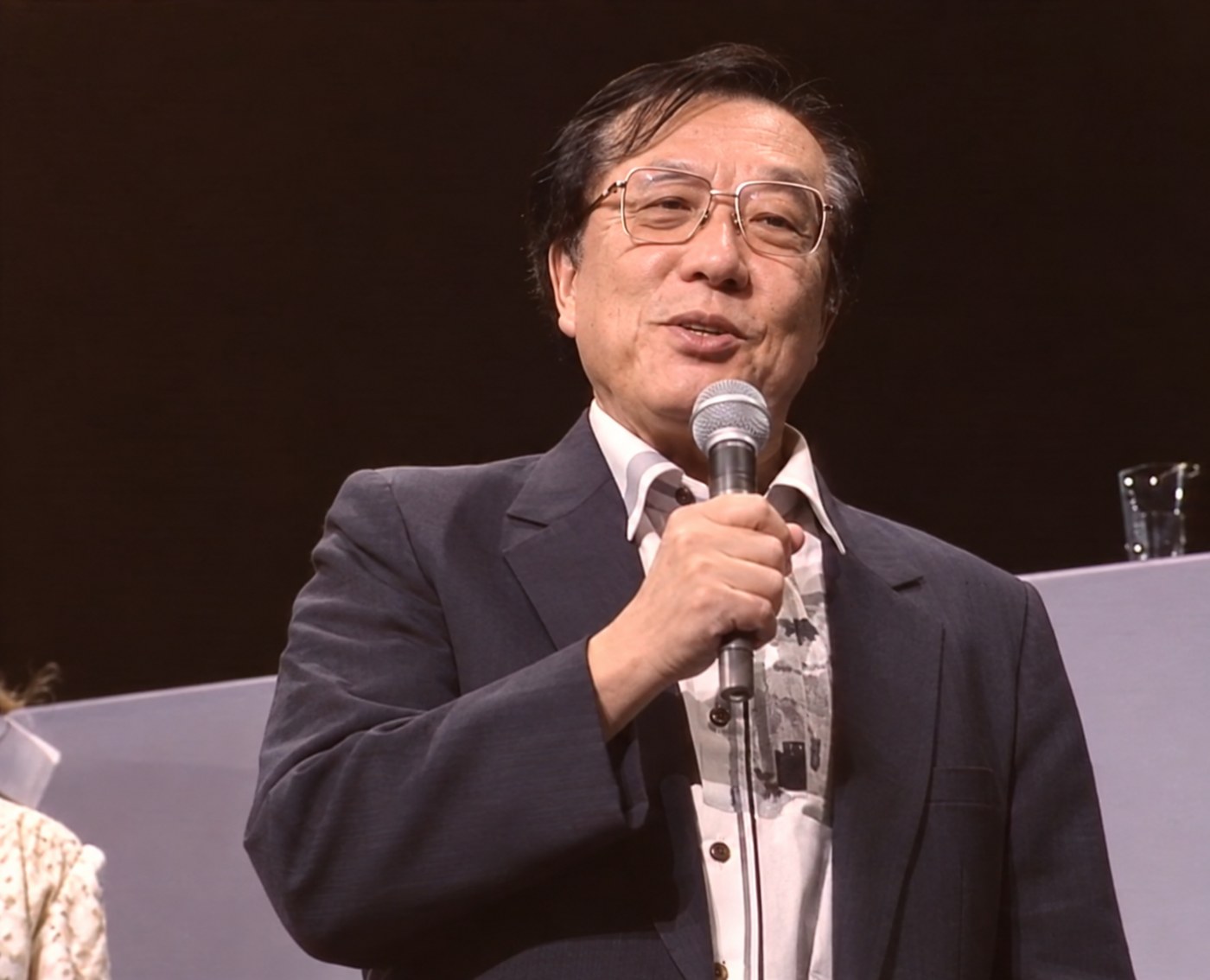
Ohno asked about the 1972 sessions, and Watanabe said the Mazinger Z opening was born out of a rejection. "First I composed what is now the insert song, Z no Theme, as the opening, and played it for everyone," he said. "Everybody was satisfied. But the head of production at the film company, a famous production chief, thought it lacked punch and told us to put more punch into it. We redid everything from scratch, starting with the lyrics, and that's how the Mazinger Z theme that exists today came about. It turned out better that way."
At the Nippon Columbia rehearsal room, the composer said, the work was done at the piano with everyone gathered around. "I'd go to the piano, playing and singing, and people would crowd around to listen," he said. "It turned into a kind of critique session, everybody weighing in. Back then the whole crew was on fire." Mizuki added that the television version and the record version were cut in separate sessions, and Watanabe explained that the arrangement came off the page already prepared for the opening-credits edit.
Watanabe had brought two songs to the Akasaka Blitz that had been finished days earlier. Ohno introduced "Atsuki Chi ga Yuuki ni" as the anthem of the robot anime song generation, "exactly the people in this room." "Mazinkaiser" was a Mazinger theme returning to a video game 25 years later, this time with lyrics by Go Nagai, the creator of the robot. Mizuki sang both right after.
The Pilder
A life-size Hover Pilder hung from the set, the cockpit that docks onto the head of Mazinger Z, complete with a pilot's seat and control sticks. Mizuki and Ohno joked that they needed permission from Koji Kabuto, the pilot in the series, before climbing in, and the banter turned into a plan. "This first ROBONATION got the Pilder," Mizuki said. "If we keep doing the show, we can bring down what goes under it, piece by piece, and that depends on your help."
The production had been decided at the last minute, he said next, and for a while nobody knew whether anyone would show up. The Pilder was built in that window. Kageyama opened the second half with "Burning Love," the closing theme from Dancouga, and the cockpit came down over the crowd with its propeller spinning and its jets lit. "The thing we saw so many times in the anime, spinning its propeller and firing its jets, actually flying. It was worth being alive for," Ohno said.
Ohno then asked the hall to repeat the shout from the start of the night, "about three thousand times louder." "Tonight everybody loses their voice," he said, and counted to three. MIO came back for the home stretch with "Mizu no Hoshi e Ai wo Komete," from Zeta Gundam, and "Zankoku na Tenshi no These," from Evangelion, the only recent hit in the repertoire. Mizuki closed the main set with "Go Shogun Hasshin seyo!," "Bokura no Mazinger Z" and "Ore wa Great Mazinger," the last one with Kageyama.
The four came back for a four-song encore, and the night ended with "Mazinger Z" sung by the whole cast, a closing the show has repeated at every edition since.
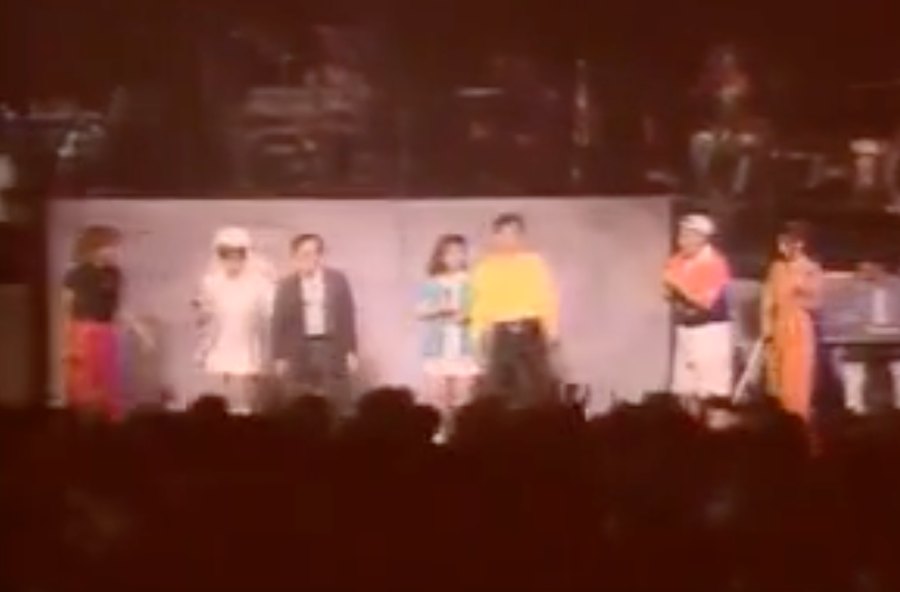
Kageyama treated that night as the turning point for anison concerts in "Goal wo Bukkowase", the autobiography he published in 2018. Before then, he wrote, the shows were one-off events put on by record labels or TV programs, with the audience seated and clapping politely even through the fast songs. The Akasaka Blitz was a live house, the Japanese term for a club-sized venue. "We sang our own repertoires live, like a rock band. It was pretty much the first live house show devoted only to anison. It was standing room. More than two thousand people singing together. And that's where everything changed." The audience, he wrote, started raising their arms and shouting along with the songs, and anison "finally took on an energy like rock."
Super Robot Taisen
Banpresto released Super Robot Taisen F for the Sega Saturn in 1997, the tenth title in the strategy series, known in the West as Super Robot Wars, that puts robots from different anime on the same board. The company built a campaign around the game under the name ROBONATION, and the Akasaka Blitz show was one piece of it.
The campaign's first product was an album released in May, with the original singers re-recording the themes of the series featured in the game. It reached No. 23 on the Oricon chart, the first time that repertoire had appeared on a sales list in many years. "Aniki Tamashii," a 2000 book on Mizuki's career, records that the album and the shows set off a movement around robot anime music.
Mizuki had ended his exclusive contract with Nippon Columbia at the end of March that year and had no label. The ROBONATION album was the first he released as an independent artist.
The campaign also left behind two songs that belong to no series. "Atsuki Chi ga Yuuki ni," subtitled an anthem for the robot generation, is the game's image song, with music by Watanabe and lyrics he wrote with the ROBONATION Seinendan, the production's collective. The other is "Hagane no Tamashii," also by Watanabe, sung by Mizuki and Kageyama for the commercial of Super Robot Spirits, the fighting game Banpresto released for the Nintendo 64 in 1998. Both went into the show's encore and stayed in the repertoire, and the fighting game's name became the name of the show itself the following year.
Tie-ups
The kind of song that spelled out the robot's name, its weapon and its finishing move had been off Japanese television for more than a decade when the four walked onto the Akasaka Blitz stage. All four had gone through those years with little new anime work.
Mitsuko Horie explained the shift in a 2015 interview with the website CINRA. "From the late 1980s on, as anison established itself as one of the ways to land a hit, all kinds of people came into the anime industry and the so-called tie-up songs kept increasing," she said. Until the mid-1980s, she said, it was common for the lyrics to carry the character's name and his attacks, the custom ROBONATION brought back to the stage. What took over the opening credits was whatever pop or rock band had a single out that week, usually with no connection to the story on screen.
Mizuki recorded the Mazinger Z theme in 1972 and spent the next 25 years stringing together anime and tokusatsu openings. "They said it was comic-book music, and we couldn't step into the same ring as kayoukyoku," the mainstream Japanese pop of the day, he said in an interview reproduced by Oricon. "There was a period when, even selling hundreds of thousands of copies, we weren't invited onto the music shows."
"Back then I never imagined it would turn into this. I figured I'd do one or two songs and quit singing anime. But I sang for you, on the other side of the TV screen, and I sang from the heart."
Ichiro Mizuki, onstage at the Akasaka Blitz, August 17, 1997Kageyama worked construction jobs until he was nearly 30, in a stretch when his yearly income from music fell to 70,000 yen, and he memorized the lyrics of "Cha-La Head-Cha-La" on the train to the studio after a day on a work site. In his autobiography he writes that anime songs were seen as "music for children, a notch below even musicals or nursery songs." Booked to sing at an event at the Osaka Dome, he expected to step onto a giant stage and was placed at the stadium entrance, next to the paddock, singing to the people in line. It was Horie who summed up for him where an anison singer stood at the time: "You guys exist so your name can appear in the end credits." Until the end of the 20th century, he writes, not even anime song, the unabbreviated form of anison, was a common term in Japan.
The songs stayed on sale in reissue compilations and turned up in the Super Robot Wars games as instrumental arrangements, almost always without the singer's voice. ROBONATION took that same repertoire, put a 22-piece band behind it and gave each song back to the singer who had recorded it.
1998
The show changed its name in 1998 and became Super Robot Spirits, with a tour through Osaka, Nagoya and Tokyo in June and a second round in September. Mizuki and Kageyama got a radio program on Bunka Hoso the same year. Masaaki Endoh joined the cast that year with "Yuusha Ou Tanjou!," the GaoGaiGar opening.
The 1999 tour played the Telepia Hall in Nagoya on April 4 and the Big Cat in Osaka on April 25. It returned to the Akasaka Blitz on April 29 with Isao Sasaki as special guest. He sang "Uchuu Senkan Yamato," "Makka na Scarf" and "Iza Yuke! Robot Gundan," and in the encore Kageyama started "Getter Robo!" and handed the song to its original singer, who sang it through. That night came out as a double CD in July and on DVD in August.
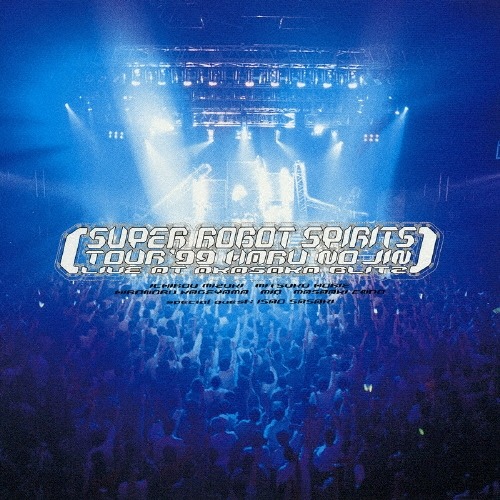
Sasaki recorded the Yamato themes in 1974, when anime songs reached the public through television. "What I feel most is that the very form of anime music has changed from the days when we were singing. We sang anison as part of the work, something that came out of the TV as the show's opening or insert song," he told CINRA in 2016. "Singing in a big venue, waving penlights along with the audience the way it's done today, was something I had never even thought about."
On August 14, 1999, the day before the summer edition, the stage of the Shibuya On Air East hosted Super Hero Spirits, a show made up only of tokusatsu songs. The idea was Ohno's, at the request of Tatsuji Yamagishi, president of Birthday Song, the company that organizes Anime Japan Fes. "Super Hero Spirits was such a success that the autumn tour, with shows in Tokyo, Osaka and Nagoya, which would normally have been Super Robot Spirits, was replaced that year by Super Hero Spirits," Ohno said. It was on that November tour that the singer MoJo entered the circuit.
Mizuki was marking 30 years in music in 1999 and closed the year alone, at the Kawaguchiko Stella Theater in Yamanashi. On August 30 and 31 he sang a thousand songs in 24 straight hours, with Ohno as master of ceremonies and a national broadcast on Fuji TV. The Tokyo Shimbun sent a reporter, Mikiko Miyazaki, and her story ran in the September 2 edition. "Aniki. That is what Mizuki's fans call him, with reverence," she wrote. "At 8 p.m. on the 30th, amid the deep shout of Aniki echoing through a hall of 3,000 people, he walked out dressed all in white to the sound of Mazinger Z."
The ROBONATION legacy
The format the Akasaka Blitz saw in 1997 became the standard for anison concerts: a standing crowd, a live band, each singer performing the songs they recorded and "Mazinger Z" at the end, sung by everyone. Super Robot Spirits has repeated that blueprint since 1998, and Super Hero Spirits carried the same model over to tokusatsu in 1999. Kageyama draws the whole line from that stage: "That movement gave birth to concepts like Anison no Chikara and Anison Damashii and, later, to giant events like Anime Japan Fes and Animelo Summer Live, which today draws more than 80,000 people."
Mizuki announced the formation of JAM Project on July 17, 2000, at the Egg-man in Shibuya, with Kageyama, Masaaki Endoh, Rica Matsumoto and Eizo Sakamoto. Two of them had sung at ROBONATION, a third had joined Super Robot Spirits in 1998, and Sakamoto had watched the 1997 show from the floor. Kageyama explained the reasoning in an interview with Animate Times: "Around that time there were more and more tie-ups where the label would take the anison slot and shove in some band's latest release with no connection to the work at all. It would have been bad if everything turned into that, so we decided to form a group that would say so."
Shunji Inoue, keyboardist of LAZY, the hard rock band Kageyama formed as a teenager in Osaka, founded Lantis in 1999, a record label devoted to anime music. It started with four employees and 10 million yen in capital, part of it raised by cashing in his life insurance policy, as he told the Nikkei in 2020. Kageyama wrote that the label was born from the same fear that would lead him to JAM Project: "I felt an enormous worry that, faced with the overwhelming financial and promotional power of J-pop, real anison could end up disappearing. If we wanted it to survive into the future, those of us at the center of it all had to act." Lantis became the biggest house in the field and in 2016 organized Anisong World Matsuri in Los Angeles. In 2018, the consultancy Pia Research put anime-related concerts in Japan at about 20 billion yen, with 1,784 shows and 2.65 million spectators that year.
The nickname shouted at the end of the first song stayed with Mizuki to the end. It became a book title, "Aniki Tamashii" in 2000, and the first word of the Tokyo Shimbun story on the thousand songs of 1999, and the show itself began citing its origin. "Since this time it's 15 years, the opening sound effect is the audio from the first show," Mizuki said from the stage of Zepp Tokyo in 2012, at the 15th edition of Super Robot Spirits.
The event that began as a video game promotion is still on the Japanese calendar, with annual editions each spring. The last time Mizuki sang with JAM Project was in July 2021, at a Super Robot Wars franchise event. The group said so in the statement it released when he died, in December 2022, at 74.