In April 1984, Choudenshi Bioman (Super Electronic Bioman) buried a heroine for the first time in the history of Super Sentai. What went into the coffin was the yellow costume with the helmet closed, because the actress who wore it no longer worked on the series. The four remaining heroes hold the wake for Yellow Four in a quarry, with no portrait on display. Above the coffin, the Bio Robo projects a hologram of Mika Koizumi running and waving, a clip recycled from the opening credits, while the narration announces that the Bioman are now four. The scene closes the tenth episode, "Sayonara Yellow", broadcast on the afternoon of Saturday, April 7, on TV Asahi. In the twenty minutes before that, the heroine had fought, hidden, protected Pink Five and died without showing her face a single time.
The explanation sat off screen, and nobody watching at home had any way to reach it. Yuki Yajima, the actress who played Mika, had left the Japan Action Club, or JAC, the action and stunt agency run by Sonny Chiba, at the end of January, and she never came back to the studio to record the dialogue for episodes 7, 8 and 9. By the time "Sayonara Yellow" aired she had been out of the production for two months. The voice heard in Mika's last four episodes belongs to Mayumi Tanaka, the future voice of Krillin and Luffy, called in at short notice and left off the credits.
Toei took five years to put anything in writing about it, and what it wrote fit into one line of a 1989 mook, one of those magazine-format books Japanese publishers devote to a single subject. The actress had supposedly left "because of an accident that made it impossible for her to continue". The real story surfaced in pieces over the four decades that followed: a Pink Five talk show in 2010, a TBS comedy program in 2013, the producer's memoir in 2018, six videos with the cast in 2024 and, in February this year, two posts by former JAC students on X. The reason for her departure is still unknown. The only person who knows it has not spoken in public for forty-two years.
The Early Years at JAC
Yuki Yajima was born on February 11, 1962, in Chiba, the prefecture across the bay from Tokyo, and grew up in Ichihara, a city of oil refineries and steel mills. She attended Seika, a girls' high school tied to Tokai University. Her stage name was the name on her birth records. In 1983 JAC published a profile of her in a Keibunsha paperback devoted to the agency's "kung fu stars", and the entry sums up what the company thought was worth telling. She stood five feet four, held a second dan in kendo, played basketball, skied, had a motorcycle license and liked the mountains and long rides. Her favorite word was mogami, meaning "the highest" or "the best". Her favorite colors were black, brown and dark red. She was one of the young women JAC was selling that year.
As a child she wanted to play volleyball or basketball for a living. That changed after she saw The Rose of Versailles staged by the Takarazuka Revue, the company in Hyogo where women play every part, the male roles included. She began dreaming of becoming a takarasienne, one of the troupe's performers, though she never sat the entrance exam. It was in a magazine of casting calls that she came across the Japan Action Club recruitment ad. She thought "this is it" and went to audition. She passed in March 1981, at nineteen.
Trading one dream for the other makes more sense than it looks. Takarazuka trains actresses in a two-year school with boarding-school discipline and then hands them princes, generals and villains. Chiba's JAC, with its gymnastics, its staged combat and its dojo hierarchy, sold the same promise in a different key, the promise that a woman could do on screen what the men did, and do it for real. Etsuko Shihomi, the agency's leading woman, had been the proof of that since the Sister Street Fighter films of the 1970s, made when she was twenty and performing her own fights at Toei. Over the next three years Yajima would take roles along that line: a kunoichi, or female ninja, a warrior from another planet, a pirate boy and a photographer who fights.
The company was at the peak of its popularity. Hiroyuki Sanada, whom Chiba had raised in the business since childhood, had just become a national idol on the strength of Toei's action pictures. There were musicals at the Shinjuku Koma theater, records cut by the young performers of the house and a clothing line, JAC Brothers, where Chiba, Shihomi and Sanada worked the counter themselves on sale days. A Japanese columnist summed up the period by saying that JAC had "taken on the color of an idol group" and that the auditions were flooded with people who wanted to be near Sanada.
The 1981 audition came with a prize, an appearance in Hoero Tekken, the Sanada action film about to shoot in Hong Kong. Naomi Morinaga, who years later would play Annie in Shaider, has said that a friend with a crush on Sanada dragged her to the tryout. The friend failed and Morinaga passed, having never done karate or gymnastics and without much idea of what JAC was. She still describes herself as "one of the two worst in the class".
Yajima arrived with the opposite résumé, which explains how quickly the company put her to work. The class of 1981, admitted as the eleventh intake and later renumbered as the twelfth, gathered names that any fan of tokusatsu recognizes, tokusatsu being the Japanese live-action genre built on practical special effects and costumed heroes. Hiroshi Watari, the future Sharivan, was there, still doing extra work and monster doubling, along with Keishi Tsujii, who two and a half years later would be inside the Yellow Four costume. Akito Osuga would become Blue Three. Sumiko Tanaka had been accepted while still in high school, and Chiba told her to finish her studies before moving to Tokyo. Shinobu Shimura would play Goggle Pink from inside the suit, and Ayumu Tsuchiya would play Yajima's brother in Sharivan. The ties in that class lasted a lifetime. Watari writes on his blog about Tsujii as the friend he has had "since we were eighteen" and turns up at Tanaka's events saying that "JAC bonds run deep". Yajima is the only member of the class who never appears at those reunions.
The routine of those first years was the one every newcomer in the house went through: gymnastics classes, tate, or staged sword fighting, jazz dance and acting, drills in which one person's fall sent the whole group back to the start, and a great deal of extra work. Morinaga, Watari and Osuga cycled through monsters, foot soldiers and high schoolers on Sun Vulcan, Goggle V and Sharivan. One of the instructors, the veteran Kiyokazu Inoue, had a line ready for every arrival: "Without at least three years of training, nobody is good for anything." The fan club bulletin introduced the new member as "a healthy girl, a bit of a tomboy". That is the only description of her at nineteen that survives.
Between May and August of 1981 the entire class appeared as high school students in Hoero Tekken. In June, three months after joining the agency, Yajima was cast in a named speaking role in Bokensha Kamikaze, the film Chiba shot at Toei's Kyoto studio in the second half of that year. Chiba played a former Olympic gymnast, and the script avoided martial arts on purpose, as a nod to the French picture The Last Adventure, putting sports where the punches would normally go. Yajima played Michiko Nishina, a student at the fictional Tozai University and a friend of Sanada's character. Part of the shootout footage was filmed on Gunkanjima, the abandoned island off Nagasaki. The film opened on November 7, 1981.
JAC treated the casting as an exception. When NHK ran a live segment about the agency's women on the program 600 Kochira Johobu, it was Yajima who stood beside the veterans Kiyokazu Inoue and Noriko Kojima, and it was in front of her that Inoue repeated the three-year rule. At the annual fan event in Kiyotaki, in the mountains north of Kyoto, in 1982, she was the only woman in her class to perform a solo action routine. The company was saying, in its own way, who was coming next.
In 1982 the agency put her on stage, in movies and on television at the same time. In August and September, JAC reopened the Shinjuku Koma, the revue theater in Kabukicho, with the musical Yukai na Kaizoku Daiboken, directed by Chiba himself, with Shihomi, Sanada, Kurosaki and Morinaga in the cast and Yajima in the chorus. The show sold out, came out on record through Epic Sony and was revived for three years. In the Osaka restaging at the Umeda Koma, in March and April of 1983, she had a character of her own. She played Bolt, the boy mascot of the pirate crew who gets drunk in the tavern scene, a comic male role that required her to carry a scene alone.
Her film work that year carries the strangest story. Pasokon Wars ISAMI was the directing debut of Izo Hashimoto, a teenage gang picture with 8-bit computers and roller skates, released in August 1982 with JAC coordinating the action. In the original script the second in command of the rival gang was a bruiser named Tetsu. Hashimoto went to the JAC gym to ask for help with the fight scenes, saw Yajima training and rewrote the part for a woman. That produced Shoko, the only girl among the Salty Jets, who leads the underlings from the front, fights with weighted balls on a rope and, according to the synopsis in the magazine Shukan Myojo, "privately envies the femininity" of the lead. In the JAC bulletin Yajima recorded that Shoko "was extremely difficult to play". The film's program book, which turns up at auction now and then for pocket change, carries her name on the cover.
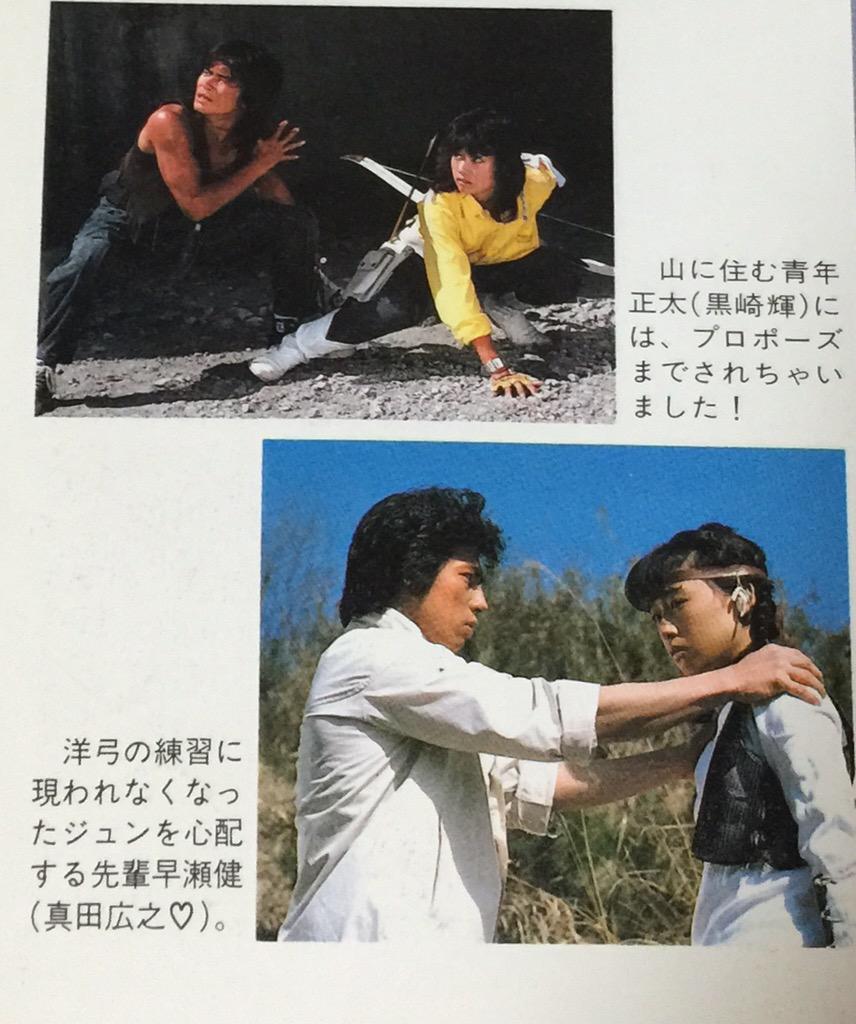
Her first recurring television role came in October of that same year, on Yagyu Jubei Abaretabi, at TV Asahi. It was a 26-episode series with Chiba as the one-eyed swordsman and the JAC cast filling out the Ura-Yagyu, the ninja network that serves the hero. On the 2022 DVD release she is the fifth name in the credits, after Chiba, Shihomi, Sanada and Kurosaki. She played Akemi, a kunoichi and the sister of Arisuke, Kurosaki's character. Akemi protected Princess Akane and moved through the series in one disguise after another, a traveling singer, an actress in a troupe, a dancer. In episode 25, the last one, broadcast on April 19, 1983, she is captured and tortured by Genjo Hinohara, then rescued, then sent away by Jubei, and she runs to his duel with Genjo anyway. She steps between the two blades at the moment the men are about to kill each other. She dies saying she had thought she would see everyone again, and Kurosaki weeps, keeps a lock of her hair and rides on. It was the first time Yuki Yajima died on screen. Two more deaths would follow in less than a year.
In that same stretch she wrote the only personal text of hers that survives, a short piece in the fan club bulletin about Etsuko Shihomi, her scene partner on Jubei and in the musical. Shihomi was ten years older, the best known action actress in Japan, the woman Chiba said in public that he considered his successor, and she had a reputation for severity inside the gym. Yajima wrote that she was "strict at work, but a gentle older sister presence". She told the story of a performance where she was left without a costume and had no idea what to do, and Shihomi lent her every piece of clothing she had. She closed by calling her "the best person, as a woman and as a human being". It is the only time Yajima's voice reaches us with nobody in between, and what she chose to talk about was another woman's generosity.
Strict at work, but a gentle older sister presence. The best person, as a woman and as a human being.
Yuki Yajima on Etsuko Shihomi · JAC fan club bulletinBioman
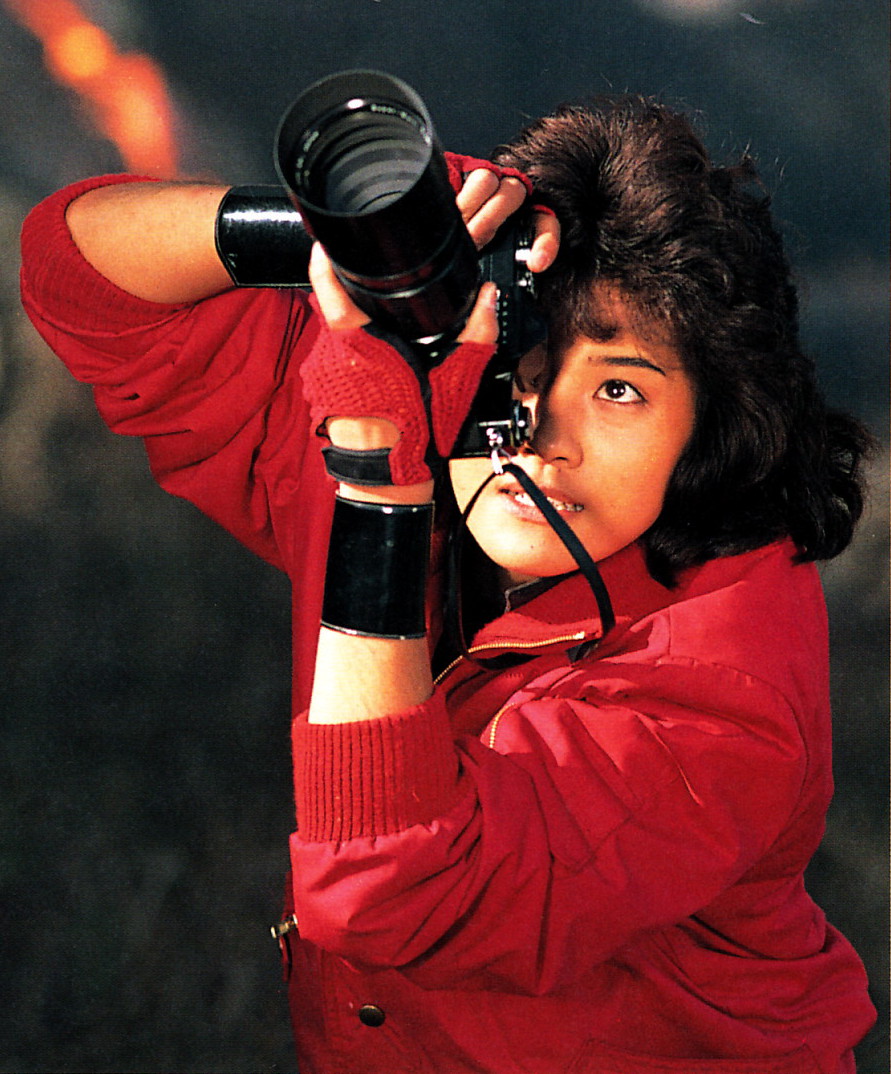
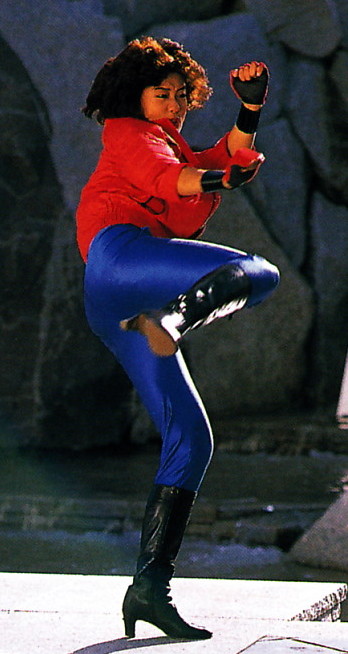
Takeyuki Suzuki, the producer in charge of the Sentai line at Toei, had decided that year to put two women on a team for the first time. He described the casting years later. Yajima did not audition. She got a direct offer, she was the first of the five to have her role confirmed, and the character was written around her. In the early drafts she was called Mika Shinoyama and was the only "ordinary person" in the group, the one who refused to fight because she had a dream of her own. That refusal survived into the final version. Mika Koizumi is an eighteen-year-old photographer who wants to shoot nature in Africa to honor the wish of her dead brother. She has a hot temper, hates losing, handles herself in a fight and on a motorcycle, and owns a Suzuki RG250Γ in HB racing colors, and the scripts have her argue with Go and walk off alone more than once in the early episodes. She was the deputy leader of the team. From what is known of the planning, the series rested on two pillars, Red One and her, with a rivalry already sketched out against Yukari Oshima's Farrah Cat, played by the action actress who would later build a career in Hong Kong. A Japanese reader summed up the talk at the time: "They were going to build the show around her. They wanted to make her the second Shihomi."
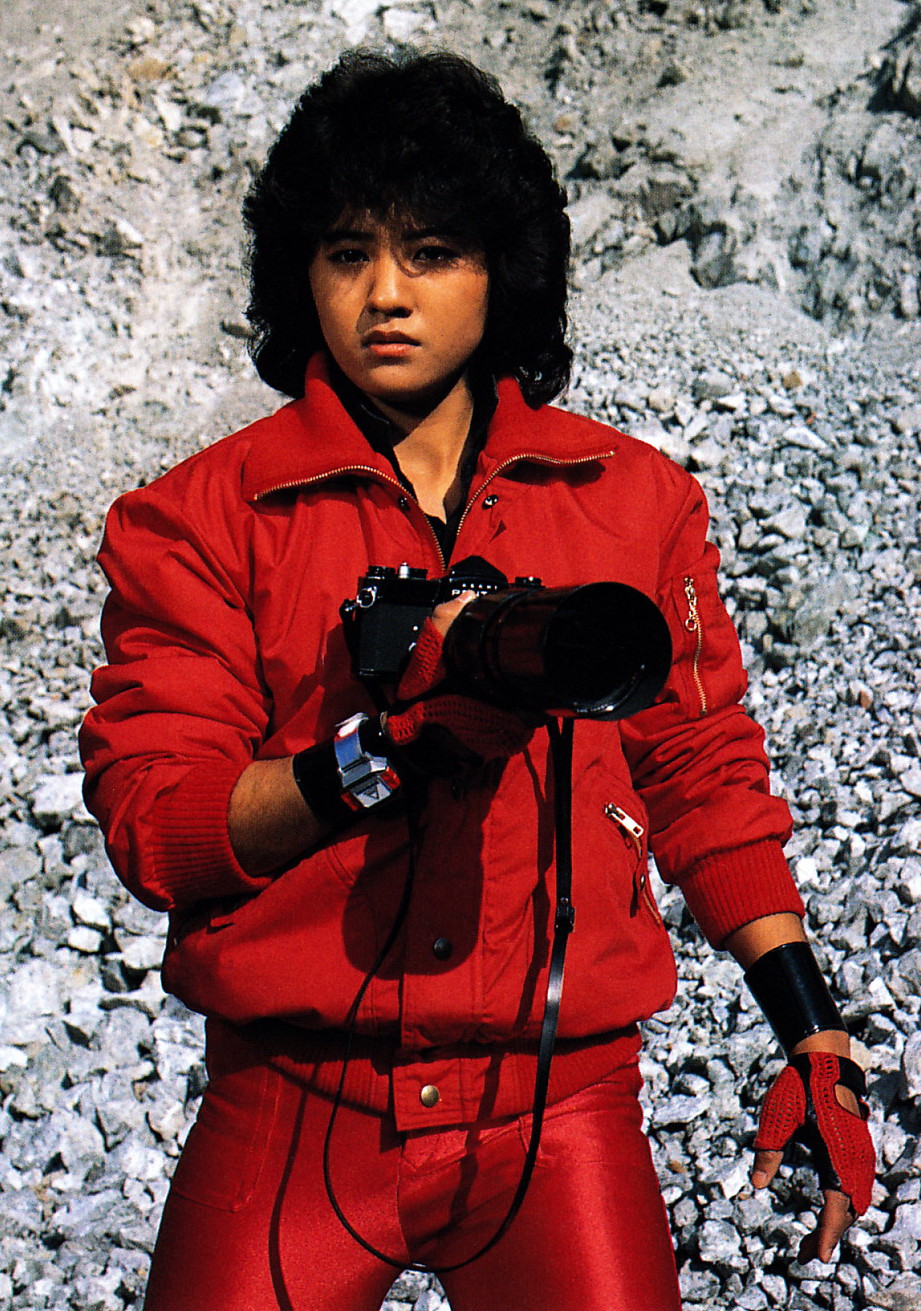
The rest of the cast had little or no track record when shooting began in mid-November 1983. Ryosuke Sakamoto, Red One, had television experience. Osuga came from JAC and was still doing work behind the scenes. Naoto Ota, Green Two, and Michiko Makino, Pink Five, had never worked in television. Makino was chosen because the search for Pink had stalled. The production wanted "an ordinary girl" to set against the combative Yellow, and Suzuki spotted a magazine cover with her on it, a university student from Yokohama, sitting on his own desk, and called the school registrar.
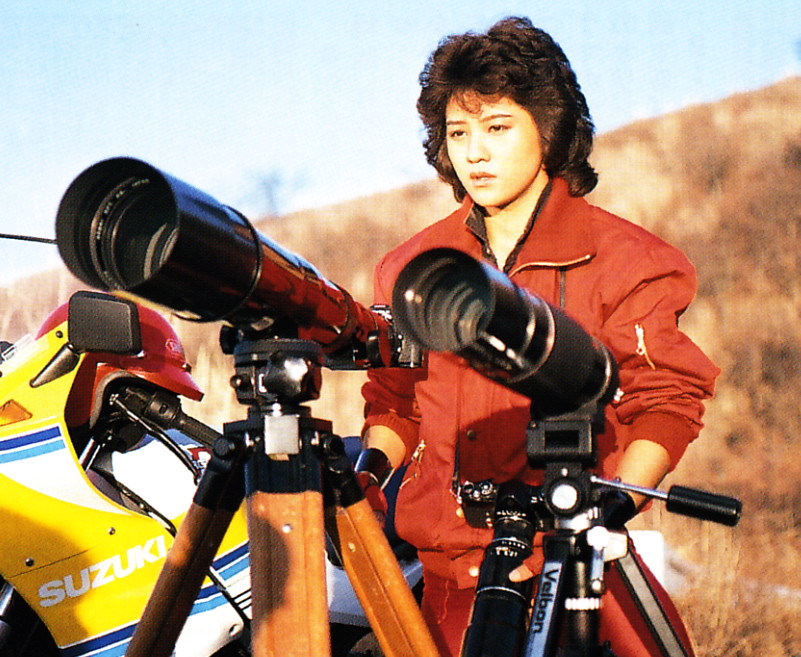
What is known about Yajima on set comes from her colleagues, and the portraits line up. Shinobu Shimura, her classmate, who on Bioman worked inside the Mecha-clone costumes as a suit actor, the performer who does the fighting inside a character suit and whose face the camera never sees, said: "She was cold, she did not like moving around in a group, and underneath it she was lonely." Sumiko Tanaka, who would replace her, said: "She seemed to put a wall between herself and everyone else, but when somebody talked to her she listened closely and with warmth." Makino remembers her as someone extremely demanding of herself, who sat alone in a corner reading the script and building the character with an intensity that frightened her. Sakamoto, the oldest of the group and the one who bridged the distance between her and the others, described a rare presence, able to act and to do action work, strong willed, and keeping to herself. He assumes part of the temperament was built for the role and part was pride in being the "post-Shihomi". The four accounts describe the same person, a twenty-one-year-old professional with three productions behind her, in a group where three colleagues had never worked in television, who knew the series had been assembled around her.
Makino said more at a talk show in a collectibles shop in Nihonbashi in April 2010, and a fan in the audience wrote it all down on his blog the next day. Yajima used to give her instructions. One was about performance: "Pink has to be more fragile, otherwise Yellow does not stand out." The other was technical, keep your mouth closed when you have no line, because on a series dubbed entirely in the studio a newcomer moving her lips at the wrong moment made work for everybody later. Yajima had already been through that studio on Jubei and on Sharivan. Makino summed her colleague up as a person of "high professional standards" and "very frightening", and in the same breath said that she had taught her a great deal. About the scene of Mika against Farrah Cat, she said the two action actresses threw off sparks, that they were equally competitive, that Oshima already talked with passion about her dream of becoming an action star, and that the four young men stood watching and repeating "wow, a girl fight". The two from JAC, Osuga and Tanaka, went to look after the veterans inside the Mecha-clone costumes as soon as their own scenes were done. The agency hierarchy applied inside Toei's studio.
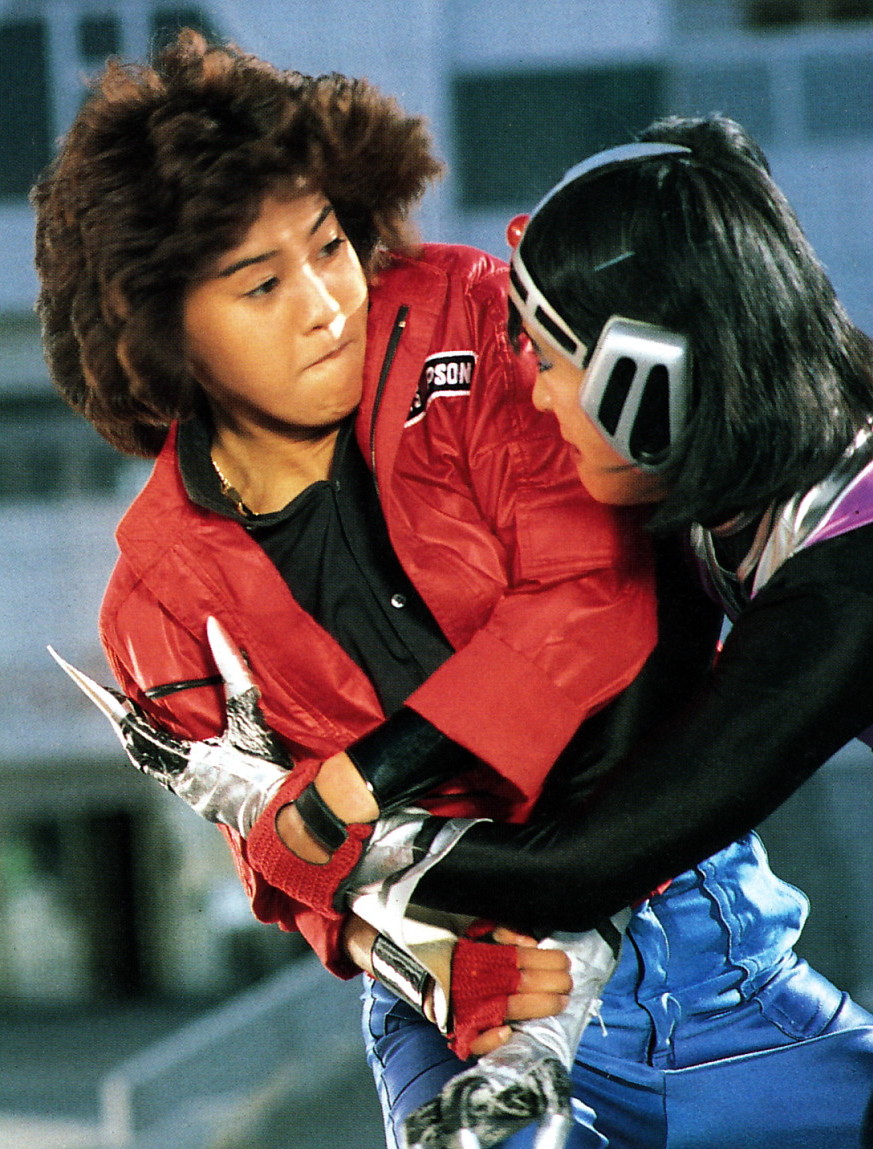
Yajima rode the motorcycle for real. Her successor had no license and had every one of those shots done on a tow rig. Anyone rewatching the episodes notices that the most dangerous unmasked scenes went to her, in the slot Junichi Haruta had filled on Goggle V and Dynaman. Inside the Yellow Four costume was Tsujii, her classmate, in the first female character of his career.
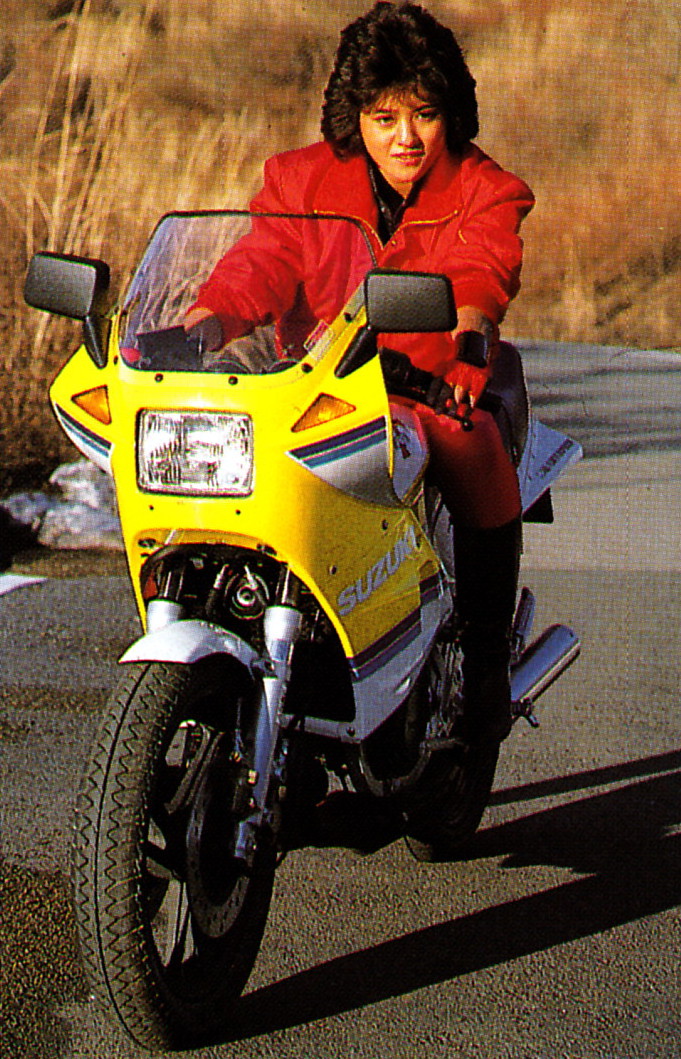
The last record of Yajima at an event with the cast comes from Setsubun in 1984, the festival at which Japanese families throw beans to drive off evil spirits, and it was Makino who preserved it, in a 2020 post. A production assistant named Terasaki took the five heroes and the three villains, Hirohisa Nakata, Strong Kongo and Yuko Asuka, to the Mitake shrine in the mountains of Ome, west of Tokyo. Everyone put on kamishimo, the broad-shouldered ceremonial dress, threw the beans in front of a crowd that included fans of Strong Kongo, and had lunch in the shrine's main hall. What Makino kept from that day was the "Bioman Pink 5" sash they pinned across her chest and an image of her colleague: "The outfit looked wonderful on the first Yellow, Yajima." Setsubun falls on February 3. Bioman premiered on the 4th.
What happened on the night before she vanished was told by Makino at that same 2010 talk show, and it is the closest account that exists. Yajima and Sakamoto traveled back from work together. As they said goodbye she told him, without changing her tone: "Tomorrow I am going to disappear, you know." He answered something like "what are you talking about", and that was the last conversation the two of them had. The next morning she did not show up for the call. While the crew ran from one end of the studio to the other, the other four went for coffee at a diner nearby and sat there grumbling: "What is going to happen to all this?" Makino said in 2010: "She really was frightening, but she taught me a lot, so it was very sad." Sakamoto said years later, at an event, that there has been no contact since that day. On Japanese forums some people say he felt responsible for having treated the warning as a joke.
She really was frightening, but she taught me a lot, so it was very sad.
Michiko Makino, Pink Five · 2010 talk showThe version that circulates online, with the line "tomorrow I am skipping the shoot" and a "grudge against the agency president" confided to Sakamoto, is a later reconstruction. It entered the Japanese Wikipedia in 2012 and was removed in 2020 for lack of a source. What the people at the talk show wrote down on the spot was only the sentence, the shock and the coffee. The dates fit together. Her page says she left JAC "around January 1984", and the producer says she vanished "around February, before the dubbing of episode 7". That points to a formal break with the agency in January and to her walking away from the set a few weeks later, when the series was already on the air.
The producer was the last to find out, at his own father's wake, at home. He noticed that a crew member who had come to pay respects seemed to want to say something, took the young man outside and heard that Yellow had disappeared. He scolded him for not having said so earlier and went back to work. Etsuko Shihomi, the veteran who two years before had lent the newcomer her clothes, went out searching for her along with the crew. Nobody found her.
Suzuki then took stock of what he had. There was unmasked footage through episode 9. There was episode 15, written as a two-hander for Mika and Hikaru and already ninety percent shot, because the production, aware that it was making the first pair of heroines in Sentai, filmed the episodes centered on the two women in parallel. There were the scripts for episodes 13 and 16, both built around Mika. And there were episodes 7, 8 and 9 with no voice on them.
The first problem solved was the voice. Suzuki asked the president of Aoni Production, the largest voice acting agency in the country, for somebody who sounded like her, and the name that came back was Mayumi Tanaka, then twenty-nine, a member of Theatre Echo and still a long way from Krillin, Pazu and Luffy. She told a radio show around 2002 that they said "the bone structure was similar" to that of the actress, whom she had never seen or heard. They listened to a sample of her voice and said "that sounds like her". By the time she reached the studio the broadcast must have been so close that everyone repeated "that sounds like her, that sounds like her" after every line, perhaps afraid she would walk out. She explained that dubbing Japanese over a Japanese face is far harder than dubbing a foreign film, because the mouth has to match precisely and the other person's breathing is not your own. She recorded the four episodes without credit and came away from the death scene with a sense that something was off. The teammates run in and lift Yellow in their arms, and normally she would revert to human form, and Yellow stayed Yellow to the end. The Toei crew was grateful, and according to fans her casting in the company's anime multiplied from that point on. The following year she was the voice of the lead in Kamitaman.
In Hirohisa Soda's original script for episode 10, Yellow died lying down after the fight with Chameleon Kans, looking at a flower, with a last line asking the others to protect that beautiful planet, and Go carried her body away. In the version rewritten under pressure, everything happens in costume. To justify the death the team invented the Bio anti-particles, without explaining why the heroine never reverts or how the Bio Robo works again with four pilots. Since every suit actor on Bioman was a man, the scene in which the four hold a wake for Yellow "as a woman" left an odd atmosphere on set, according to people who were there. In Japan the episode is known as an emergency job. The improvised anti-particle became the basis for the Anti-Bio Alliance and for Bio Hunter Silva, whom a lot of people consider the best villain in the series.
For the replacement, Suzuki picked among three JAC candidates, with Naoto Ota reading opposite them, and settled on Sumiko Tanaka, Yajima's classmate, who was the most courteous and made the best impression. Michie Tomizawa, the future voice actress who was also at JAC then, was considered for the audition. Tanaka had no acting experience, had never worn makeup and did not ride. The producer took her to Yamano Aiko, the most famous salon in Tokyo, had her photographed and sent the pictures to the show's commercial partners so that the switch would look planned. Episode 15 was reshot with Jun in Mika's place, and it was Tanaka's first day of work. The scene in which Jun slaps Hikaru, which shows up in the preview, was cut because it made no sense for the newcomer to hit the veteran. Episode 13, a romantic episode for Mika and Go, became Jun's introduction, and episode 16 changed protagonists as well. Hikaru changed along with it, since she had been conceived not to fight and to be protected by Mika, and being protected by the new arrival would have looked strange. Anyone who has watched the whole series remembers that from Jun's arrival the two young women develop a friendly rapport that had not existed before. Makino explains that this was the set itself showing up on screen, because, in her words, "Sumi-chan's arrival suddenly made the shoot fun".
That left the accounts with JAC to settle, since the agency had pulled the lead of a yearlong series away from Toei with no warning. From what Tanaka and Makino revealed in 2024, the agency's first idea was to send Sonny Chiba himself to Bioman. Hiroyuki Sanada went instead, then at his peak with Satomi Hakkenden, as Captain Ken Hayase in episode 13, followed by Hikaru Kurosaki in episodes 35 and 36, a year before he starred in Jaspion. Suzuki wrote in his book that Sanada arrived on set before everybody else, so polite that the crew felt awkward and asked him not to come so early, and that this was what you expected of JAC's biggest star. Tanaka, who had joined the agency because she was a fan of his, got the scenes with the idol as a gift. Makino remembers the insecurity of those weeks, the fear that the show would be canceled, and a major star riding the same location bus as the rest of them. One of the young men in the cast, so the story goes, broke out in nervous eczema, afraid he would be fired too. Bioman was the last Super Sentai with JAC actors performing unmasked. From Changeman on, the agency supplied only the men inside the costumes.
A Mystery With No Answer
Neither Toei nor JAC explained anything, at the time or across the four decades that followed, and the Japanese press kept the same silence. The tokusatsu magazines did not touch the subject. Adult fans in 1984 heard about it by word of mouth, through the network of university manga clubs, and what caught the public's attention was Sanada's guest appearance rather than the disappearance. One reader who lived through that year remembers that the change in Mika's voice and the burial in costume seemed odd, and that nobody talked about anything except the new Yellow and the visiting star. In 1989 the line about the "accident" appeared.
The case left the fan circle in January 2013. Takahiko Ota and Michiko Makino, on a TBS variety program alongside the couple who had played Dyna Yellow and Dyna Pink, said that the first Yellow had disappeared and that they had seen her about ten years earlier, working in Chiba. Anything more they said about her life is a secondhand account, delivered on a comedy program, about a meeting a decade before, and she has never confirmed it. The Japanese reference entries on Yajima open with a notice that she is a private citizen today and that trying to track her down is an invasion of privacy. Kyoudai Express applies the same standard.
In 2018 Suzuki's memoir, Yume o Oitsuzukeru Otoko, carried the account of the wake and the sentence that became the definitive quotation on the case: "Leaving the show, fine. But I wish she had apologized, even with a single word." To this day, he wrote, there has been no phone call. The book tells other things about that year, the beauty salon, the early-rising Sanada, the choice of the voice actress, and it is the only source from inside the production that exists on the subject.
Leaving the show, fine. But I wish she had apologized, even with a single word.
Takeyuki Suzuki, producer of Bioman · memoir, 2018In 2024, for the fortieth anniversary of the series, Yasuhisa Furuhara, who played Go-On Red, brought Ota and Osuga together on his channel, and later Tanaka and Makino, to talk about what happened behind the scenes when Yellow left. The six videos are now the fullest record of what her colleagues remember. One comment summed up the mood: "It is not taboo anymore." Another summed up the result: "Not even the four of them know why she vanished or where she is."
On February 4 this year, a former student of the JAC school wrote on X that at the time there was an atmosphere in which nobody could raise the subject, and that some hundred students were gathered at the Shinjuku Koma for the musical when it happened. In reply, a user who presents himself as a former JAC member wrote that half the responsibility was his. According to him, a year earlier she had been flattered with the promise of being "next year's lead, the first woman hero", and shortly before shooting began she had been demoted to an ordinary member of the team. Nobody has confirmed the identity of the person who wrote it, and it is the only statement from anyone who claims to have been involved, and it matches what Suzuki himself said in 2004 about a series resting on two pillars and a character written for her.
The other versions get listed by Japanese fans precisely to point out that they rest on nothing: running off with her manager, running off with a girlfriend, a fight with the director, disillusionment with Chiba. What the forums add is context. The agency paid little, charged its own members monthly fees, started work at five in the morning and gave one day off a week. The list of people who left in the following years is long, with Junya Takagi going that same winter, at nineteen, to try his luck in the United States, Shihomi in 1985, when she opened her own agency, Watari in 1988 and Sanada in 1989. Yajima was the first in that line and the only one who left without a word. One longtime fan says he asked somebody from the set around 1990 and got a single answer: "Everything people tell you is wrong." The question that sums up the whole subject sits in a post from 2024: "I wonder how she is doing, and what she was thinking back then."
Mika Koizumi remains the only regular Super Sentai heroine who has died in combat, and the franchise itself acknowledged that in 2016, when Zyuohger, the fortieth anniversary series, referred to her as "the heroine struck by an irreparable misfortune". Traces of her stayed in Bioman even after the switch. The closing credits kept the shot of Mika cleaning the Bio Robo all the way to episode 51, and in the encyclopedia on Toei's official site Yellow Four is still the first one listed. In the manga published by the magazine Terebi Land in 1985 she also dies, at the hands of Metzler instead of Mason. Whenever a Super Sentai loses an actor in mid-season, the Japanese press returns to the case, as it did in 2017 and again last November, when a weekly magazine called the episode "the mysterious disappearance and the burial in costume of 41 years ago".
From the inside, what remains was said by Makino in 2022, after an event with the five of them. She wrote that changing Yellow halfway through united the group around the decision to finish the year no matter what, and that without it the bond they have today might not exist. She calls Sumiko Tanaka her "life partner". In 2010 she had said the other half of it, that she was happy when Sumi-chan arrived and that she sometimes catches herself wondering how things would have gone if Yajima had stayed.
From the outside what is left is seventeen stills scanned by fans, a 1983 profile card, four sentences from colleagues, an essay about Shihomi, JAC bulletins that surface at auction now and then, a movie program with her name on the cover and a shikishi, one of the square autograph boards, signed by her, by Sakamoto and by Osuga at a promotional show in January 1984, when the three of them were the only Biomen the children knew. When the five Biomen gathered for the first time, in 2019, at Japan Expo in Paris, Sakamoto said it was "the first and last time with all five together". The Yellow was Tanaka.
Yuki Yajima died on screen three times in eleven months, as Akemi in April 1983, as Bel Helen in December and as Mika in April 1984. In all three the character dies protecting somebody. In the one where the actress was absent, the wake was held with the costume sealed and a hologram standing in for the farewell, and the original script had a flower and a line she never got to say. What she did say, in writing, was about somebody else, the woman who lent her the clothes and whom she considered the best person she knew, as a woman and as a human being. That was the woman who went out looking for her in February 1984, along with the crew, and came back with nothing.
Sharivan
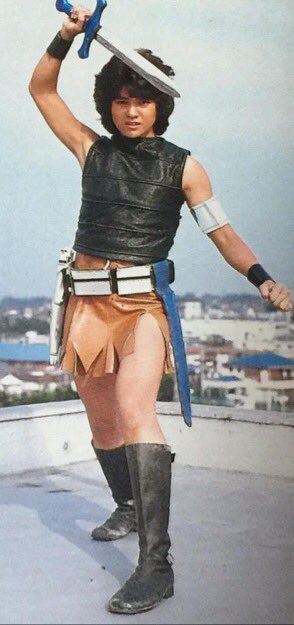
Of the three series she worked on, Sharivan is the only one Brazilians saw on Rede Manchete, the network that carried Japanese hero shows across Brazil in the 1980s, and that is where most of us saw Yuki Yajima for the first time. She comes in at episode 36, broadcast in Japan on November 11, 1983, at the start of the final arc, the Kiseiden, the "chronicle of the strange planet", written by Shozo Uehara and regarded by fans as the finest stretch of the Uchu Keiji shows. Bel Helen and Bel Billy are siblings, descendants of the Iga, whose parents were killed by the Mado, and the official description calls them "impetuous and hardheaded". Billy is Ayumu Tsuchiya, her classmate, and he dies in the same episode he appears in, saving Sharivan and calling him brother with his last breath. Helen stays, and the series begins to turn partly around her. She comes back matured in episode 38, when Den and Lily face a trap inside the Mado castle. She is manipulated by Dr. Polter in 39, an episode where a child version of her appears on screen and the trauma of losing her parents sits at the center of the story. In 42, broadcast on December 23, 1983, and titled "The red youth of the warrior who crossed the battlefield", she duels the swordswoman Reisa from the world of the dead and dies from a treacherous strike by Miss Akuma and the Mukuro Beast, handing the pendant to Den before she closes her eyes. The official description says she felt "a shy love" for the hero that she never declared. Fans rewatching the series today point to episode 42, with the return of Rider and the death of Helen, as one of Toei's high points in the 1980s.
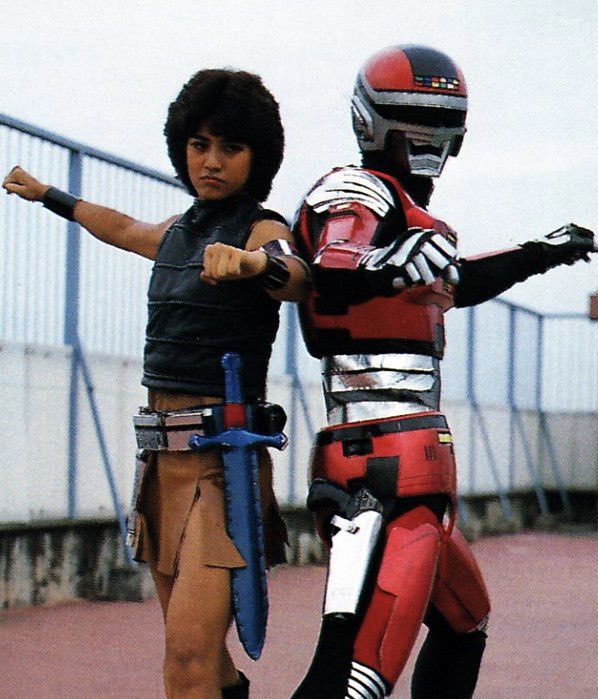
Bel Helen was where she stopped being a name in the credits and became somebody fans looked for in the magazines. The contrast between the character's wild look, with a bandana, a fringed vest and unkempt hair, and the actress's soft voice drew attention, and the specialist press began treating Yajima and Morinaga as the "post-Shihomi", the two heirs to the star of the house. Her fights were performed unmasked, and according to the Japanese reference entries she was respected even in the training gym. The Bel Helen portraits that still circulate, her smiling in a black leather top under a blue sky with the city out of focus behind her, are among the few magazine-quality images of her that survive.
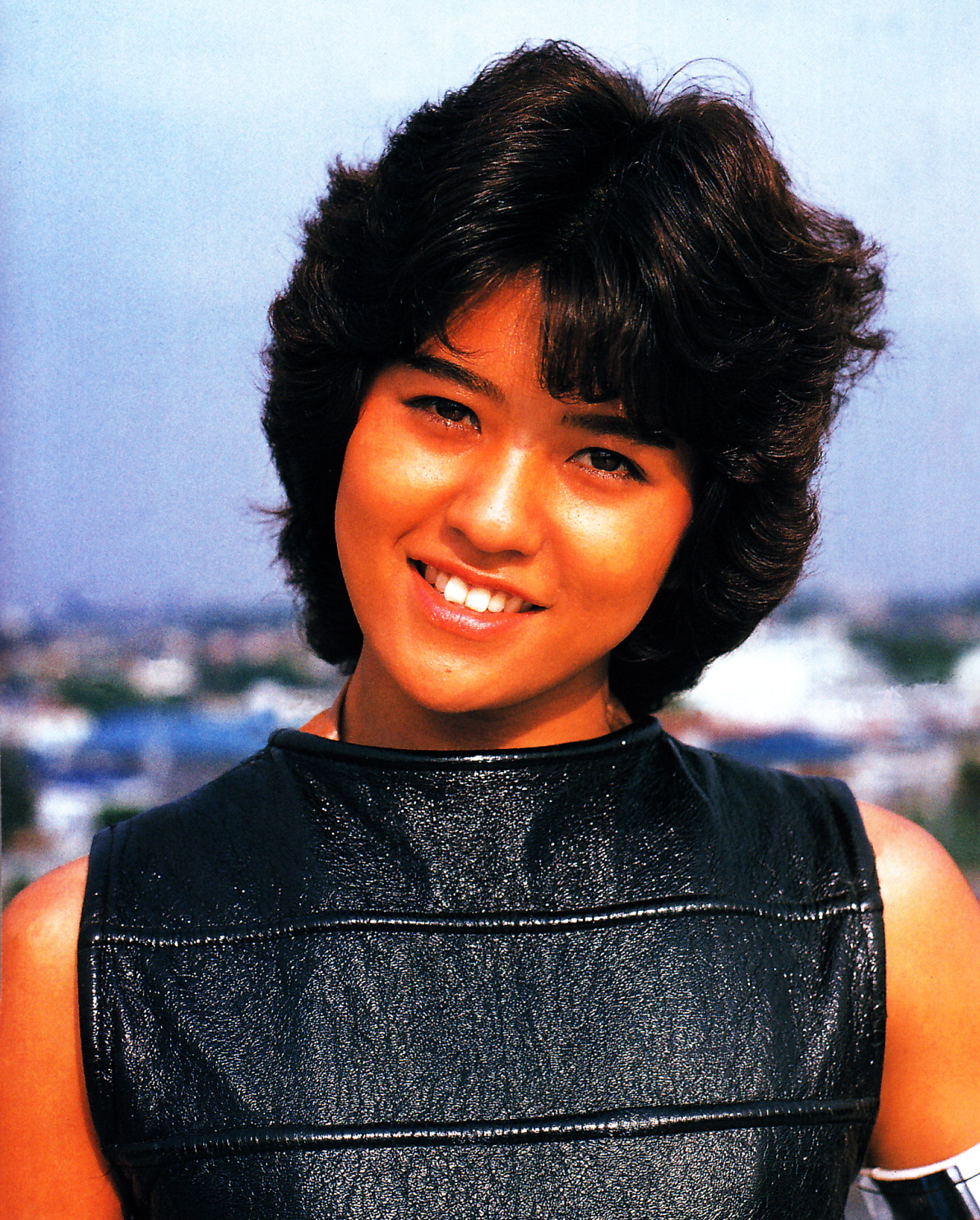
A fan on the 5ch forum noticed, going back over the dates, that episode 36 of Sharivan aired on November 11, 1983, and that shooting on Bioman began in the middle of that same month. Yajima was finishing an arc in which she died, filmed weeks earlier, while starting another in which she would die as well. JAC was putting her into everything it had.
Sources: Japanese Wikipedia, Pixiv Hyakka Jiten, Michiko Makino's blog, account of the 2010 talk show, Mayumi Tanaka radio show, Magmix, Shukan Josei Prime; Takeyuki Suzuki, Yume o Oitsuzukeru Otoko (Kodansha, 2018); Toei Super Sentai Daizen 2 (Futabasha, 2004); Toei Hero MAX vol. 31 (2009); Super Sentai Official Mook 20 Seiki: 1984 (Kodansha, 2019).