"Godzilla Is a
Symbol of Japan"
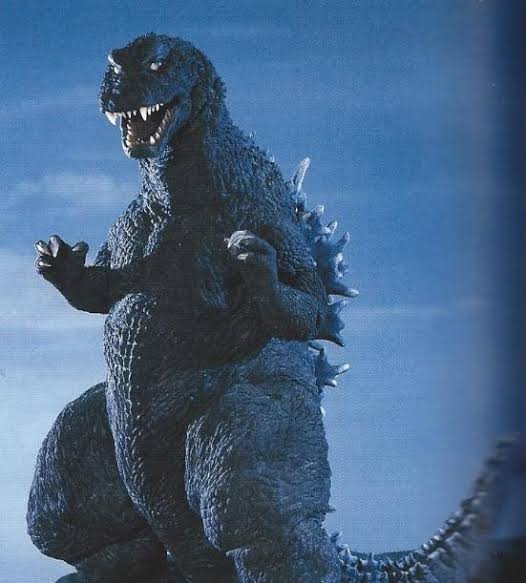
Days after Tokyo's worst snowfall in 48 years, the man who spent his career inside the costumes of the blue heroes and the Millennium Godzilla sits down at the microphone. Suit actors like him carry the whole physical performance from within the mask, where nobody ever sees a face: Kitagawa talks about the sand pit in Yamaguchi, the shouted "die!" that finally freed his voice, the Kung Fu Man of the noodle commercial and the phone call he needed time to think about.
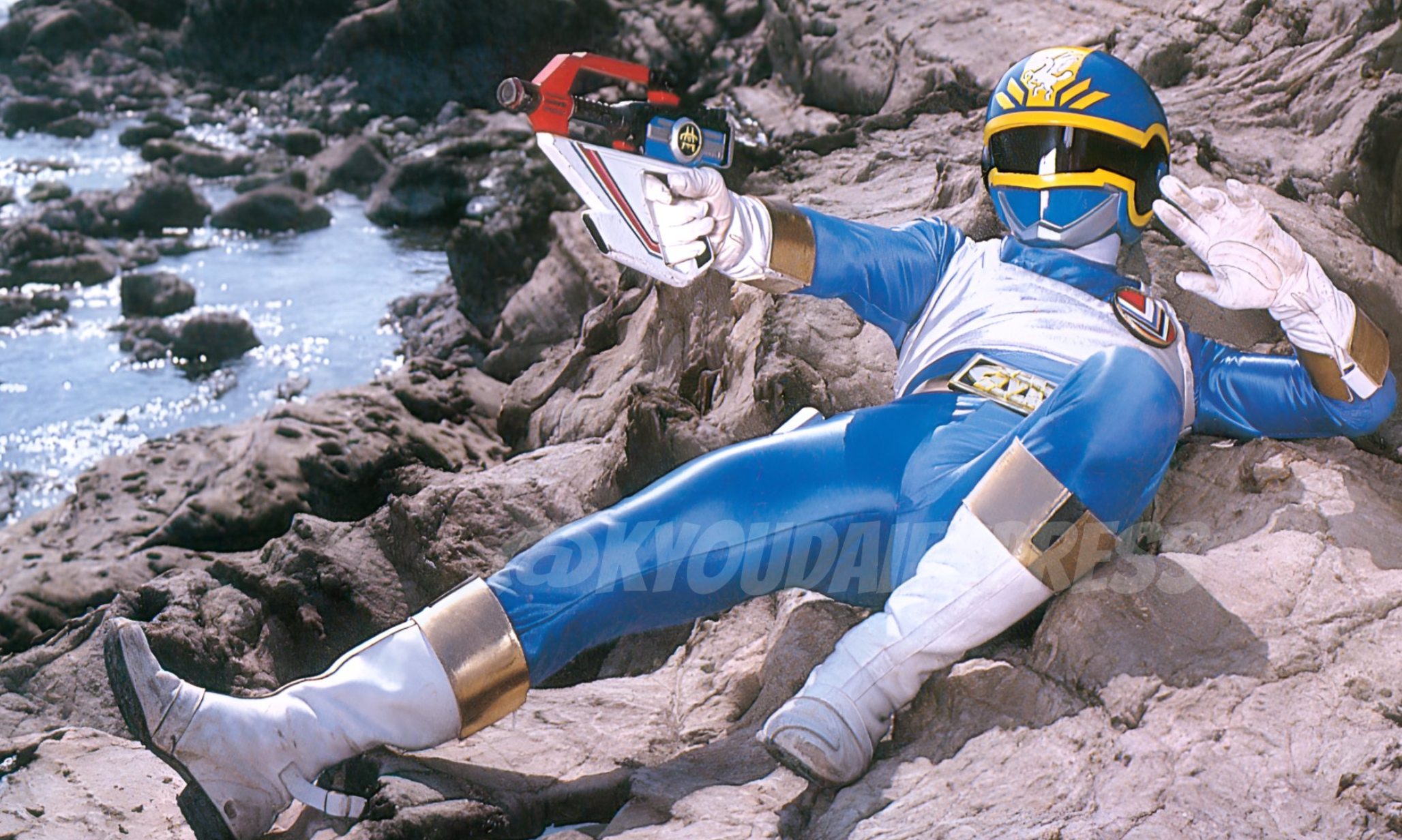
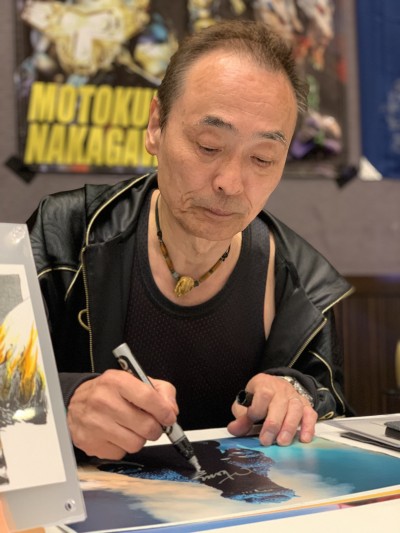
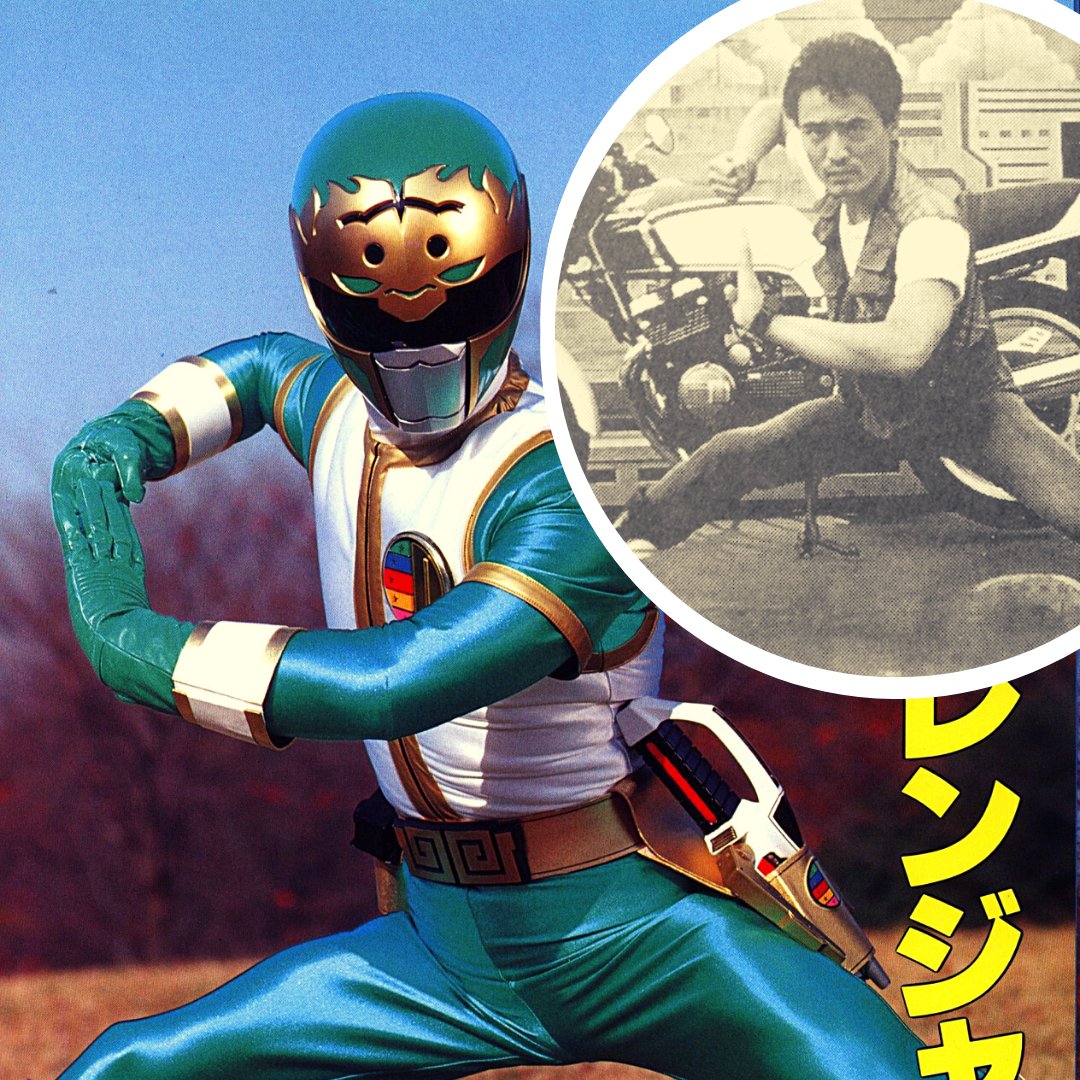
A member of the sixth class of the Japan Action Club, he was the body behind the blue heroes of Super Sentai (Blue Three, Change Pegasus, Blue Flash, Blue Mask) and, from 1999 to 2004, the Godzilla of the Millennium era. He opens the show by summing up the trade with the resignation of a man who has spent his life on set: "When a shoot gets called off because of snow, there is a certain relief in it. The trouble is when it does not get called off."
The worst cold snap in 48 years has brought Tokyo to a halt. And today our guest is a veteran who has spent his whole career facing the risk of injury.
Thank you for having me. For anyone who works on shoots, snow is usually an enormous headache. When a shoot gets called off there is a certain relief in it; the trouble is when the work goes ahead and we have to get there anyway.
The day before yesterday I had a two o'clock call in Takadanobaba. I thought about driving, the way I always do, but my wife insisted it would turn into a blizzard, so I took the train. The job wrapped around seven in the evening and the Yamanote Line was barely moving. Some stations were letting people in only a few at a time, and Shibuya was in especially bad shape. It took me about three and a half hours to get home, on a trip that normally runs an hour.
Looking back over your career, which heroes did you play?
I notice I played a lot of blue heroes: Blue Three, Change Pegasus, Blue Flash and Blue Mask.
You were a mischievous, athletic kid, and you also drew?
Yes. My father drew manga as well, and I loved to draw. I always liked superheroes, the giant ones and the human-sized ones alike: Ultraman, the Ultra Brothers, Thunder Mask. I even invented heroes of my own, and I still have the ideas and the original drawings put away. Sometimes I joke that I could take them over to Toei and ask whether anyone is interested.
What was school like? When did sport turn serious for you?
I liked gymnastics, but my middle school had no gymnastics club, so I ended up in track and field, mainly the long jump, and the sand pit doubled as a place to practice tumbling and somersaults. I would run at the sand and throw myself into flips, something I had been doing since the early years of elementary school. Other students and even the older boys got pulled in, and instead of using the pit only for the long jump we turned it into an acrobatics spot.
At my last middle school sports festival they put together a group gymnastics routine. While everyone else did the setup moves, I stood in the center and performed the showpiece flips. In the club relay I worked in somersaults and whole acrobatic sequences. The girls would scream and carry on as though it were a beautiful thing.
Around that time the idol group Four Leaves helped make the backflip a familiar sight on Japanese television. Koji Kita was known for his gymnastics and his backflips, and Toshio Egi had played Mamoru in Ambassador Magma. For a lot of boys, those stunts were the first time they paid conscious attention to movement.
The sight of those performers doing acrobatics really was very appealing.
You finally landed somewhere that took gymnastics seriously. What was that like?
In my second year of middle school an English teacher arrived who looked like an ordinary man and turned out to be an excellent gymnast. When he saw the school had no club, he decided to start one. My father had a hand in what came next, and I was steered toward a high school with a strong gymnastics program. On the first day I already wanted to quit. There is a vast difference between fooling around because you enjoy it and training competitive gymnastics, where you have to work all six apparatus. Dozens of us signed up that first day, and a week later there were two of us left, me and a friend.
I could not go home and tell my father I wanted to give up. There was practice in the morning; at lunch I would eat udon and then sleep. My mother made a heavy recovery drink in the blender, with banana, egg and meat. I drank it down in one go, took a bath, ate dinner and slept. About six months in came the novice competition. That was when I looked at my body in the mirror and saw how much it had changed. The training had built me without my noticing.
And the Olympic dream?
As a boy I wanted to be Ultraman, and I also dreamed about the Olympics. One of my teachers told me there was no money in gymnastics. Back then the sport had no clear professional path. I trained for three years, made captain, and competed at the Inter-High and the National Sports Festival. About six universities came looking for me. But I thought: instead of spending four years at a university, I could work, learn a trade in those same four years and take some of the load off my parents.
How did you end up at the Japan Action Club?
My club coach had studied with Shinichi Chiba at Nippon Sport Science University. When I started thinking about work as a stuntman, he brought me a sheet listing several clubs and asked which one I wanted. I knew the Japan Action Club because I had seen a photograph in a magazine, probably Boken O, tied to Barom-1, with the words "Action Club" beside it. That picture is pretty much the reason I chose the JAC.
A different photograph could have changed your whole career: a piece on the actors at Toho, or on Bin Furuya, and you might have gone over to the Ultraman side.
It is possible. Ultraman was my biggest dream. In the end I played Super Sentai heroes, worked on Kamen Rider and became Godzilla, and I never once played Ultraman. My build did not match the physical type they were looking for. After I became Godzilla, people on the Ultraman side did say they could probably find some part for me. It would not be the Ultraman I dreamed of playing as a young man. I joke that these days it would be easier to turn up as somebody's father or grandfather.
"Ultraman was my biggest dream. I became Sentai, Kamen Rider and Godzilla, but never Ultraman."
Kitagawa, on the photograph that decided his pathThe JAC training had a reputation for being brutal. What was it like?
I came up from Yamaguchi to the office. Since Chiba was the only one who knew anything about me, the others looked at me as if to ask who I was. I am from the sixth class; Junichi Haruta was two classes ahead. We trained Monday through Saturday, with gymnastics on Wednesday and Saturday. When that part of the week came around, I felt alive. What scared me were the falls: they had you climb up, hold a railing and drop about three meters. We waited in line for it. When my turn got close, I would quietly circle around to the back of the line and hope the drill ended before they called me.
They would say, "If it hurts, learn to fall in a way that does not hurt." I would think, "Then teach me that technique." I was also very shy. At first I could not get my voice out during the fight drills. Shouting "die!" or "you bastard!" came easier, because those words come out with the force of the blow. These days, when I teach young people and I see somebody who can barely manage a "ya!", I understand completely and I try to help.
And getting work?
I spent about a year training every night without a single job. I understood that if I did not introduce myself to the senior men, nobody would ever pick me. You had to be the first one at the coordinator's car asking to be included. Right after I joined, I was told the JAC did not do Ultraman and that a small kid like me would never be a lead. At 18, hearing that you are of no use knocks you down hard. On my first big location shoot, two or three of us rookies carried mats up a mountain. At the top of a cliff, the veteran beside me dropped a prop gun. He looked at me and said nothing. He did not have to: I went down the slope to get it.
They would say: if it hurts, learn to fall in a way that does not hurt. And I would think: then teach me that technique."
The JAC method, 1975I started out as a foot soldier and a combatant on Akumaizer 3, then Chojin Bibyun, and I passed through Daitetsujin 17, Spider-Man, Megaloman, kabuki work connected to Ennosuke Ichikawa, and Message from Space. My first important regular role came with Battle Fever J. Because I was short, they called me in to double the women in the more dangerous action: I did the stunts for Miss America (my wife, Eiko Onodera, was one of the main suit actresses in that role) and I also doubled Battle Kenya.
And on Denziman, doubling Kenji Oba as Denzi Blue?
Working for a couple of years on characters tied to him taught me a great deal. Oba was meticulous down to the position of the fingers in a pose. He used to say, "Nobody can imitate me. Surpass me; when you surpass me, I will surpass you again." As soon as I had one thing down, he came up with another. That kind of rigor teaches you that copying the outward shape is never enough, and that you have to keep growing.
Oddly enough, the first time I recognized you was not on Sentai or Kamen Rider. It was in the House Foods commercial for Wang Fu Mian noodles, with Fei Fei Ouyang. You took a spectacular fall, your body tipping over rigid with your legs in the air. A magazine asked who that "Kung Fu Man" was and ran photos of you training in a tracksuit at the Okubo gym.
That commercial turned out to matter in a way I never expected.
You were also in the famous Honda City commercial with the band Madness.
I was more than the choreographer on that one. The band members were an undisciplined bunch who did not take direction easily, so they brought me in to hold the position of a martial arts teacher. I started by demonstrating nunchaku and action moves. Foreign professionals will not take your title on faith, they want to see the skill. Once I had shown them, they started listening to what I said.
What was one of the most frightening jobs? An old interview mentioned a scene where you were surrounded by fire.
That was on Kon Ichikawa's The Phoenix (1978), from the Osamu Tezuka work. I doubled Toshinori Omi in the part where someone walks into a burning tree. I wore wet cotton padding, and the plan seemed to be simply passing through the flames. Then they told me to go in and stay inside while pieces of the set melted. We agreed I would come out when I could not take any more. It was a reckless piece of work, and it had nothing to do with what I understood I was signing up for.
On another production, a reconstruction of a real subway case, I set my own body on fire. The person on the extinguisher panicked and froze. I was genuinely shouting, "Put it out! Put it out!", and she thought I was acting. With fire you cannot breathe the flames in. I kept my face down and kept asking. You can study a fall; there is no training that makes anybody immune to fire. When a situation cannot be worked out safely in advance, you have to refuse. Saying "this cannot be done" takes its own kind of courage.
At the 30th anniversary event for Maskman, somebody asked about the opening shot: the five of you on the edge of a Shinjuku skyscraper roof, no railing, with a helicopter kicking up wind. Were you not afraid?
I did not have to jump from up there, so the shot never struck me as especially frightening. If the wind pushed me off balance, I could simply step backward. There is a curious logic to it: at heights up to about 25 meters, there is still a chance somebody will ask the stuntman to jump. At 40 or 50, everyone knows there will be no jump. Sometimes the higher position feels psychologically simpler for exactly that reason, because nobody is going to demand the fall. The fear is still there; what matters is doing the math. A man who has only tested twenty meters has no business doing thirty. You do not go ahead with something just because there has never been an accident before.
Did you ever have a really serious injury? On Bioman I saw you with two fingers taped together that seemed to point the wrong way. You pulled the glove on over them and went on fighting.
The worst injury was a torn ligament, and I broke fingers as well. If the eyes or the legs had stopped working, it would have been impossible. But as long as I could still move, I worked. If I missed a day, somebody else would play the character. Blue Three was my role, and I wanted to be the one performing his action too. As long as there was a way to keep going, I kept going.
"Blue Three was my role. As long as there was a way to keep going, I kept going."
Kitagawa, on fighting with two broken fingers under the glove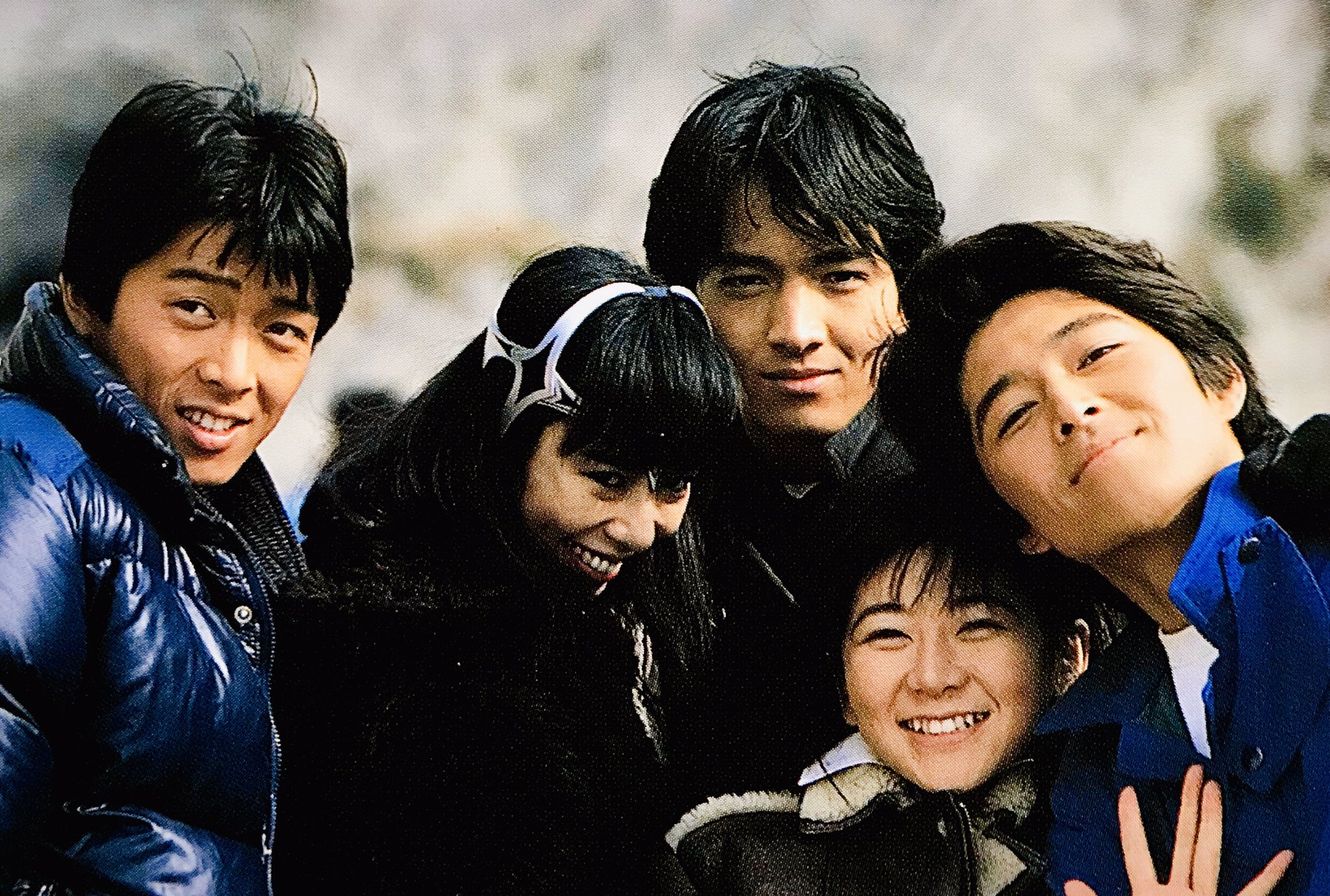
Along with the shoots there were the live shows: Korakuen, department stores, housing complexes.
The shows were fun, and they took a lot out of you. Often we arrived early and built everything in front of the audience: in about two hours you had to put the whole spectacle together. The two of us hardly ever worked those shows together, because we were usually assigned to opposite sides: you played villains and I played heroes. Later, when I started doing theater, I found myself wanting to play the villains, the ones who get to talk.
The older costumes had bigger heads and more room inside. During a show you could lift the mask behind the set and get some air.
Exactly. The modern masks fit very tightly. In the old Korakuen shows we would run behind the set, push the mask up onto our foreheads to breathe and pull it back down before coming out again. Today that would be impossible.
The veterans put together a band, and you play electric guitar. How did that start?
I have liked instruments since I was a teenager. I started on acoustic guitar, with folk songs and Kaguyahime numbers. Two or three years ago Jiro Okamoto asked me to play electric guitar. For someone raised on the idea that the electric guitar was for delinquents, that was a different world. I bought a beginner's instrument for about ten thousand yen and started practicing in the dressing room. I cannot follow sheet music on stage, especially with the lighting changes, so I have to memorize the melody and find the positions by the markers on the neck. I have more than fifty songs committed to memory by now.
Why did you consider taking a different professional name?
My name was misspelled all the time. Several different kanji are read as Tsutomu, and the credits sometimes used the wrong one. Seeing your own name wrong on screen is a professional shock. During a stage job, Kazutoshi Yokoyama came up with a play on words around the idea of "two Toms". He is the godfather of the nickname. I thought about adopting that spelling during the Godzilla years, and I was told that since I was playing a symbol of Japan I ought to use a Japanese name. As I started traveling to the United States more often and "Tom" was easy to pronounce, I began asking people to call me that.
How did the invitation to play the Toho monsters come about?
It all goes back to the Wang Fu Mian commercial. The monster sculptor Shinichi Wakasa had kept the image of that "Kung Fu Man" in his head. During Rebirth of Mothra III, the effects director Kenji Suzuki wanted a young King Ghidorah, from the Cretaceous, one who could run. The traditional suit weighed close to two hundred kilos and depended on wires. Wakasa went looking for someone who could combine monster acting with acrobatic movement, remembered me and tracked down my number. I thought: this is the king of the monsters, it will be something I remember for the rest of my life. I said yes.
And the following year the phone rang again.
"Can we ask for your help once more?"
"Of course. Which character?"
"Godzilla."
I was stunned. Godzilla is Godzilla, a symbol of Japan. I thought, "Is this really something I can do?" I asked for time to think it over.
The Ultraman dream never came true in the literal sense. Becoming Godzilla did put you in the company of the pioneers you admired: Haruo Nakajima, the first Godzilla, and Bin Furuya, the first Ultraman.
I am very grateful. Playing Godzilla made possible meetings I would never have imagined.
In Super Hero Taisen Z, on the freezing shoot at Mount Iwafune, you came back as Ninja Black among hundreds of heroes.
My son saw a promotional image on television, pointed at one of the characters and said it was me. I told him he was right. He knew I had played Ninja Black years earlier, and he had no idea I was in that shoot. It amazed me that he could recognize me from the movement and the silhouette alone.
I also played Ki Ranger in another hero gathering. The suit had been built for a different body and I am slimmer, so my version came out looking too elegant. A woman I know told me she was disappointed: to her, Ki Ranger needed the traditional round body. I understand that. The silhouette is part of how you remember a character.
To finish, leave a message for the listeners.
There are still plenty of stories I did not get to tell. I will keep working and keep pushing myself. Please go on supporting me. Thank you very much.
It amazed me that he could recognize me from the movement and the silhouette alone."
Kitagawa, on his son pointing at Ninja Black on TVThe conversation above is the main source for our career profile of Kitagawa: the sand pit in Kudamatsu, the verdict he heard when he joined the JAC, the blue heroes of Super Sentai, the 70 kilos of the Godzilla 2000 suit and the wrong kanji in the credits, all laid out in order, with photographs and a timeline.
Profile · Suit Actors section · about 14 minutes
Read the profile →