The Long Road of Hirofumi Ishigaki Inside the Suit
The hermit of Japanese action work talks into a microphone for the first time: Yamagata, the abandoned plan to move to America, the weekly cut at the JAC, the nickname Ika-taro, seven years as a hero, drunken boxing and the day he fell into the hippo pool.
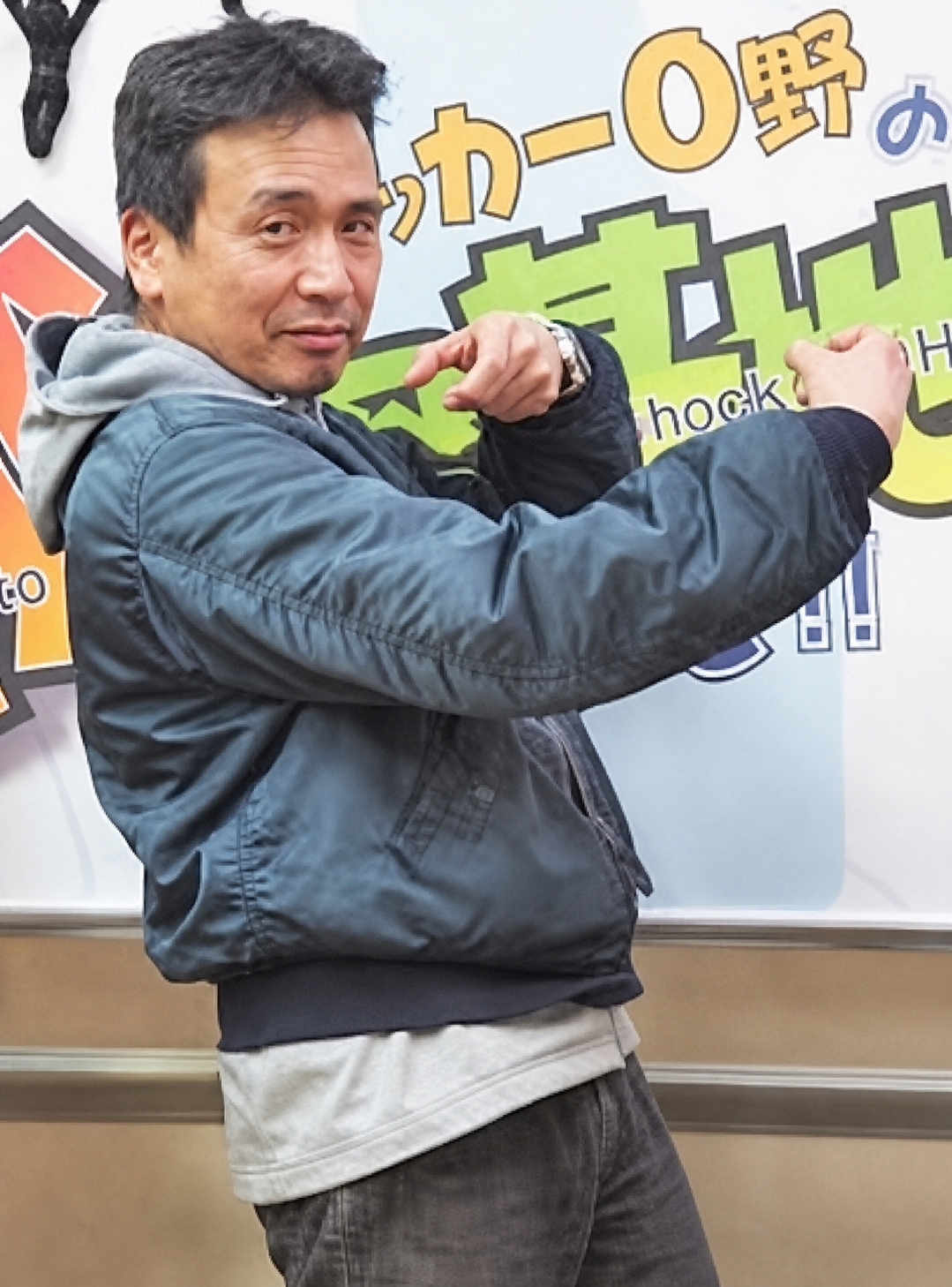
Suit actor on seven straight Sentai series, the body inside the 2002 Mechagodzilla and action director for eight consecutive seasons of Super Sentai. He had never given an interview on the open internet, and this was the first time he spoke on a radio show.
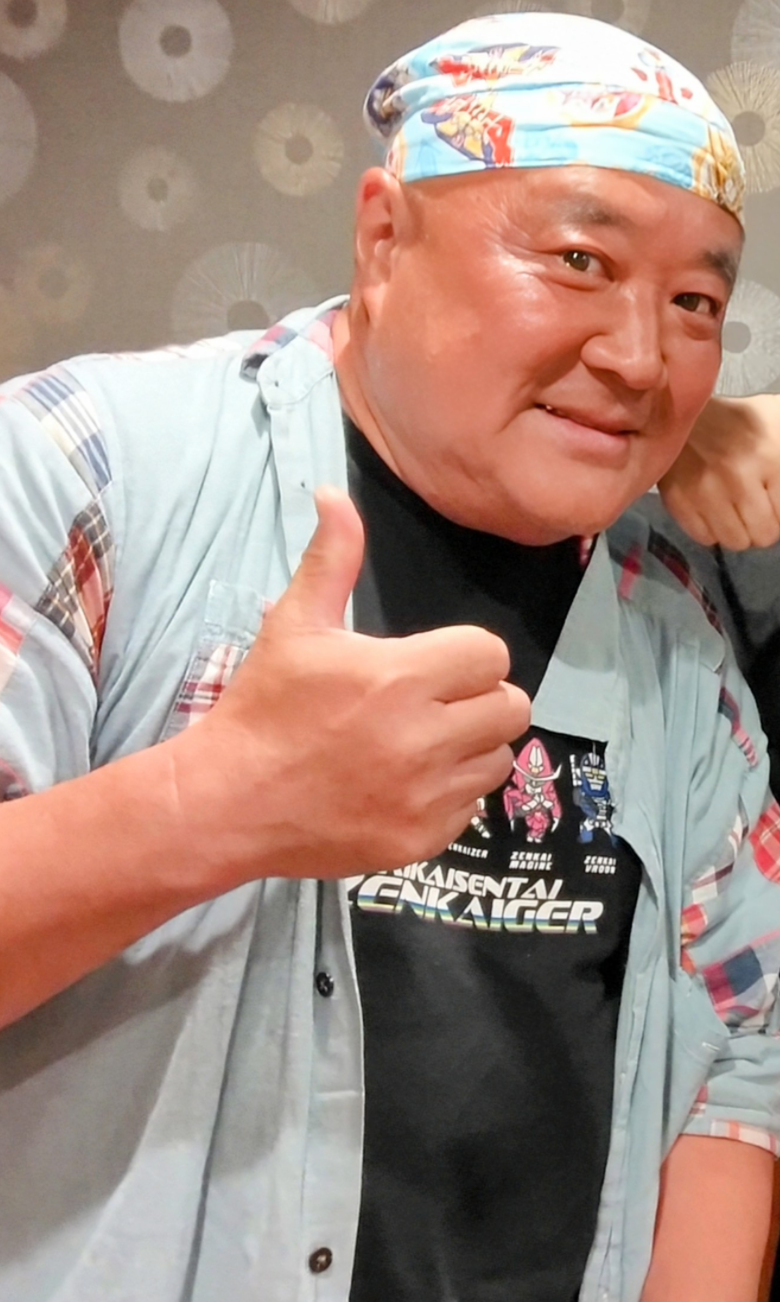
Actor, announcer and former enemy soldier at the M Project agency. He met Ishigaki on the sets of Goggle V in the early 1980s, and it took him more than thirty years to get a conversation out of him at the microphone. "Any other way and he simply does not come."
Today's guest is a friend of more than thirty years. We started back in the days of the space sheriffs, the uchu keiji; after that came many, many years of Super Sentai, then the Heisei-era Kamen Riders as a suit actor and, finally, action direction. Today's guest: Hirofumi Ishigaki!
Good evening. I am Ishigaki, and Ono forced me to come here. Say it as many times as you like: I was forced.
It really was by force, because any other way and he does not come. You even have a reputation for not talking and not appearing in front of an audience, and that rumor always reached me. You are the hermit of the action world, the man nobody can bring out in front of a crowd.
That comes from the action director Junji Yamaoka. "If your place is behind the scenes, give yourself to the work behind the scenes." The double disappears behind the camera. Back when he was still active as an action director, that was what he taught us, and we followed it to the letter. It was a different time.
These days it is a remarkable thing. Even "suit actor" turned into a handsome job title. In our time the word did not exist, and we were called stuntmen, action men, the kigurumi guy. Today one of those men puts on an event, the smallest little number, and the tickets sell out on the spot. That is exactly why I say we are going to break the rule tonight, once and for all.
"If your place is behind the scenes, give yourself to the work behind the scenes. The double disappears behind the camera."
The Junji Yamaoka rule that Ishigaki followed for forty yearsAt the Japan Action Club, now Japan Action Enterprise, the veterans call you Ika, Ika-taro. The story goes that Tsutomu Kitagawa is the one who made the name stick.
It was Kitagawa, or somebody around him. And since I went on doing the Korakuen shows afterward, everybody held on to that first impression. Ikarus turned into Ika-taro, and also into Ika-chan. The special effects director, for instance, calls me Ika-chan. That is the crowd that calls me Ika-san, Ika-chan, Ika-taro.
The origin is the open-air theater at Korakuen park. It was the Sun Vulcan period, the New Year show, the Great Gathering of Super Heroes. Sun Vulcan was the main attraction, but heroes from earlier years came in too: Denji Green, Battle Japan, Kamen Rider Stronger riding a motorcycle onto the stage, Ultraman Taro. For Taro they needed a villain from the Ultra line, so, for reasons nobody could explain, in comes Alien Icarus. And the script says, with no ceremony at all, "You, Alien Icarus, were defeated by Ultraman Taro's beam." Inside the suits we were thinking that this was a barefaced lie, since Icarus is not even Taro's enemy. The people upstairs invented the continuity however they pleased, and we grumbled about it from inside the costumes while we watched.
It became the nickname, exactly as it stood. And for a while, through Goggle V and the rest, I was always the Korakuen guy, so everyone went by the image of that first character and called me Ikarus.
You were born in Yamagata prefecture. What was young Hirofumi like?
Right in the middle of cherry country, in a town called Sagae that almost nobody has heard of, though people sometimes know Tendo, which is close by. The place was surrounded by nature. I do not remember much about the boy himself, because all I did was play in the river and the streams. The countryside back then had no sports, no athletic clubs and nothing specialized.
I did a little judo, but the real thing turned out to be swimming, and it happened by accident. As a small boy I only jumped into the river, so I could not swim in a pool. In sixth grade they put me in the group of children who could not swim, to learn properly, though swimming in a river is if anything harder. That same year, somehow, they entered me as a starter in the district championship out of the group that could not swim. From then on I was a starter in every meet in junior high and made it to the prefectural championship, and I got into high school on an athletic recommendation, with no entrance exam.
And television? We are the same generation, the generation raised on TV.
At home we picked up three channels, counting NHK. TBS came over from the Miyagi side, with the signal crossing the mountain, so we watched through that snow, half picture and half static, which we used to call watching through the sand. So I was never much of a television child, and of the heroes I have almost no memory. I got to know Kamen Rider mostly through the manga, professor Ishinomori's original work, and with Ultraman I stopped somewhere around Seven.
I read a great deal of manga. I had an older brother and I was his errand boy: from the start of elementary school he would hand me the money and send me out to buy it, around eight or nine at night. And not to a bookstore, since the bookstore was far away. It was the dry goods shop, which at that hour was already closing up. The countryside had no convenience stores, and I had never seen one in my life. I read Shonen Magazine, things like that. Then, for reasons I cannot explain, in high school I moved over to shojo manga. Kabamaru, Patalliro. Igano Kabamaru. It was around the time of Kabamaru that I decided action was a fun thing.
And the future? Were you already thinking about what to do with your life?
My uncle was an animator, so the word animator existed in our house, and I thought about becoming one. I drew well, in fact. I went to look at the work up close, but back then it was nothing like today with computers, since everything was done by hand. One sheet was worth a few hundred yen, which was not enough to eat on. So I thought that in that case I wanted to go to America.
Hold on: from animator to America. How do those two connect?
Going to America takes money. And then I saw it: stuntmen wanted. A stuntman piles up a fortune in a year or two. An ordinary job with a fixed salary, taking the train every day, pays very little. If you want to gather it all at once, in a short time, you have to risk your life. It was the JAC era, with Etsuko Shihomi and that crowd at their peak. I thought it was tremendous and I applied. I saw it in an ad in Sports Nippon.
I did not have any great admiration for the JAC. It was only the bridge to America, and I was going to quit after two years.
"To a kid who was doing nothing at all, 'stuntman' sounded like five hundred thousand yen a jump."
Ishigaki on the math he did to finance the American dreamAt the time the JAC was still a phenomenon: with Etsuko Shihomi and Hiroyuki Sanada so popular, classes eleven and thirteen drew thousands of applicants.
Mine was much smaller, around fifty. It came well after that peak, in a gap right in the middle. As a rule there was one class a year. But they got so popular that Sonny Chiba wanted to turn everybody into actors, which left nobody for Toei's children's programs, and those were the bread and butter. Hence the stuntmen wanted. That was the door we came in through.
Officially about thirty must have joined. But with the training, every week half of them dropped out, then half again, and five or six were left. Those were the ones who started going to the sets.
And what you got right away were the big veterans: Goggle V and Gavan, from the same year. Plus the Korakuen shows.
And around then there were odd jobs here and there as well.
"Shoji and I spent our days carrying the five masks of the five heroes, the two of us, while somebody else carried the monster mask. You could not ask the veterans above you to do that. The five were heavy and nobody could ask for help. Then Ono would come by and hold a couple of them once in a while, which saved us."
"Shoes, back in those days, did not come in the right size. The right sizes were set aside for the veterans and we wore whatever was left over, sometimes a 24.5 on one foot and a 27 on the other."
"Trampoline people": crouching underneath and holding the mat for the veterans jumping from up high. Some days we went home without appearing in a single shot.
I am from a different agency, M Project, and they used to send me to help on the JAC sets. It was roughly parallel to the Hachisuka twins that I went to Goggle V and met Ika-chan. In one episode somebody got hurt coming down a zip line, and the next day he was back as though nothing had happened, on top of a moving truck, trading blows with the Madara soldiers. Mr. Fukui from props laughed and said, "today it is Yellow Madara and Blue Madara, what fancy Madaras."
And that is when I saw Ika-taro: he would fold his bath towel in four, prop it against the bus window and sleep on it like a pillow, smiling. Always with that serene face. I did not even know his name yet. "What a calm man," I thought.
On Goggle V it was mostly me and Shoji, Hirokazu Shoji. He was one of the first friends I made, and that group was the first crowd I got close to on a set. I remember that much.
We were the shutter pair: two extras crossing the frame in front of the camera, left to right and right to left, alternating. A whole crowd of people appearing, purely through movement. There was no fighting, only the crossing from one side to the other, like a shutter closing and opening.
And even once the action started, it took a while before they let us in for real. On Sentai, with ten soldiers, we were not always among them. Gavan only had five, and with five the amount of screen time each man gets goes up. In that sense the uchu keiji gave us more to do and had more to them. In the end they used me quite a lot, thank God.
On Dynaman you were in it practically the whole year. A promotion: from soldier to monster.
Dynaman was where I started playing monsters. Tsujii said he wanted to do Korakuen and went over there, the monster slot opened up, and Koji Nakamura and I took it, third in line, more or less. A monster is a different thing from a soldier, because there is acting in it. Yamaoka told me every single time: "The monster is the lead. The monster is the only thing that changes every week. You have the starring role, so do it properly." So I decided to take the acting seriously, and it started being fun.
By the way, the plan was to quit after two years and go to America, was it not?
True, true. I was supposed to have gone.
"The monster is the lead. The monster is the only thing that changes every week. You have the starring role, so do it properly."
Junji Yamaoka, action director, on DynamanThen comes Bioman, and you play the Junoids.
I played Aquaiger, a full year as a monster. When Aquaiger died in the story, I also took on the Queen, Juuoh. That was the year two veterans looked after me: Kitagawa, who played Blue Three, and Michihiro Takeda, who played Pink Five. The Blue and the Pink raised me, and Takeda and I were always going out drinking.
We were the backup to the backup: one day on Dynaman, the next on Sharivan. Since I moved between the two, I made friends on both sides, and with the production people as well.
And the Korakuen shows? The JAC was always there.
Always. At Korakuen we got hurt. I used to cover for Kitagawa, and that is roughly when I got close to him. A couple of times the zipper on the back opened up in the middle of the action, and with the zipper open you fight without ever turning your back to the audience. A suit actor thing.
A hero mask rarely comes off. But sometimes the fastener would burst, and then it is a familiar ritual: you act as though you are pinning the hero down. It gets fixed on stage, on the spot. They press it back into place, somebody says "it is open here", and the hero, for some reason, stops moving. With people who know each other well it gets done in the middle of the fight. If that is not possible, you move in close, say it under your breath, everyone holds him, it gets fixed, and the hero jumps again and the scene goes on.
On Metalder you played Top Gunder. And here is the secret: in canon Top Gunder is left-handed and shoots with the left, while you are right-handed. So for anyone rewatching on DVD, if the gun is in the right hand, that is Ishigaki.
Top Gunder originally belonged to Kenmochi. Among the graduates I was Dranger, and then, in the second half, I started playing Top Gunder. From the closing stretch onward, it is all me.
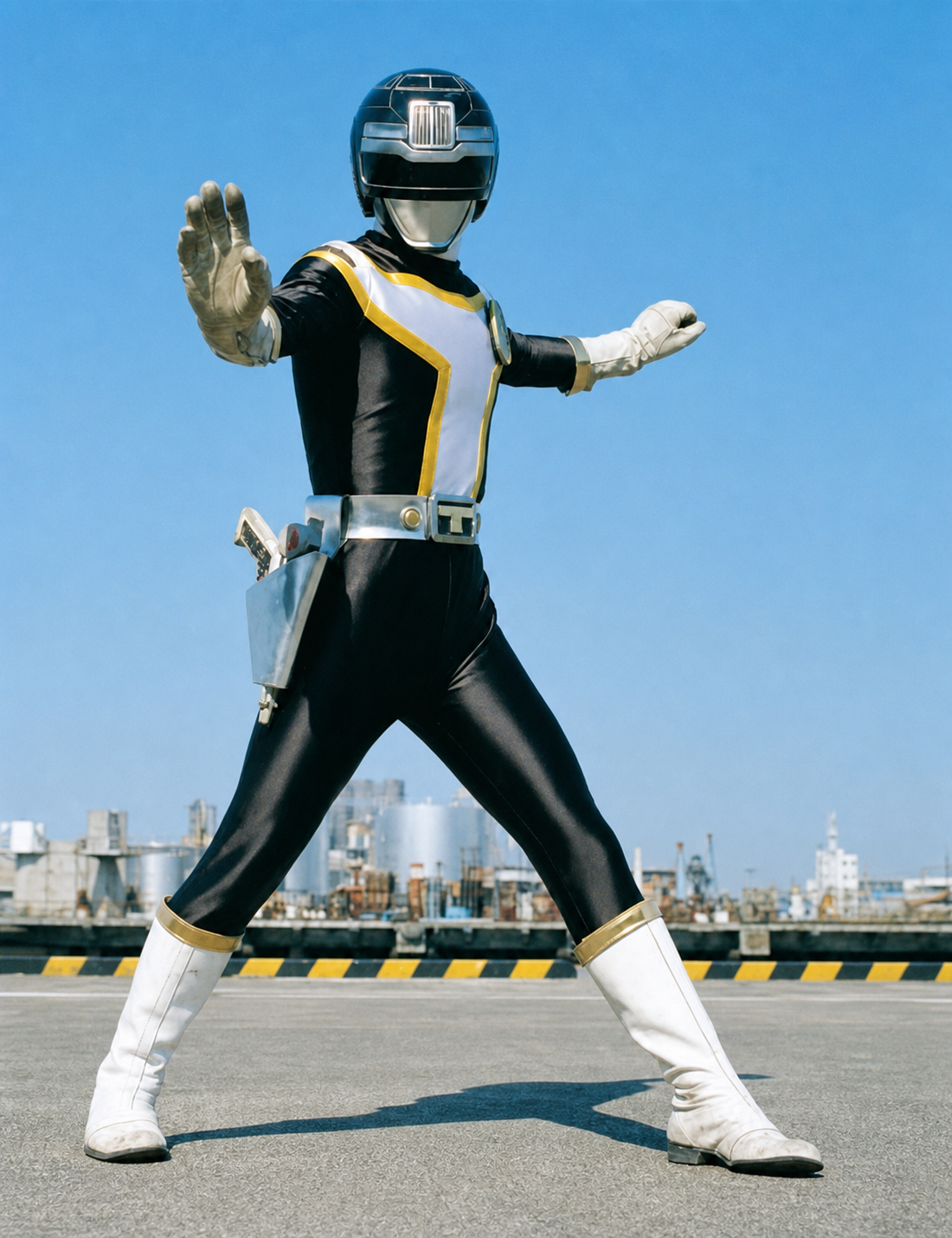
Now I have to tell a story you are going to deny. You, the almost-animator, used to draw manga. And back then, when you drew a hero of your own, the character's name happened to be Black Bison. Do you remember?
I do not remember.
I heard it from you! I thought it was an incredible thing.
Liveman and Black Bison. That one was announced as the work marking ten years of Super Sentai. It started with three heroes and later went up to five. From the beginning I was already doing monsters and various other things, so I was already part of the Liveman cast and already on the set. Daisuke Shima and Megumi Mori were there, people with names, and you could feel that this really was the ten-year production, with a certain air of grandeur about it. And I was right there on the set. I did not prepare myself psychologically for anything much. It was a matter of doing it, and there was nobody else to do it anyway.
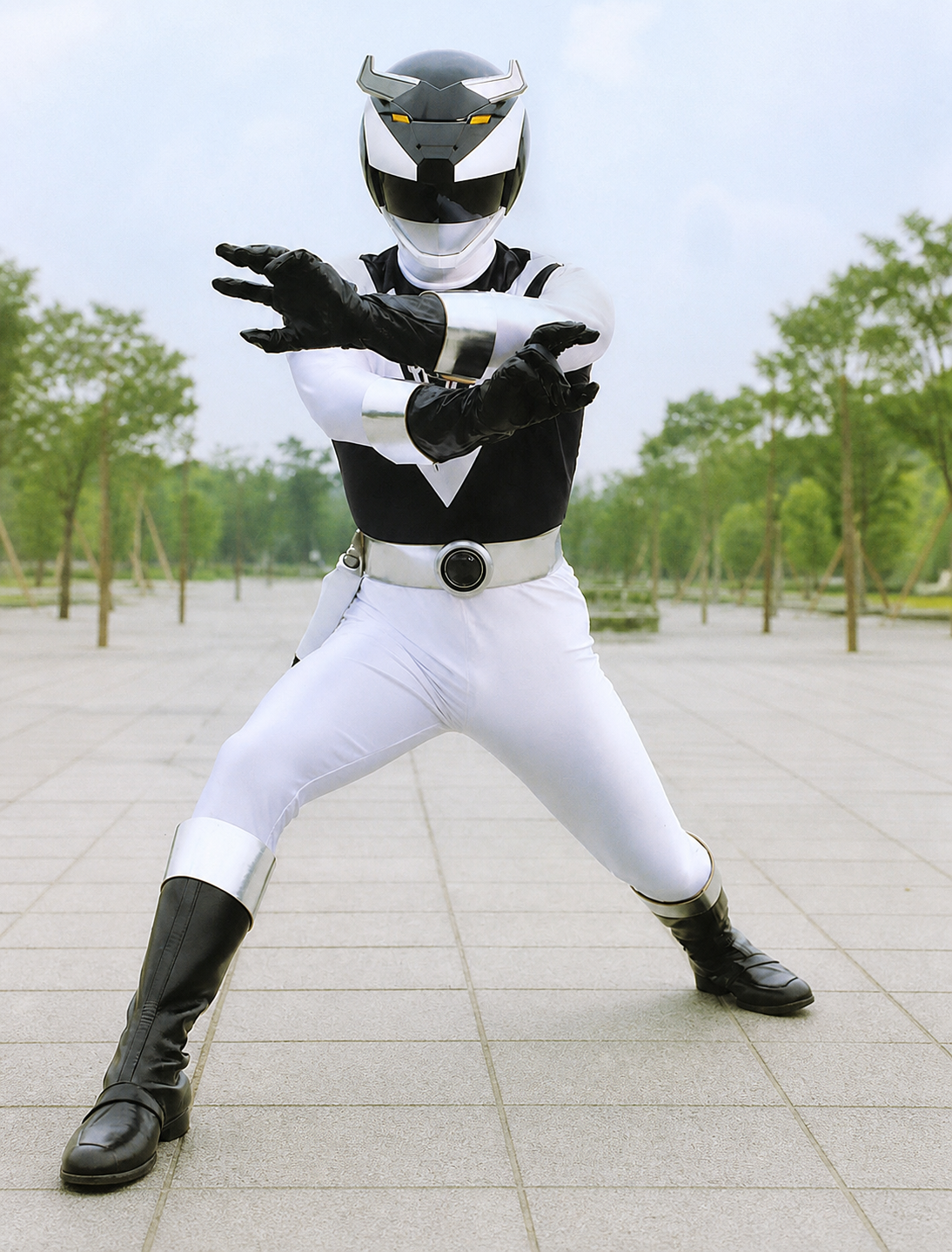
And from there you string one Sentai character after another: Black Turbo, Five Blue, Yellow Owl, Kirin Ranger, Tiger Ranger. Seven shows in a row, seven years.
Seven years. It was fun.
In the middle of that, Niibori became an action director and you were always out drinking with him. And here is where the famous drawing comes in: on the equipment trucks, taped to the trailer door, there was a portrait of Niibori as a giant robot saying "shall we go eat raw liver?" Who drew it? "Ishigaki did." It even became a Red Action Club T-shirt.
Every day was fun back then. On Turboranger you told me yourself that the set was too much fun right now. Red with Niibori as the leader, Black with me, Blue and Pink with the Hachisuka twins, and Yellow with another classmate. Practically everyone came from the same generation, with Niibori as the boss at the center, a tight group with terrific chemistry.
And Dairanger, Kirin Ranger.
The hardest one of all. We were already training about three months before the five of us went into filming, and in my case it was drunken boxing, the suiken, the master of drunken boxing. It was rough.
On Zyuranger you played Tiger Ranger, and here comes the craziest story of them all. The series turned into Power Rangers, it was exported, and over there the yellow one was turned into a female character.
Before the transformation, American actors. After the transformation, up pops the Saitama countryside.
One moment it is New York, and the next moment America becomes a close-up of the Saitama countryside. The movement is a hundred percent Ika-chan, yet in the American version we are meant to believe a girl is doing the moving. So you can do it that way, we thought, watching it.
People came over from America to observe the set. "You cannot work with this," they said. One rehearsal and we were rolling. Back then there was no monitor, it was film. We shot a hundred and thirty setups a day.
A hundred and thirty setups. Sometimes a hundred and fifty. An American watching that has to go into culture shock. Then there is the number of lights: you used about three, with marks on the ground. Over there the money never runs out, not even on lighting, and here there was almost none. Seen from their side it must have been shocking. But it is a point of pride.
"Before the transformation, American actors. After the transformation, up pops the Saitama countryside."
Ishigaki on Tiger Ranger becoming the Yellow Ranger of Power RangersIn the Metal Heroes of the B-Fighter period something happened: Schwarz.
I did the body and the voice was Shigeru Chiba's. The man improvises without stopping, and matching his improvisations with my body forced me to study a great deal. Speaking, then carrying the speech with the body: I found that enormously enjoyable. And when I did Korakuen I was one of the senior villains, and normally somebody else, an outsider, did the talking. I said let me talk, put on a lapel microphone and started doing it myself, which meant memorizing the whole text. These days almost everybody wears one.
And Junichi Haruta, from Kohei Tsuka's theater company, the veteran you admired.
Haruta, the one I admired, has not changed. A dream of a senior. And I said that I wanted to do it too, and got onto the membership list. Except that the agency stepped in and blocked it. And then I thought that if this was how it worked, as long as I stayed in this job I would never be able to say what I wanted to do. So I gave up the position. I am not doing any of this anymore, I said, because I wanted to be on Tsuka's stage. I took odd jobs and waited for the chance, until I finally got to take part.
There was all of that as a suit actor, and then you cross over to the action direction side. That must be hard.
I learned by watching. And after that, always with Takeda, glued to him. I asked his advice and heard that the sooner the better. With the agency's permission, I became his shadow. Not just anyone becomes an action director. More than thirty years ago the head of my agency was already saying that from then on we would either become actors or become stage combat masters, and only a small share of us would make it. Sonny Chiba was the first person in Japan to give himself the title of action director, a kind of JAC exclusive, and even inside the JAC there are few of them.
When Takeda got busy, on the VS movies and so on, I covered for him. And on an ordinary day, with no time off, I rode along on the bus and studied. For some reason the only work coming in was from outside, through the agency: Onmyoji II, Azumi. Learning outside matters as well, since every company has its own way of doing things. I wanted a few more years like that, at an easy pace. And right at that moment came the do it now: Dekaranger. On the recommendation of the director, Katsuya Watanabe.
"If you are already studying stage combat, then become an action director." Me: "I am still studying." And him: "Great, then study here." Dekaranger was where I became a full action director, on my own account.
"Me: I am still studying. And him: great, then study here."
Katsuya Watanabe pushes Ishigaki into the action director's chair on DekarangerYou are the one who brought me back to a set after twenty-five years, in the Shinkenger period: "I need about fifty soldiers here, come and help me." There were around fifty of us, and they turned that into ten thousand by computer. I even went on horseback, on a white horse.
But the one that really stayed with me was the movie: to gather everybody, two hundred, three hundred suit actors. Six tour buses in front of the Subaru building in Shinjuku, before dawn. On location, the Iwafunayama quarry in Tochigi. Snow. Two hundred heroes lined up, every one of them shivering with cold until somebody shouted action. And in the middle of all that shivering, one man alone was holding the introduction pose properly. "You are the only one here doing the pose right," they told him. "It is my knee, it is frozen," he said. When they shouted action, two hundred heroes spread out in a row, and all of us were thinking that we could not fall behind. And it happened because Ika-chan invited us.
That cannot be done again. Gokaiger, I said, was my last Sentai. I am tired, let me rest. And Sentai ended for me. Fukuzawa wanted his turn as well. After that I moved over to the Rider side, and then everything opens up again, right away.
From the listener Kirin Yellow: of all the heroes you played, which character stayed with you the most?
For the sheer work it took, Kirin Ranger, the one who studied kung fu. But in terms of the production itself, the Changeman location shoot in Nagasaki: Holland Village, Bio Park. That is the one that stayed in my memory the most.
Everything happened on that shoot. I fell into the hippo pool. I was thrown into the middle of the llama herd. The keeper warned me beforehand: "in the water nobody beats a hippo, and the other day there were six in there, now there are two, and they say there was cannibalism." Given the way he put it, the instant I hit the water I came flying straight back out. On the developed film you can barely see the frames, that is how fast I jumped clear. Then the llamas: the moment I went in, Yamaoka signaled for them to drop me exactly where the animals were gathering, and they all came over at once. As soon as I fell, there was the crack of hooves right next to my ear. Terrifying.
They threw me off a motorboat in the open sea, and the boat kept filming as it moved away, leaving me floating alone and waiting to be rescued. Out of nowhere a local fisherman turns up: "what are you doing out there?" Well, quite: a man in the middle of the sea. "Strange outfit. You will catch a chill, you know." And off he went. I am still not sure which of the two of us should have been rescuing the other.
Who did you work with and think, that one is beyond me?
With the monsters, when I started, my target was Tsujii, and to this day I feel I have not got there. I played a great many monsters and managed to give each one a personality, and against the ones who came after me I do not intend to lose to anybody, but against Tsujii, not yet. With characters, my teacher is Kitagawa, and he is still the goal.
How do you create the movements of a new character?
From the image. At the start the character already has a certain storyline and a profile sheet, and I follow that, thinking it is roughly like this. With people like Fukuzawa and Takeuchi I hand it over: it goes this way, the rest is up to you. That is what an action director does. With a rookie who has just arrived, you build it from nothing. It always starts from which series it is and which character it is. On Dekaranger, for instance, the image was freedom. When they put me on Go-Busters, they told me I was going to do an introduction pose and should come up with one. I was the carpenter, so I combined a plane, a hammer, a little tap. I showed it on the set and heard that it was far too long. I shortened it. And the scene, being so long, got cut anyway.
This meeting between people, these thirty-odd years, being able to have you here makes me very happy. To finish: a word for the fans who follow you.
Thank you for watching so many productions for so long. These days I no longer do this work myself. But the younger ones are growing, and they will go on making interesting things. Cheer for them.
Today's guest was Hirofumi Ishigaki. Thank you very much!
This was Ishigaki. On April 12, at the Naked Loft, the Ishigaki Festival. I cannot promise it will be fun. But come along.
Translation of the transcript of episode 126 of the web radio show "Welcome to Shocker Ono's Secret Base" (April 1, 2018, about 109 minutes, produced by the doujinshi print shop Neko no Shippo).
The conversation above is one of the sources for our career profile of Ishigaki: Sagae and the swimming, the rookie caste at the JAC, the seven straight Sentai series as a hero, the Tiger Ranger who became a Power Ranger, the 2002 Mechagodzilla and the eight years in the action director's chair, all in order, with photographs and a timeline.
Profile · Suit Actors section · about 20 minutes
Read the profile →