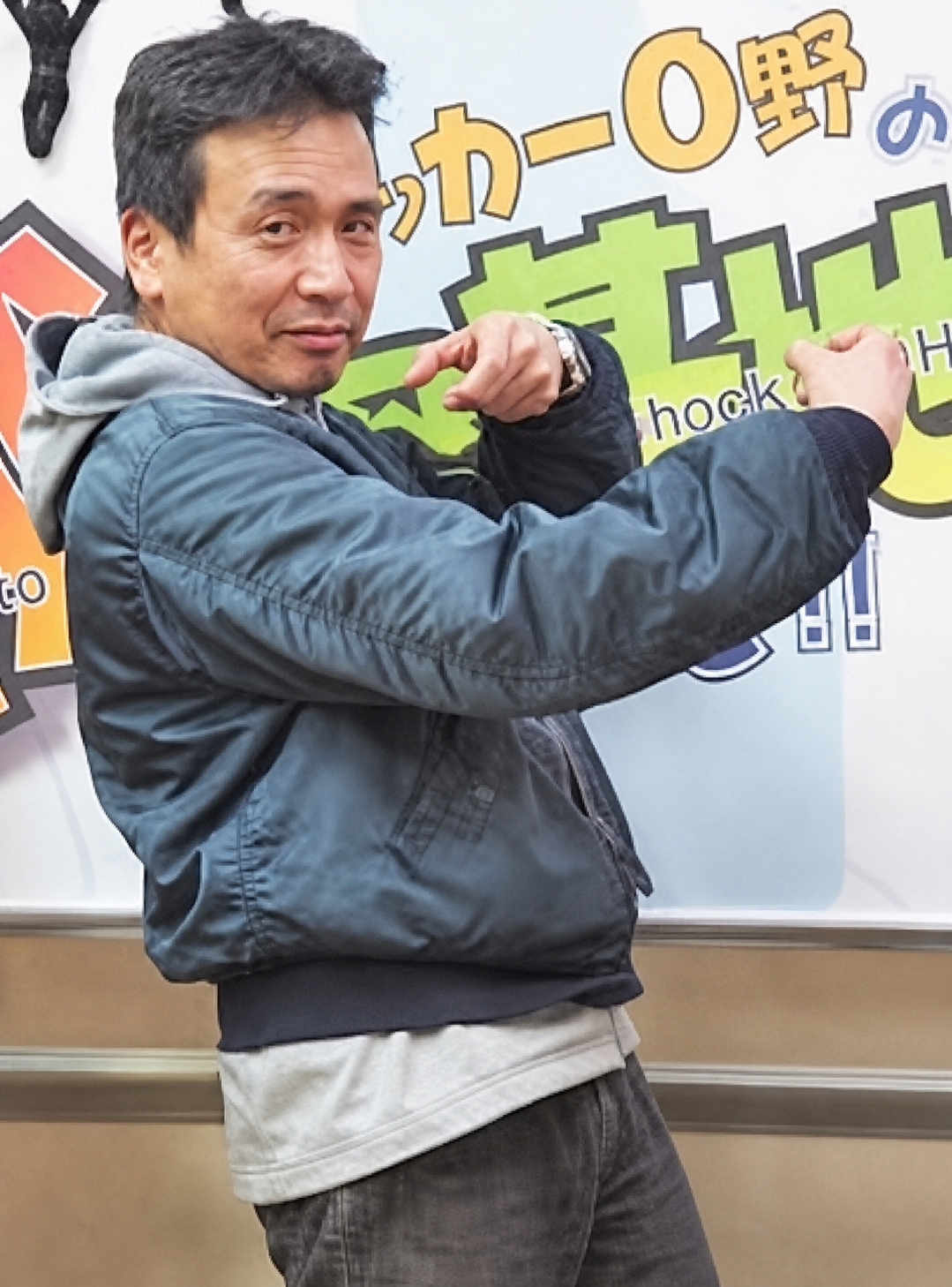
There is a photograph that does not exist, and it would show a small young man from Yamagata asleep against the window of a rented bus at the end of a shooting day, somewhere in the early 1980s. His pillow is a bath towel folded in four, and he is smiling.
Nobody took that picture, but the people who worked beside him still carry the scene in their heads, and it is the most faithful portrait we have of Hirofumi Ishigaki: forty years inside costumes that erased his body completely, and a whole career built on that erasure.
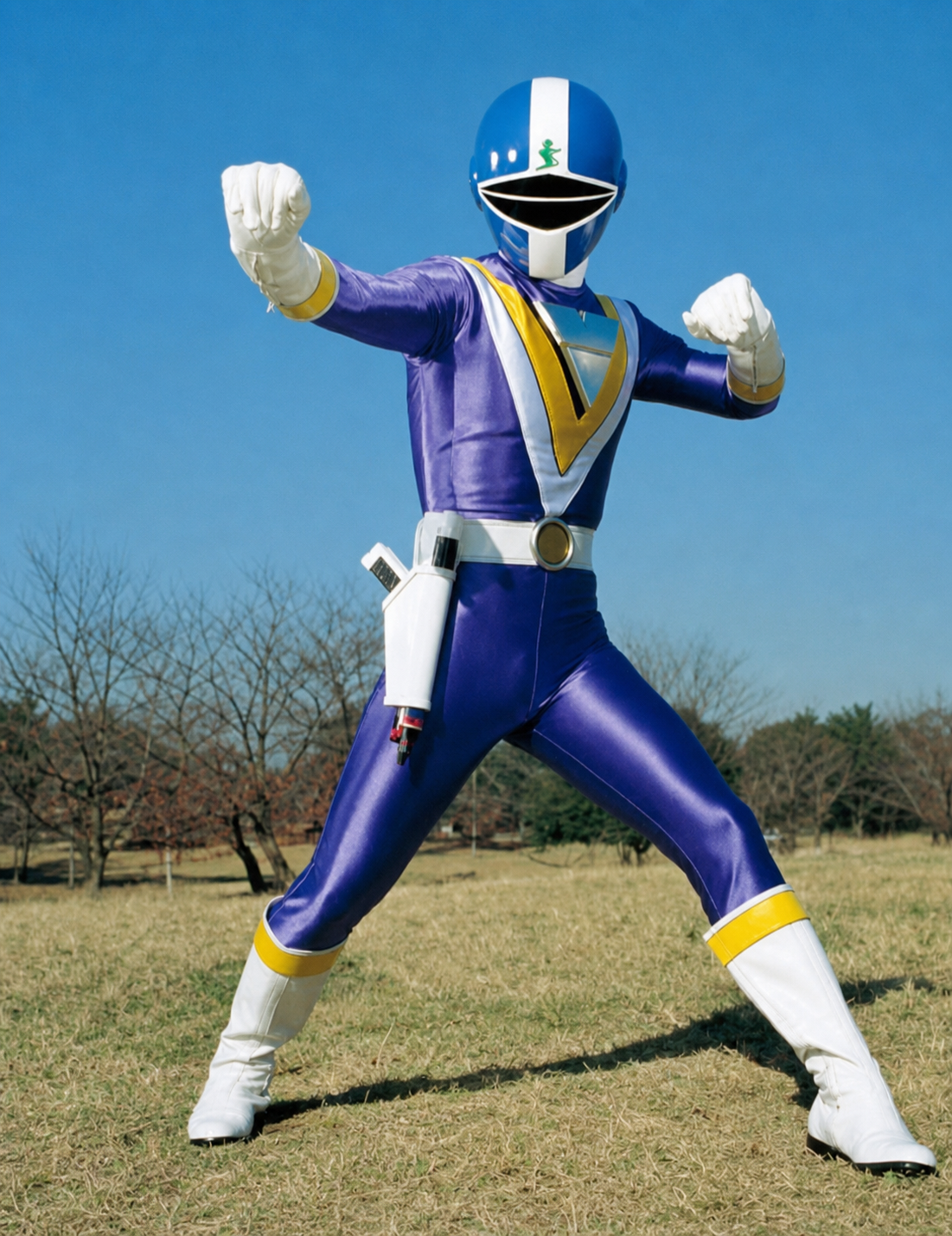
Viewers around the world saw him dozens of times without knowing it. Anyone who watched Zyuranger, or Power Rangers, which is the same footage recut, saw the Tiger Ranger throw a backflip with a weapon in each hand, and he was the man inside. Anyone who followed Godzilla at the movies saw the biomechanical Mechagodzilla (Kiryu) rise against the monster, and that was him as well. Anyone who admired the choreography of a decade of Super Sentai fights, from Dekaranger to Gokaiger, was watching his mind at work behind the camera.
Ishigaki has held up an entire genre without ever standing on a pedestal, and his career is also the story of how Japan learned to use the words suit actor for a job that had no name at all when he started: the performer who plays a character from inside the costume, with his face never on screen.
Cherry country and an America that never came
Ishigaki was born on February 20, 1963, in Sagae, in the middle of Yamagata prefecture in northern Japan, cherry country and a neighbor of Tendo. By his own account he grew up surrounded by nature with little to do beyond playing in the river and the hills, in a rural place with no sports clubs and no specialized coaching. As a boy he could swim in a river and sank in a pool, so in sixth grade he was put in the class for children who could not swim, to learn properly, and that same year he ended up in the starting lineup at the district championship.
From junior high onward he made the lineup in every competition, reached the prefectural championship and got into high school on an athletic recommendation, without sitting the entrance exam. His professional profile still lists, among his skills, swimming at Inter-High level, the national high school championship. He stood five foot six, small for a man and exactly right for the trade waiting for him.
The plan for his life was something else, because his uncle was an animator, the word animator existed in the house and Ishigaki drew well. He looked into the career until he saw up close that, in the era of hand-drawn cels, a single sheet was worth a few hundred yen and nobody could live on it. He read manga without stopping: first the shonen titles he bought at night at the village shop as his older brother's errand boy, then shojo, Patalliro and Igano Kabamaru, and it was ninja manga that first made him think action was fun. Out of that patchwork came one stubborn dream, which was to go to America.
America cost money, so when he saw an ad recruiting stuntmen in the sports paper Sports Nippon, the arithmetic he did in his teenage head was simple: a stuntman risks his life, therefore he must earn a fortune per jump, and a year or two of that would pay for the trip. He took the entrance test for the Japan Action Club, Sonny Chiba's JAC, with none of the devotion that drove his classmates. The JAC was his ladder to the United States and he was going to quit in two years. He never quit.
The weekly cut and the nickname that stuck
Ishigaki joined the JAC in 1981, in the twelfth intake, the same class as the twins Yuichi and Shoji Hachisuka, who would become well known names in the business. It was the aftermath of a boom, since the popularity of Etsuko Shihomi and Hiroyuki Sanada had drawn thousands of applicants to the earlier classes, and his own was smaller, around fifty people. Training decided everything, and half the class was cut every week: half, then half, then half again, until five or six were left, and those went out to the sets.
Sonny Chiba wanted to turn his pupils into complete actors, actors who move, and Toei needed bodies to fill its children's programs. The door Ishigaki came in through was labeled stuntman, because nobody said suit actor yet. They were the stuntmen, the action men, the kigurumi guys.
The nickname that would follow him for life was born on a stage. In the live shows at the open-air theater of the Korakuen amusement park, around the time of Sun Vulcan, there was a New Year spectacle called the Great Gathering of Super Heroes. The dramatic logic was loose: if Ultraman Taro came on, the show needed a villain from the Ultra line, so they cast Alien Icarus, who was not even Taro's enemy. Ishigaki made his debut on that stage dressed as Icarus, Ikarus turned into Ika-taro and then into Ika-chan, and the name stuck because for a good while he was Korakuen. The man who gave it to him, he says, was Tsutomu Kitagawa, who two decades later would put on the Godzilla suit himself.
Ishigaki's career in the 1980s is a manual on how an invisible craftsman gets built. He started on the floor as a foot soldier, playing Madara in Goggle V and the combatants in Gavan. Before that he was trampoline crew, the man underneath holding the crash mat for the veterans jumping from above, who goes home at the end of the day without appearing in a single shot. He was half of the shutter pair, two extras crossing in front of the camera in opposite directions to add bulk and movement without throwing a punch.
In those first years the newcomers carried the five hero masks, the veterans' costumes and even their socks. They wore whatever boots were left in a mailing box, sometimes a size 24.5 on one foot and a 27 on the other. The JAC was, in his words, a caste society.
Yamaoka's lesson
The first promotion came on Dynaman, around 1983, when he moved up from foot soldier to monster of the week, and it was there that the action director Junji Yamaoka, the man he places above all others, gave him the lesson he would carry for the rest of his life. Yamaoka would repeat it:
"The monster is the lead. The monster is the only thing that changes every week. You are in the starring role, so do it properly."
Junji Yamaoka, action directorThe other half of Yamaoka's lesson shaped his public personality: a backstage man devotes himself to the backstage, and the double disappears behind the camera. That, say the people who know him, is where Ishigaki's reserve comes from, the reputation for not talking, not showing up, being the hermit of the action world.
On Bioman, around 1984, he spent the year inside the Junoid monsters as Aquaiger, and when the character died in the story he inherited Queen Juuoh and covered for Green Two. It was also the year two veterans took him in: Tsutomu Kitagawa, the Blue Three, and Michihiro Takeda, the Pink Five, who years later would be the master who taught him to direct action. Blue and Pink, he says, raised him.
In the Metal Heroes of the same period, among the giant beasts of Juspion and the villains of Metalder, he left a puzzle for collectors. Top Gunder shoots with his left hand, yet there are scenes in which the gun is in the right, and the explanation is that Ishigaki, who is right-handed, took the character over halfway through the run. From that point on it is all him.
Then, in 1988, the floor became a pedestal. Liveman, the series marking ten years of Super Sentai, needed a hero, and Ishigaki, already on set playing monsters, was the choice, almost by elimination. On being called up, he says:
"I did not psych myself up over it. It was just work. There was nobody else left to do it."
Hirofumi Ishigaki, on becoming Black BisonThe part was Black Bison, his first hero, and it opened the most remarkable run of his career: seven consecutive Sentai teams as a hero, from 1988 to 1994. Black Bison, on Liveman, was an extra warrior role, and the following year on Turboranger came Black Turbo, with Ishigaki cast as a full member from the first episode. It was a dream team: the veteran Kazuo Niibori as the Red and the leader, Ishigaki in Black, the Hachisuka twins in Blue and Pink, all of them from the same generation and used to one another. "The set is too much fun," he told a friend at the time.
A backstage legend was born in those years. Ishigaki the draftsman drew a caricature of Niibori, the veteran with the face of a giant robot, asking "shall we go eat raw liver?". The drawing was taped to the door of an equipment trailer and ended up printed on a Red Action Club T-shirt.
Five Blue came on Fiveman in 1990, and Yellow Owl came on Jetman in 1991, bringing a craftsman's detail with it. To reproduce the plump body of the character Raita, Ishigaki stuffed styrofoam under the suit in place of the usual padding until the silhouette matched. A castmate, the suit actor Motokuni Nakagawa, would later describe him as "the skillful Ishigaki-san, who can handle anything", and would say that to the rookie he was at the time, those veterans were "beings above the clouds".
In 1992 came the role that would carry him to the other side of the world, the Tiger Ranger of Zyuranger. With an athlete's background, Ishigaki gave the character acrobatics of an unusual order. Fans still talk about the opening in which he throws a backflip with a weapon in each hand, and they describe the warrior as a master of acrobatic strikes and fast movement.
The following year, on Dairanger, came the hardest of them all: the Kirin Ranger, in the suiken style, the drunken fist. The five performers trained in kung fu for about three months before shooting began. In 1994 Ishigaki closed the run with Ninja Yellow on Kakuranger, which made seven years and seven colors, a resume few suit actors in the history of the genre can show.
When the tiger crossed the Pacific
The strangest story of this period belongs to the Tiger Ranger. When Zyuranger was sold to the United States and recut as Mighty Morphin Power Rangers, the American producers kept the Japanese action footage that already existed and shot new dramatic scenes with local actors, and in the American version the yellow member became a woman, Trini. The result is an editing miracle: before the transformation, an American actress; after it, the acrobatic body of a small man from Yamagata. Ishigaki sums it up:
"Before the transformation, American actors. After that, rural Saitama suddenly shows up."
Hirofumi IshigakiNo Japanese report ever printed the line "Trini's suit actor was Ishigaki", but the arithmetic closes on its own, since Trini reuses the Tiger Ranger footage and the Tiger Ranger was him. The Americans visited the Japanese set and left in shock, unable to believe the pace: little light, almost no rehearsal and, in the film era, no video monitor, with a hundred and thirty to a hundred and fifty shots done in a single day. "How do you shoot this fast?", they asked. The answer had to do with money, since Hollywood had all of it while the Japanese crew got its results out of three lamps and a lot of skill, which was a point of pride on set.
Finding a voice
After Kakuranger, Ishigaki changed trenches and moved to the armor shows, the Metal Heroes of the B-Fighter era, and a quiet turn in his training happened there. Playing the villain Schwarz, he supplied the body while the voice came from the actor Shigeru Chiba, a tireless improviser. Matching his body to Chiba's improvising forced Ishigaki to study, until he found that acting with words was fun.
The discovery had a practical consequence. In the Korakuen shows the senior villains were voiced by an outside narrator, and Ishigaki asked to deliver his own lines live, on a lapel microphone, and memorized the whole text. Nobody was doing that then, and almost everybody does it now.
That hunger for acting led to an episode that says a great deal about his temperament. Ishigaki admired Junichi Haruta, a JAC veteran who was doing well on the stages of the playwright Kohei Tsuka, and he wanted the same thing for himself, but when his name went onto a Tsuka cast list the agency blocked it. His answer was to give up his position, take odd jobs, wait for his moment and, between 1999 and 2003, walk onto Tsuka's stages for real, because under the discreet hermit there was a stubborn man willing to burn bridges.
Godzilla, the exit he chose
In 2002, Ishigaki put on the heaviest suit of his life, the 3-shiki Kiryu, the biomechanical Mechagodzilla of Godzilla Against Mechagodzilla, at the invitation of the modeler Shinichi Wakasa. On the other side, inside Godzilla, was Tsutomu Kitagawa, the veteran who twenty years earlier had named him Ika-taro and taken him in on Bioman. Two old friends were fighting each other, one inside the king of the monsters and the other inside the machine built to kill him.
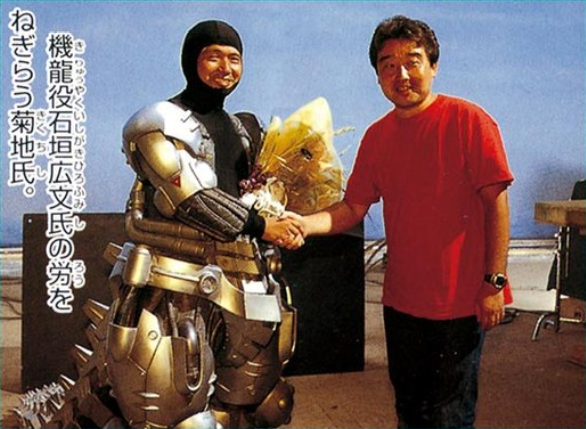
It was a brutal shoot and Ishigaki never hid it. He has said that the movement would not come out, that he fell off the turntable, that pieces of the suit caught on the steel cables and flew off. Syncing the opening of Godzilla's mouth with the movement of the suit gave so much trouble that a single take ate up about twenty hours.
That was deliberately his last role as a performer, because by the time he accepted the invitation he had already decided privately to move into action directing, and Mechagodzilla was the exit he chose from the suit, after more than twenty years lived inside characters. There is a neat symmetry in it, since the man who learned from Yamaoka that the monster is the lead ended his performing career as the lead monster of a Godzilla picture.
"If you want to learn, just come and learn here"
The transition was not automatic, and Ishigaki makes a point of remembering that almost nobody manages it. More than thirty years earlier the head of the agency was already warning the young ones that from there on they would either become actors or become stage combat masters, the action directors, and that "only a small part of you gets there". In Japan it was Sonny Chiba who first gave himself the title of action director, a kind of JAC exclusive. Even inside the agency, few arrive.
Ishigaki did his apprenticeship glued to Michihiro Takeda, his master: riding the production bus, working days without a break, watching and nothing else. He was credited as an assistant on the VS films of 2003 and 2004 and on outside jobs such as Onmyoji II and Azumi. He wanted a few more years like that, taking his time, but the call came earlier, on a recommendation from Katsuya Watanabe, and it worked as a shove. Watanabe said:
"If you want to learn, just come and learn here."
Katsuya Watanabe, chief director of DekarangerDekaranger, in 2004, produced a full action director, and one of the longest runs anyone has had in that job in the history of Super Sentai starts there: eight straight series from 2004 to 2012, with Dekaranger, Magiranger, Boukenger, Gekiranger, Go-Onger, Shinkenger, Goseiger and Gokaiger. He then crossed to the Kamen Rider side and directed the action on Wizard, Gaim and Drive, from 2012 to 2015, and his last job in the chair was the V-cinema release Drive Saga: Kamen Rider Chaser, in 2016.
As an action director, Ishigaki left fingerprints everywhere. On Boukenger it was his doing that brought the veteran Yasuhiro Takeuchi back into the regular cast, and, seeing his colleague Yuichi Hachisuka in female roles again, he remarked that it was "a waste, when the man is a first-rate onnagata". On Shinkenger he helped work out the item that served as both shuriken and shield. On Gokaiger he ordered the muzzle flashes replaced with computer graphics to hold down the budget, and had a designer redraw the main villain's sword after complaining that he "could not tell how to use the thing".
He also coordinated one of the biggest scenes the genre has produced, the legend war of the 2011 film, with more than two hundred suit actors lined up in the Iwafunayama quarry, the mecca of tokusatsu explosions. It was an army of heroes from every era, and every one of them had to be dressed, briefed and moved individually. The 2011 earthquake hit Japan during the shooting of the final scene, production stopped for weeks and the release was pushed back.
The lineage
A career like Ishigaki's only makes sense inside a lineage, and he holds one link of it. In Super Sentai the head action director's chair passed from Michihiro Takeda, his master, to Ishigaki on Dekaranger in 2004, and from Ishigaki to Hiroshi Fukuzawa on Go-Busters in 2012. On the Kamen Rider side he held the post of Tsuyoshi Miyazaki for three years and then handed the chair back to the man who had it before him, in a chain of masters and students in which each one trained on the shoulder of the last. Fukuzawa, his successor, said in 2025:
"When Ishigaki-san came in, in the 2000s, fighting that felt real started to stand out."
Hiroshi Fukuzawa, his successor, in 2025In the same interview, by then a veteran action director himself, Fukuzawa said that having been able to work from Dekaranger onward beside "such remarkable action directors" as Ishigaki "is what has become my treasure today". He also recalled that men like Ishigaki and Takeda had spent about a year learning action direction under someone else's wing before taking over. Ishigaki's influence was all there, without appearing in the opening credits.
"We don't need you"
In May 2016, at 53, Ishigaki left Japan Action Enterprise, the old JAC, ending a bond of thirty-five years. That day he wrote to his fans: "Thank you for supporting me for so long. From now on I want to cheer for Sentai and for Rider along with you." Only in 2022, in a tweet, did he let slip the wound behind the departure. He wrote:
"I left the world of action choreography after hearing the words: we don't need you."
Hirofumi Ishigaki, 2022Ishigaki never said who told him that, and the reading that it came from his own agency is an inference. The sentence was left hanging in the air: the man who had carried eight straight years of Super Sentai and three of Kamen Rider, let go.
There was no retirement, and Ishigaki became the representative, the president, of a production company and agency called L4, based in the city of Hanno, in Saitama. L4 is tied to an action team named LYNX and to the surgeon and choreographer Yasuhiro Kikawa, who directs an in-house ninja series, and that was the door through which he went back into costume. In 2022, at nearly 59, Ishigaki reappeared as a suit actor on the series Musashi Ninpoden Ninja Reppu, in the role of Kazasaki Haito, performing and handling the sword choreography at the same time. On the return, he said:
"Those were four genuinely fun months. As long as my body still moves, I want to keep working on shoots."
Hirofumi Ishigaki, 2022The series kept going season after season and was still on the air in 2026, and his recent life is that of a veteran quietly at work. He turns up at his company's charity events, such as the August 2025 donation to victims of the Noto peninsula earthquake, and he runs into old colleagues; in July 2026 he was named in a surprise performance of a ninja show for international guests. The American dream never happened, and the boy who wanted to save up enough money to cross the Pacific is now, in his early sixties, the owner of his own company in a quiet town in Saitama.
The master with no credit
There is a quiet injustice in Ishigaki's story, and it says a lot about the trade he chose, because when the Japanese press decides to celebrate the great suit actors he is almost always left out. The reported book on the profession, "The Pride of Suit Actors", by the journalist Mishio Suzuki, published in 2023, interviewed eighteen veterans, and Ishigaki is not among them. His Godzilla partner Tsutomu Kitagawa is in it, so is his JAC classmate Yuichi Hachisuka, and so is Hiroshi Fukuzawa, his successor in the action director's chair, in a portrait where he is the missing link of a genealogy he helped create.
Part of that is temperament, because Ishigaki keeps away from the spotlight. Every substantial interview he has given in his life sits in a magazine or a specialist book, none of them on the open internet, and he keeps no blog and no channel and barely uses social media. When he turned up on a web radio show in April 2018, the host joked that some people doubted a talking Ishigaki existed and believed the voice on the air belonged to somebody else. A few days later he would do the first talk show of his life, an Ishigaki Festival organized by Mishio Suzuki in a small club in Shinjuku.
Part of the invisibility comes from the nature of the work, since the suit actor who succeeds is the one you do not notice, and the action director's name goes up the screen too fast to read. Ishigaki spent his youth carrying five hero masks at once to spare the veterans and sleeping with a towel for a pillow between takes, and he spent his maturity teaching two hundred lined-up heroes how a suit goes on, how you see out of it and how you fall in it. "A suit does not walk by itself," he says.
Watch the Tiger Ranger's acrobatics again, the drunken balance of the Kirin Ranger, the weight of Mechagodzilla getting to its feet, and look at the realism of a decade of Super Sentai fights: it is all there, signed without a signature, by the same hand that once drew a hero called Black Bison as a joke, with no idea that it would spend a whole life where nobody could see it.
The quotes used here come from the conversation Hirofumi Ishigaki had with Shocker Ono on the web radio show Welcome to Shocker Ono's Secret Base, episode 126, released on April 1, 2018. It is the first time he sat down at a microphone to tell his whole career: Sagae and the swimming, the American dream that turned into the JAC, the weekly cut that thinned the classes, the Ika-taro nickname, the seven years as a hero, the Tiger Ranger who became Power Rangers, the Kirin Ranger's drunken fist and the day he fell into the hippo pool.
2018 archive · web radio, about 109 minutes · produced by Neko no Shippo · translated and adapted by Kyoudai Express
Read the interview →Read next
Tsutomu Kitagawa: the Godzilla who fought Ishigaki's MechagodzillaKazuo Niibori, Mr. Red: the red leader of Turboranger, standing beside IshigakiMotokuni Nakagawa, the Mister Pink who called Ishigaki "the skillful one who can handle anything"Kyoryu Sentai Zyuranger: our entry on the series that became Power Rangers (in Portuguese)Gosei Sentai Dairanger: our entry on the drunken fist team (in Portuguese)Dekaranger: our entry on the series where Ishigaki took over the action direction (in Portuguese)Every profile and interview in the Suit Actors section (in Portuguese)Hirofumi Ishigaki 石垣広文 (b. 1963). Profile reported in August 2026 from Japanese sources, with the quotes translated from Japanese. Some of the statements come from print interviews cited at second hand. Identifying him as the body behind the Power Rangers Yellow Ranger is a deduction.