"The Pink One Goes to
This Guy"
Weeks after the earthquake of March 2011, Mister Pink sits down at the microphone of his old friend Shocker Ono and tells all of it: the bread in Yokosuka, the bento that landed on Niibori's head, the 15,000-yen audition in front of Sonny Chiba and the coffee he nearly spat out when Junji Yamaoka handed around the colors of Carranger.
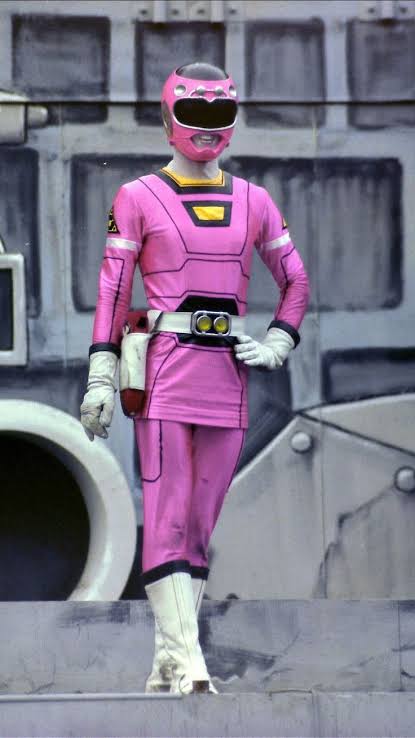
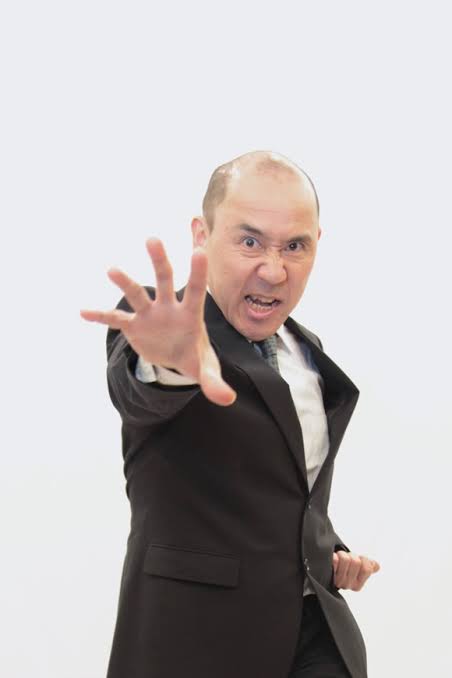
"Mister Pink," the suit actor who performs inside the costume, gave his body to five pink heroines, from Pink Racer (1996) to Bouken Pink (2006). "He has been a partner of mine for many years. Really, he is like a younger brother," said Shocker Ono, who has known him since the backstage at Korakuen, when his guest was still a teenager training at the Japan Action Club. The reply: "Good morning! I'm Motokuni... Motokuni Nakagawa. I'm not used to this, you know."
"Motokuni" is written with difficult kanji that nobody manages to read the first time.
I could not read it myself! It is the "moto" from Ajinomoto (素) with the "shu" from Kyushu (州). It is rare, and there is practically nobody else with the same one. These days I hardly ever get a chance to say "Nakagawa": when I introduce myself I go straight to "I'm Motokuni." Even on the phone, if I say "it's Motokuni," everybody knows who is calling.
And people must have asked me about it fifty thousand times: "I thought that was your surname." It is my real name, the one I have had since kindergarten! If I were inventing a stage name, nobody would pick one that cannot be read and carries that many disadvantages. Some people still write it wrong and put the water radical on the "shu" (洲). Then I get flooded!
The first time Motokuni registered with me was at a charity event for Hiroshi Fujioka, in Yokosuka, in a place with nothing around it. People got hungry and somebody gave the order: "Motokuni, go buy some bread." And Motokuni vanished. Half an hour, an hour... When he came back he got an earful. Instead of apologizing, he launched into it: "This bread here is wonderful bread!", praising with real passion the bread he had bought. "Who is this funny guy?" That was my first impression.
Could be, could be. But the bakery was far away! Up a hill, down a slope, with nothing nearby, so I had to go looking and the time got away from me.
And even then, instead of explaining why you were late, you defended the excellence of the bread.
Niibori's call brought the era of the hero shows at the NS Building, in Shinjuku. During Golden Week, the run of national holidays in early May, it turned into a tradition, and you were one of the central members.
What a fun time that was! We did Dairanger, Kakuranger, Ohranger, even Carranger. Total chaos: a normal show gets days of rehearsal, and there we would gather at eight in the morning for an eleven o'clock performance. The script had been finished the night before and got photocopied right then, and we blocked the fight on the spot: "you come in here," "this line is yours," "hey, the actor says that one, not you!" Then eleven o'clock came around and we still were not ready...
Even with all that freedom, everybody was thinking about delivering something well made, something that would make the children and the fans happy. Nobody cut corners on that.
In the Ohranger show, the fight had been blocked with a sword, and the sword never arrived from the studio. Somebody found a practice sword that looked close enough, and the small daughter of a crew member, an elementary school girl with very clever hands, cut a star out of cardboard and "turned" the weapon into an Ohranger sword. It worked on stage.
Halfway through the show, the villain would shout: "You are weak because your cyborg conversion was left unfinished! Go back and get converted again!". And in the second half we came back in the complete costume.
Today I also want to hear what came before: your childhood and how you got into this world.
I was born in Higashimurayama, in Tokyo, the same town as Ken Shimura! I loved the Drifters, the comedy group he belonged to, so he was a local point of pride, practically an honorary citizen. On school trips, all I had to say was "I'm from Higashimurayama" and everybody would answer, "Ah, Ken Shimura's town!"
I watched a lot of television. Saturday was the perfect day: Gorenger at seven thirty, the Drifters at eight and then G-Men '75 at nine. The next day was Sunday, so I could stay up late without getting scolded. It was pure happiness.
And how did the Japan Action Club come into the story?
The credits of the hero shows always said "Japan Action Club." A child pays no attention to kanji, but katakana sticks in the memory: "what could this club be?" In sixth grade the Igano Kabamaru movie, with a JAC cast, opened on a double bill with a Jackie Chan film. To be honest, I went for Jackie Chan! The JAC movie, though, had faces I recognized, like Kenji Oba, "that one is Gavan!" Everything connected. By my second year of middle school I had made up my mind: "I have to get into the JAC." When I said that in class, the girls would answer, "don't be silly!" And they had a point: I played basketball and had the stamina, but I could not do a backflip, I had never done karate, nothing. The one thing in my favor was that nobody wanted it as badly as I did.
The audition notice said the judging panel would be Sonny Chiba, Hiroyuki Sanada, Etsuko Shihomi and Hikaru Kurosaki. If I went, I would see all four of them! For a middle school kid that alone was worth the trip. The fee was 15,000 yen. It was held at Toshimaen, in the enormous changing room by the pool, across two days, with thousands of candidates from all over Japan: karate black belts, gymnasts, and me, a kid from the basketball club.
The first judge I got was Toshimichi Takahashi, who played the villain generals. I joined his line on purpose, and he could not have been kinder. Then came Junichi Haruta, Goggle Black, who was a great deal drier: "what can you do?" I was so starstruck that I could not even answer. Satoshi Kurihara asked me about bullying in schools. What? Were we not supposed to sing? And last of all came Sonny Chiba himself, perfectly serious: "Are you confident you can keep this up alongside school?" "Y-yes, I am!" By then I was already thinking, "there is no way I am getting in; just having seen all of them, the 15,000 yen was worth it as a ticket."
And then the acceptance letter arrived.
It did! To this day I have no idea what they saw in me. I went to the audition with two or three friends, all of us passed, and every one of them dropped out. "Then I'll drop out too," I thought.
It was my mother who said: "if everybody is going to quit, quitting along with them is a waste. The very fact that the others are dropping out is the reason you should go."
Nakagawa, on the decision to join the seventeenth class at the JACAt the training school I was the youngest, the "hey, middle school kid!" After class I would go to the headquarters in Shinjuku and train until nine or ten at night. It was hard going. Then they announced the gasshuku, the live-in training camp, up in Hakone: "anyone who wants to can take part." What do you mean, it is not mandatory? I had seen the television specials about the JAC camps, everybody running in matching tracksuits in the middle of nowhere. That was exactly what I had signed up for. I went.
And it was not so terrible: I came out of the basketball routine, my body held up, while the grown men were gasping for air. During the breaks people bought soda and Pocari Sweat, the sports drink, from the vending machine! I came from the "no water during practice" generation, and here were adults drinking Pocari whenever they felt like it. "The adult world has choices," I thought. "This is much better than the school club."
That was where the senior members started taking me in, and where I learned the backflip, the somersault and the trampoline. When you find the right people, they teach you: "try it again, go on." And all of a sudden you can do it. Out of the seventeenth class, which had thousands of applicants, the ones still working today are me, Nagase, Naoko Kamio and Keiko Hashimoto. That is all of us. I kept telling myself I would quit "tomorrow," and twenty years have gone by.
Once the training was over, it was time for the sets. Do you remember the first one?
I remember it far too well. I barely slept from nerves, left extremely early, and then got lost between Oizumi-gakuen station and the Toei studio. I went in circles for an hour! I asked for directions at the police box, went up the wrong staircase and ended up in the camera crew's room, until a senior member finally shouted, "Hey, it's over here! Run, the bus is about to leave!" And the first location turned out to be Yorii, the mecca of explosions, that quarry in Chichibu where every series has filmed. When I saw that wall of rock going all the way around me, the one I knew from television, I was moved. A rookie has no time to be moved, though!
And your first real part came in Kido Keiji Jiban.
In the first episode! I was one of the foot soldiers, and it was the first time I saw myself on screen. I watched it a thousand times: "that one rolling on the ground is me!" Nobody else can tell, because everyone is wearing the same mask. "That third one who just got hit is me!" The joy of having appeared at all was enormous.
The story that stuck to me forever is the bento on Kazuo Niibori's head. I have no idea what came over me: I set my boxed lunch on the luggage rack of the location bus. Niibori was sitting underneath it. The bus lurched on a quarry road and the whole bento came down on his head. It went so far past a scolding that it turned into something else: Niibori, with cabbage on his shoulder, made the joke, "why you little bastard!", and the senior members were so stunned that it ended in laughter. It is a miracle I survived.
Then there was Michihiro Takeda's order: I wrote down "yakisoba," the food arrived, and Takeda had nothing in his hands. "You idiot! I said NIKUSOBA!" I had never heard of nikusoba, the noodles with meat! The result: for about ten years he told everyone, "don't let that one take your order, and if you send him out for bread, he never comes back!"
The bread story is the one I told him!
The other people who left me stiff with nerves were the Hachisuka brothers, identical twins. A rookie scared out of his wits does not look a senior in the face, so I could not tell which one was which! In the suits it was easy, because the camera operator called everybody by color. Out of the suits, though, when they sent me off with "take this over to Yuichi," I would go praying. "Thank you." Phew, it was him! Even now I get tense around them. Having people like that around is a good thing, because it keeps your back straight.
On set, Yamaoka was the person I had spoken to the least in my whole life. I would greet him and he would not even look at me. Then one day, out of nowhere: "I'm going out drinking tonight; are you coming?" I went without understanding a thing, he paid for everything, and at the end: "see you." That was the whole of it! The senior members kept saying "Yamaoka is a hard man," and there I was thinking: he buys dinner, he buys the drinks, he is a wonderful guy! On those nights he talked about the work: "we exist to give children something to dream about."
A good part of the visual grammar of Super Sentai was invented by Yamaoka: the somersault in front of the explosion, the five of them dropping out of the sky side by side...
And the colored explosions! Back then all we had was the cement explosion and the gasoline fireball. Yamaoka was the one who got the idea into his head: "I want color in the explosion!" Ordinary powder is heavy and will not fly, so they tested a thousand things with the effects crew until they got there. I was on set when the first colored explosions went up. I am an eyewitness to history! And he never goes around saying "I invented that."
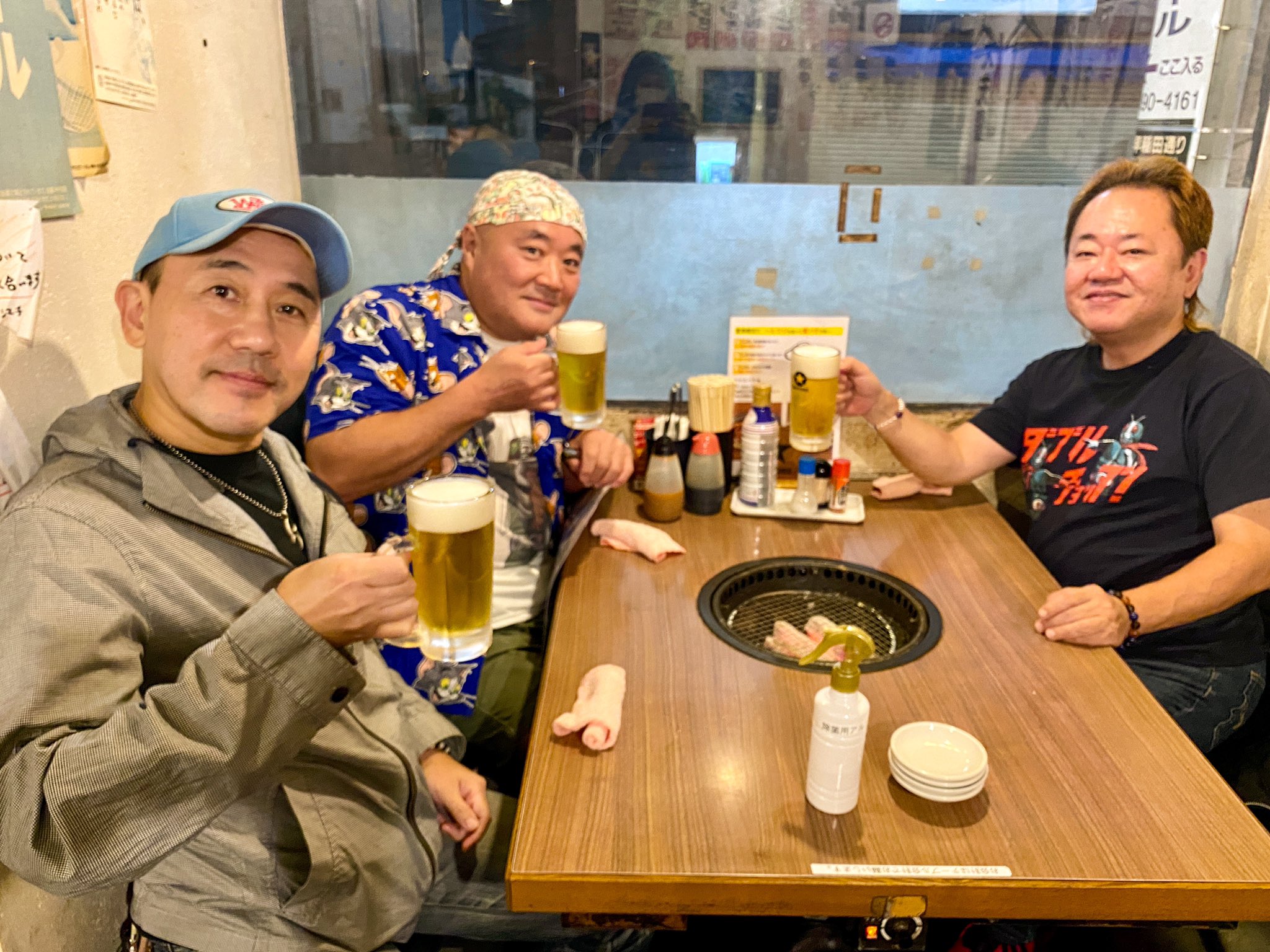
When Blue SWAT ended, Yamaoka told me, "you're coming with me to Sentai." And he handed me Acha, the butler of the Baranoia empire, in Ohranger. Acha loved to eat and drink, and I kept putting on weight. I figured, "that's fine, I'm playing a comic villain anyway; being a hero is not for me."
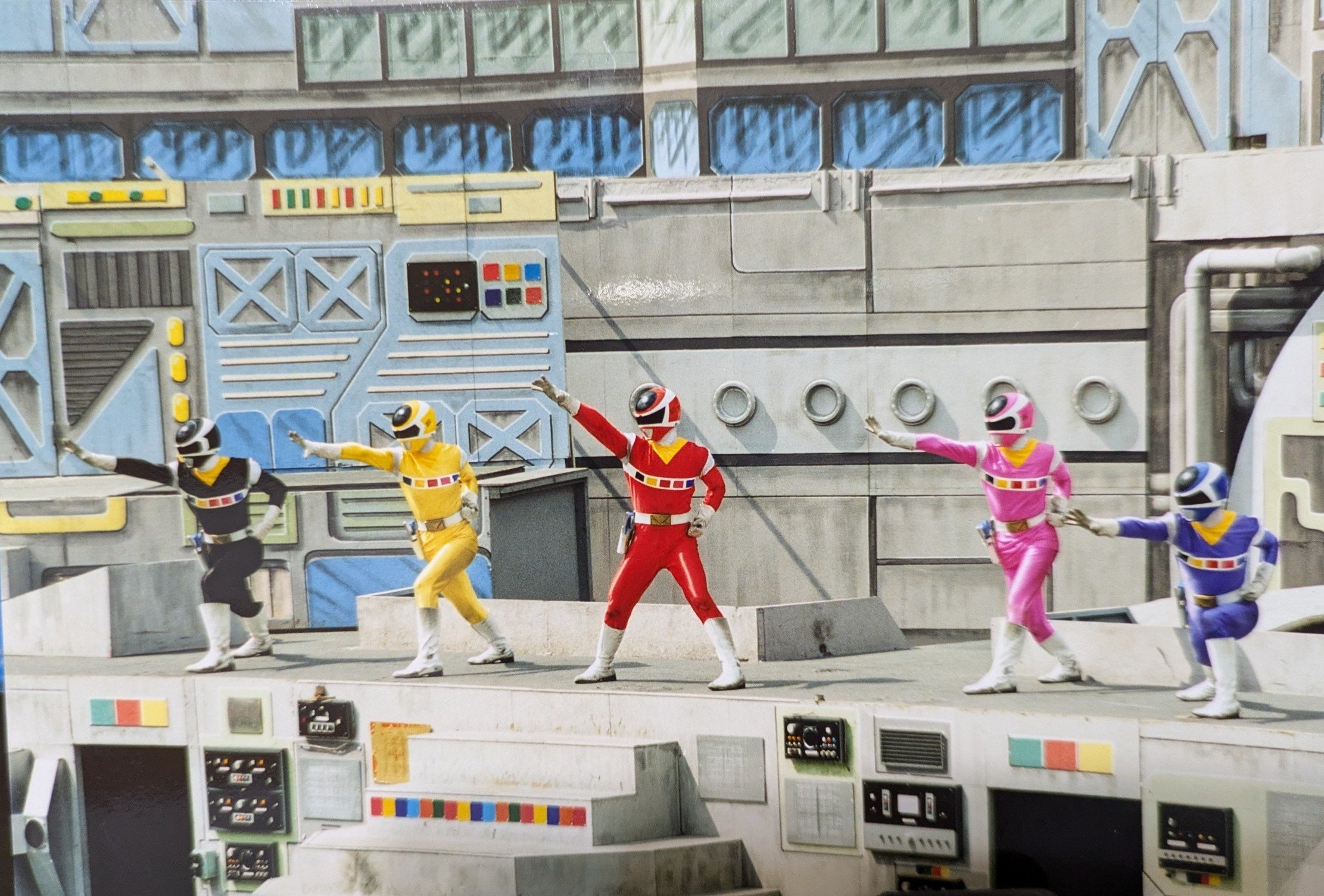
Then around October he called the people who would be doing Carranger out for coffee and started handing out parts: "Yokoyama, you're Red. Takeuchi, Blue. Yellow goes to Obayashi... and Pink goes to this guy here." I almost spat out my coffee! And the whole table stood up: "WHAT?! MOTOKUNI?!" The thing is, I was FAT! A year of Acha and izakaya! And Yamaoka, perfectly calm: "every once in a while a chubby Pink is valid too." What an irresponsible thing to say! "You can sort it out afterward with a diet."
And the diet?
Takeuchi is a monk, an ascetic who trains and runs every single day of his life, and he agreed to take me along: "we start tomorrow." The trouble is that he is far too fast, the man is not human! "Go on ahead," I would say, and he would take off, then run back to me, keep me company for a while, take off again and come back again. He ran twice the distance so he would not leave me behind. That made me very happy.
One day I blew up at Yamaoka: "I am NOT drinking! If you want to take me off the part, take me off!" All he said was, "okay, understood." He never pushed. I would work out in the next room while the rest of them had their party, and he would only say, "when you think you've had enough, come on over." When the diet worked, he went around telling everyone, "this young man worked harder than almost anybody." That made all of it worth it. From then on it was "Pink, Pink, Pink." And I owe every bit of it to Yamaoka. He could see an aptitude inside people that we did not know we had.
"They took me out for sushi once and all I ate was gari, the pickled ginger. And Yamaoka said to the sushi chef: this guy only eats garlic! Convinced he had made the joke of the century."
Nakagawa, on the Pink Racer diet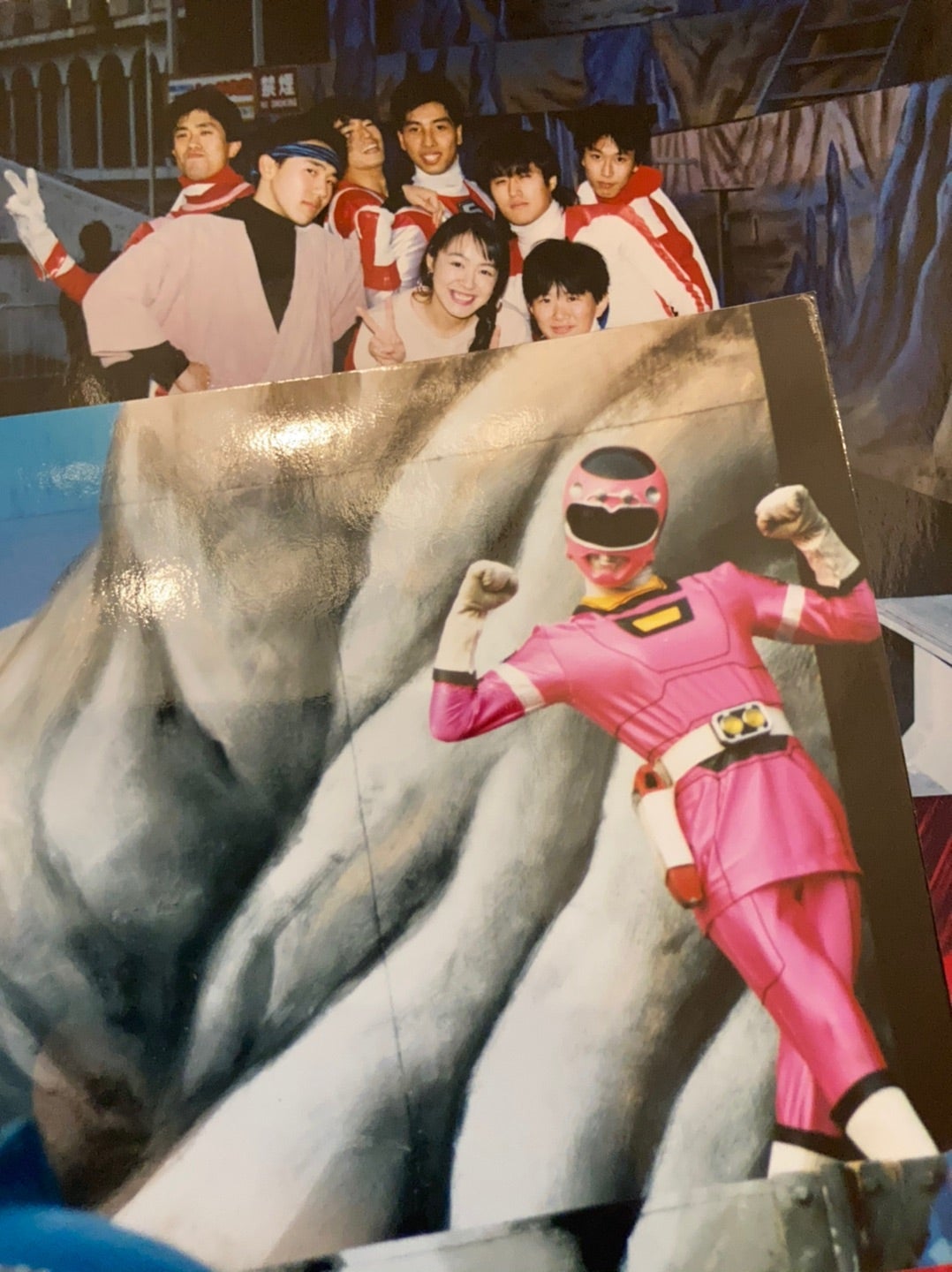
You play the female role so naturally! Did you ever train as an onnagata, the way men who play women's parts do in kabuki? Do feminine movements slip out in daily life? And do you watch your own performances?
Onnagata training, none at all! In those early days the absolute priority was losing weight. I ran for more than an hour a day thinking, "what if this is a prank and tomorrow they take it back." Studying how to play a woman came later. And I had the best possible models right in front of me: Hachisuka and Takeda. All I had to do was watch the two of them.
Feminine movements in everyday life? I don't think so! There is one detail, though: the suit helps. Wearing the pink one, with that silhouette, the body simply refuses to hold a sloppy pose. You look down and think, "that's wrong, isn't it?" The correction does not come from the head. It comes from the body.
And I need to watch myself as soon as possible, always! Back then we shot on film, so the fastest way was to run to the dubbing session, the afureco, and check it as we went: "that came out badly, I'll cut it in Wednesday's shoot"; "that worked, keep it and do more of it." I refined it week by week.
And they say the actresses themselves learned from you people.
That does happen! An actress watches her own transformed character and thinks, "I need to be more graceful, like him." In my generation the standard was Takeda: Denzi Pink, Pink Five, you take your hat off. And Hachisuka, well: his White Swan in Jetman, dodging the attacks with that ladylike "kyaa, stop it, stop it!" We would watch from the set thinking, "that is absurdly good." Even today, watching Hachisuka work, all I can think is, "far too strong."
"Wearing the pink suit, the body refuses to hold a sloppy pose. The correction does not come from the head. It comes from the body."
Nakagawa, on the suit that teachesThese days the fans already say "Pink is Motokuni." And going forward, what is it that you want?
It has been about twenty-two years on the road, and I am coming up on forty. This year I want to widen my field of vision. I discovered the Act League, improvised theater in a competition format, where the audience calls out the themes on the spot and the teams build a whole play right there, on impulse. I have been on that stage, and it added a great deal. I spent two straight years playing kaijin, a different monster every week, on Go-onger and Shinkenger; if you repeat the formula, the director calls you on it: "do something different." Having a repertoire is essential, and a repertoire without readiness is no use to anyone. Improvisation trains exactly that: pulling something out of nothing the second they ask for it.
I want to test every possibility: the suit actor, and the actor Motokuni Nakagawa as well.
To finish, a message for the people listening.
I have talked a lot of nonsense today, but the life I have lived so far has been enormous fun. And life is still long: I will work hard to shine more and more from here on. Please keep cheering for me! Thank you very much!
This conversation is one of the sources for our career profile of Nakagawa: the five pink heroines, the diet that produced Pink Racer, Kiryu and Monster X at Toho, the Gabutyra of Kyoryuger and the archive he put together himself on his blog and on X, all laid out in order, with photographs and a timeline.
Profile · Suit Actors section · five heroines in ten years
Read the profile →