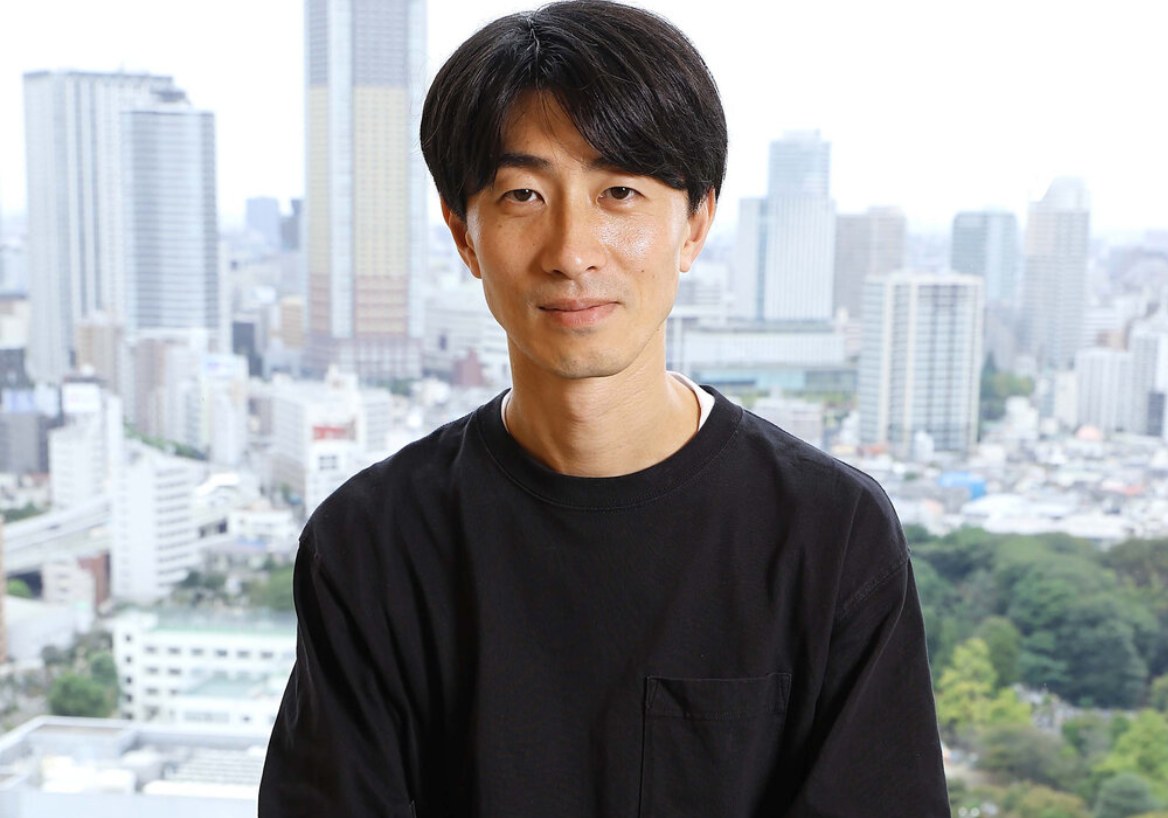
Toei producer Yoshito Kuji spoke with the TELEMAGA.net team, from the website of publisher Kodansha, about the response to Kakusei Hunter Omegahorn, the second series in PROJECT R.E.D. The conversation was recorded on October 13, 2026, and published on the 24th as the first of two parts. Kyoudai Express has translated this first part in full.
Kuji is one of the Toei producers in charge of PROJECT R.E.D., the brand the company launched in 2026 to fill the Sunday morning slot on TV Asahi that had belonged to Super Sentai. He produced Chou Uchuu Keiji Gavan Infinity, the brand's first title, and holds the same role on Kakusei Hunter Omegahorn. The series premiered on July 26 at 9:30 a.m., written by Atsuhiro Tomioka. In Brazil it streams on the same day as Japan on TokuSato, Sato Company's YouTube channel, with Portuguese subtitles.
In the interview, Kuji says he expected the audience to warm up more slowly and that social media comments reach the crew and the actors while they are shooting. He describes a cast that competes for space on screen, to the point that the bus taking the actors to locations has earned a reputation for being loud. Kuji ties that behavior to the show's central theme, the ego, which he and the writer decided to treat as a positive force.
The producer also talks about the auditions. According to him, Shogo Tazuru and Eito Konishi presented themselves as Ibaru and Zetsuenkaku while the production was still trying out different versions of those characters. The actors playing Eil and Al arrived on set with the rapport of twins, even though they never auditioned together. The lead, Sei Narahara, started out with practically no experience. Kohei Nagata, who led the cast of Gavan Infinity, returned in Omegahorn as Reiji in a less central position and took the younger actors under his wing.
The conversation ends on the idea of leadership that Kuji uses to explain the series, which he calls "captaincy." He names four favorite characters, Captain Omegahorn, Enkaku, Ibaru and Reiji, and says each one leads in a different way. That intention, the producer says, is why the word captain made it into the hero's name.
01The response
The response to "Kakusei Hunter Omegahorn" has been amazing! On social media, the praise grows with every episode.
I'm very grateful that so many people are talking about the show. Honestly, I thought it would take a little longer.
As a producer, how are you taking in all this enthusiasm?
First of all, as we launched this new series called "PROJECT R.E.D.," we realized how hugely important the fans' goodwill and enthusiasm are, the fans who think, "Let's enjoy something new!" and "We want to help get this going!"
On top of that, now that we've finally reached the second production, I have the feeling the fans are starting to get it: "Oh, so this is what they wanted to do," or "So this is what makes this show and this series appealing." We had already explained that "PROJECT R.E.D. is a project with this concept," but there are many things we can only get across once people actually watch the footage.
Third, I feel we're managing to present the appeal of the characters we built together with the actors in a way that makes viewers want to talk to other people about those characters and their stories.
Viewers are also debating the details of the show and the characters, aren't they?
Exactly! Those spontaneous reactions from the fans, which are livening everything up, reach the crew and the actors directly on set. That keeps raising everyone's motivation: "Things are going really well right now, aren't they?" and "Let's show them something even more incredible!" A very positive cycle is taking shape. After all, getting those spontaneous reactions is a joy.
02On set
Do you have any memorable stories about the atmosphere behind the scenes?
We have a "problem." They get along too well! (laughs)
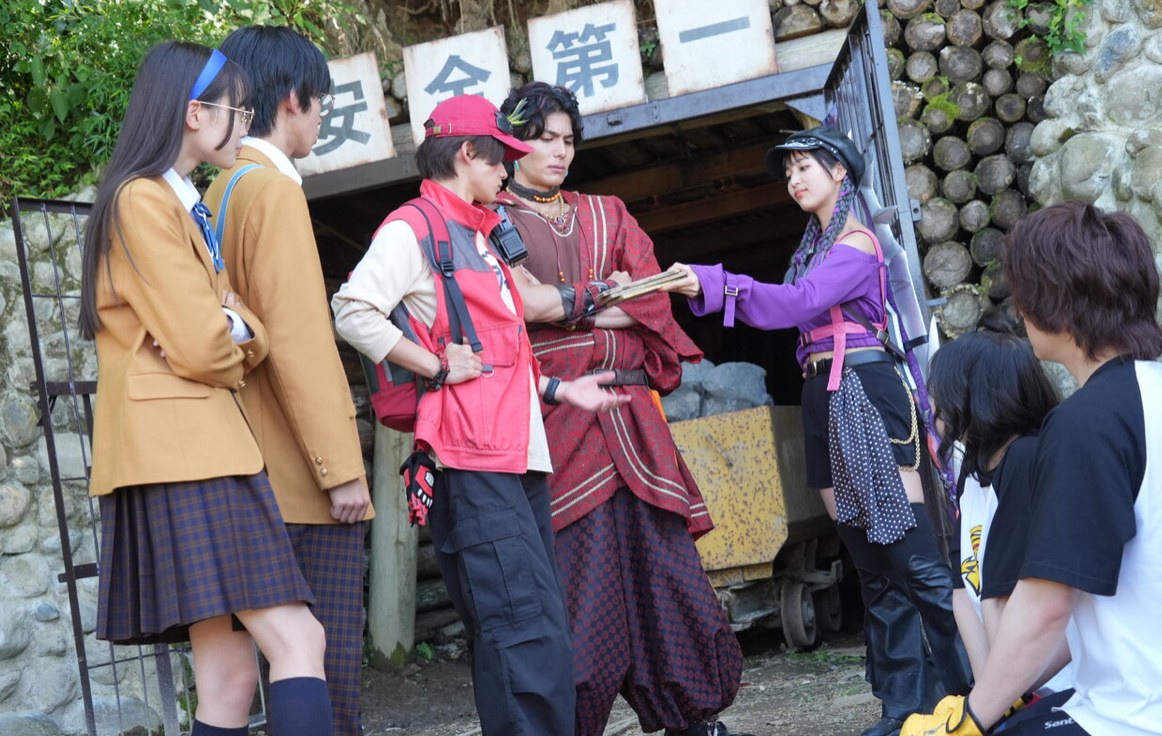
Some people in the cast have a sort of "ego that wants to get everyone fired up." (laughs) At one point we actually had the issue that "the bus taking the cast to locations is way too loud!" (laughs) There's a reason for it, though. The regular cast members make a point of making sure the guest actors don't feel left out.
At the same time, when an actor is about to do a serious scene, the older ones step in and naturally make the atmosphere more focused. They're all professionals, but deep down there's a very strong desire to make sure the people around them are having a good time.
It sounds like an environment full of energy, just like the show itself.
When I drop by a location now and then, the actors come up to me one by one and start quietly showing off their own "egos": "I want to do more action scenes!" (laughs)
Even with filming already underway, they keep showing what they can bring: "I can play this kind of scene too. Could you take a look?" They think about how to show their potential within the limited screen time they have. Even with scripts that haven't come in yet, they show an eagerness to practically seize their moment in the spotlight… Well, that's an actor's mentality.
Maybe it's because we cast these actors with the show's theme, the "ego," in mind, but when I go to the set I think, "Wow, everyone here has such a strong 'ego'!" (laughs)
None of it is selfish, though. There's a kind of "healthy clash of egos" in which they push one another to grow. I think we have a great working environment.
Even watching the group conversations, what really caught my attention was how the other actors support the newcomer Narahara, who plays Captain Omegahorn / Shout of the Flames, with warmth and professionalism at the same time.
Yes. Each of them knows very well where to stand and how to strike the right balance with the others. It's a balance that keeps shifting. They adjust their positions to fit the situation and keep things in proportion while always on the move.
In the show itself, each hunter acts in pursuit of his own goals, so the relationship each one has with his ego changes from episode to episode too. The actors pick up on those changes with real sensitivity and stay attentive to the people around them as well as to themselves.
And someone whose presence makes a big difference is Kohei Nagata, who plays Reiji the Unshakable Defense. On the previous production, "Chou Uchuu Keiji Gavan Infinity," he spent six months in what you could call the role of cast leader.
This time he has taken a slightly more backseat position. He doesn't overstep, but he keeps a very well-judged attitude of "If anything comes up, you can come talk to me anytime."
He has become an important person to turn to, for Narahara and also for Kunigami, who plays Enkaku, King of the Horned Beasts, and the others. Including the adult actors of the Ibaru Alliance, the work on set is running with a truly wonderful balance.
03The auditions
This production stands out for the cast's intense performances. What did you prioritize in the auditions?
At the auditions we choose people who match our image of the characters, in conversation with the director. At that point, though, the information about the characters only exists on paper. The images that the writer, Atsuhiro Tomioka, the director and the producer have in mind also differ slightly from one another. Sometimes we start meeting candidates while those ideas are still somewhat undefined.
In that situation, I think the people who end up being chosen are the ones with the strength to pull the character toward themselves, as if to say, "I'm the right person for this character!" Every actor we cast told us they felt very strongly, "I'm the one who has to play this role, no matter what."
It was that powerful "ego," meaning the confidence and drive to think, "If I pour everything I've built up so far into this role, I'm sure I can make it captivating," that turned characters who existed only as written information into living, breathing images. I think viewers are picking up on that too.
Was there an actor who fit the role especially well or who surprised you?
In terms of a perfect fit, I'd say the Ibaru Alliance cast. At first we were exploring a wide range of possibilities for the Ibaru Alliance, including their ages. We considered, for example, a version where Zetsuenkaku was a bit taller, or one where Ibaru was younger yet still full of authority. It was in that context that Shogo Tazuru, who plays Ibaru of Absolute Violence, and Eito Konishi, who plays Zetsuenkaku, presented themselves as if to say, "I am Ibaru!" and "I am Zetsuenkaku!" They fit the parts very satisfyingly.
The same happened with Eil and Al. Although the two didn't audition together as a pair, in the time before filming began they prepared their performances so convincingly that they seemed like real twins. I was surprised and thought, "How did they manage to get there?!"
As for someone who surprised me, I'd single out Narahara, the lead.
He started with practically no experience, but the range of responses he comes up with when we say "Try it this way" is impressive. You give him a note, and he truly takes it in. His talent and effort never stopped surprising me.
When we'd say, "Now let's try it another way," he'd answer, "Whaaat?!", but he would still deliver a performance beyond what we'd imagined. Between the first and second auditions alone he had visibly grown, and the director got excited too. I thought he had that potential to be a real performer, you know? That he truly had talent.
04Narahara
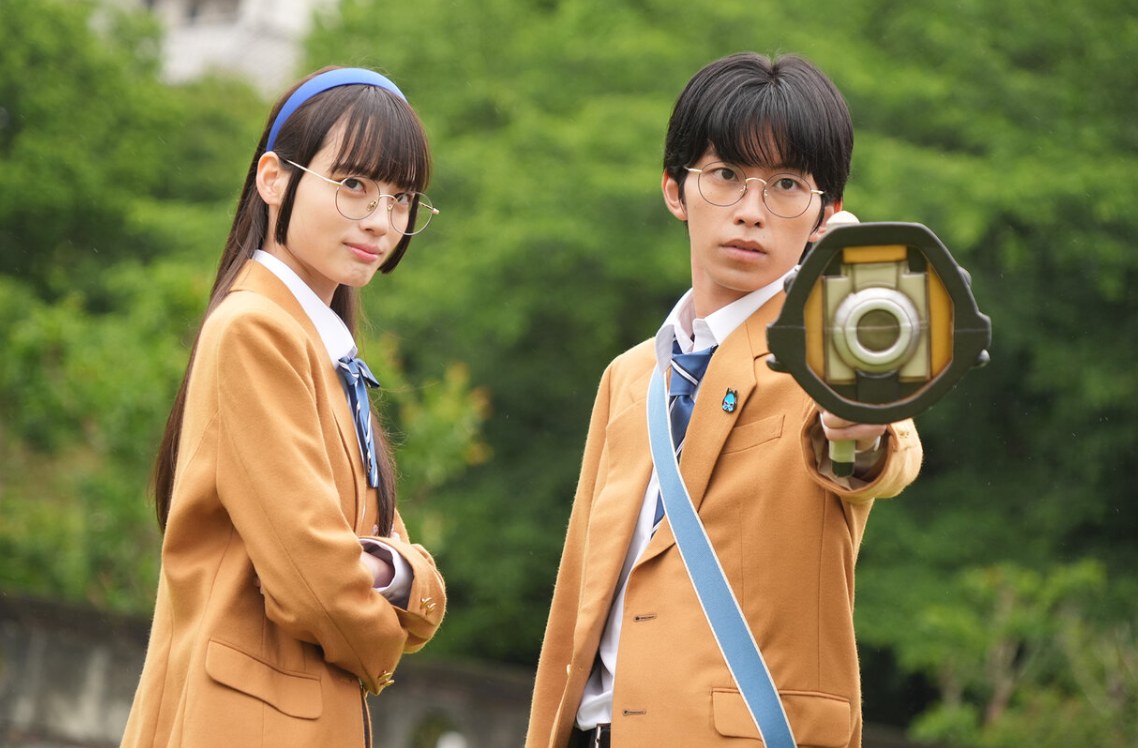
With each episode, even the way he carries the "Egorgear" gets more polished. He's looking really great!
Exactly! That's precisely it. Our intention was to make Omegahorn a hero who grows and awakens his potential.
Narahara himself also hates to lose. He's the type who thinks afterward, "At that moment there was an angle I didn't see. Oh, man! How frustrating!"
He soaks up everything on set and puts acting into even a movement of his fingertips or a look in his eyes. That speed of growth and that "I don't want to lose to anyone" attitude match the kind of hero Shout represents. It's a real pleasure to watch.
With each episode, Shout grows more ambitious, in a good way, saying, "I want to know everything, I want to win everything." The way he turns his passion into energy feels very current and captivating.
I'm glad you say that. Shout is a character who has a strong influence on the people around him, and at the same time he's able to take a deep interest in other people's points of view and ways of living.
The day after we shot a certain scene in episodes 7 and 8, where Shout suffers a defeat, I went to the set, and Tazuru, who plays Ibaru, came up to me all excited: "Listen, what Narahara and Kunigami did yesterday turned out really good. You've got to see it right away! It's just too good!"
And it wasn't only the actors who said so. The crew spoke up as well.
Tazuru and the others, who are veterans in terms of acting experience, celebrate the newcomers' growth, and at the same time they feel a competitive spirit stirring in them that verges on a certain restlessness.
Shout is very curious and takes an interest in other people's perspectives. When he raises his own voice, the people around him feel freer to raise theirs. Narahara is embodying exactly that.
I'd like viewers to keep an eye on that heroic quality in the story to come.
05The ego
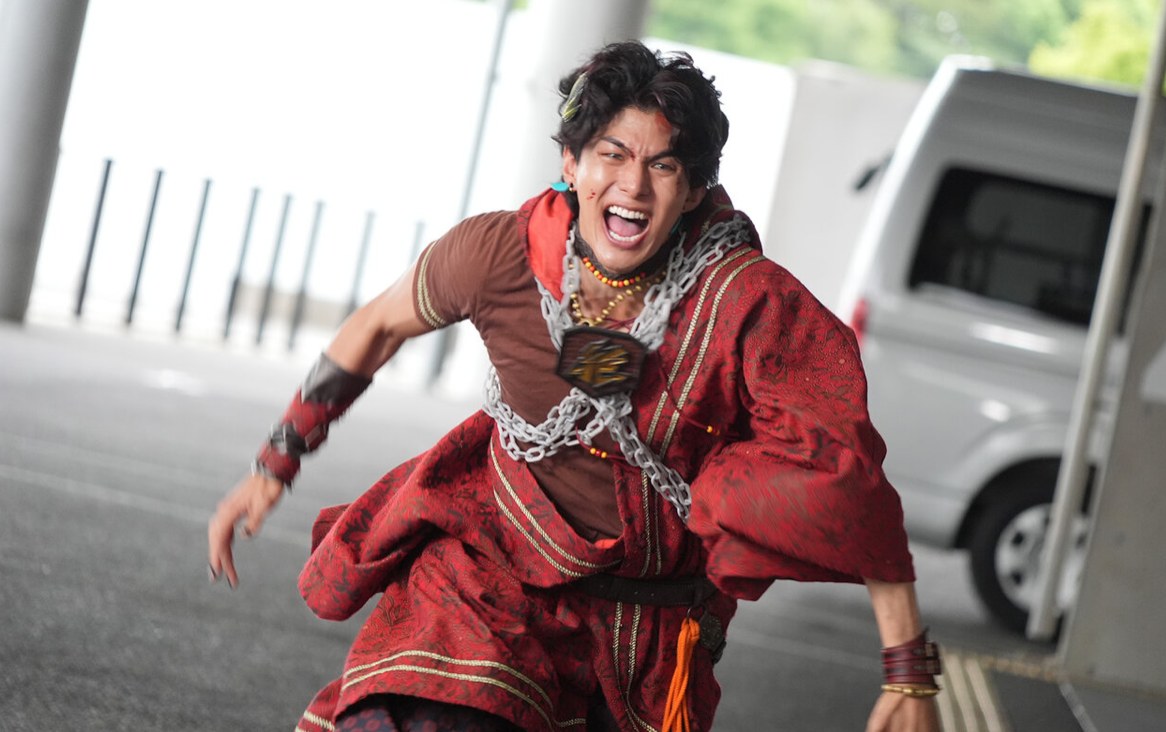
Shout expresses his "ego" and "raises his voice" in a positive way. In the show, the word "ego" is also portrayed as a very constructive energy.
Tomioka, the writer, and I had already decided, "This time, let's treat the ego as something positive."
Shout values his own ego and makes his voice heard. At the same time, he's a character who can listen to other people's points of view and egos.
At first glance that may seem contradictory, but we wanted to present a new image of a hero, someone with humanity who pursues his ideals.
06Captaincy
By the way, Mr. Kuji, if you had to pick your favorite character, who would it be…?
Given my position, that's a very hard question! (laughs) Basically, I put at least one element I personally think is cool into every character. So, all of them! I'm a fan of the whole group!
But if I really had to single some out, it would be these four, Captain Omegahorn, Enkaku, Ibaru and Reiji. Each of them has a completely different way of exercising leadership, what we call "captaincy."
"Captaincy"… That's the first time I've heard that word.
"Captaincy" is the ability to lead a team or a group, something like the way a leader or someone who guides others carries themselves. I'd like to offer a few clues about what kind of leadership can carry us through these times.
Each of the four has his own form of leadership. They're all valid, and there's no need to boil them down to a single way of leading. Those four forms of leadership are one of the central points of this show. I wanted them to be cool, and also something that inspires admiration and makes people want to follow their example.
While Tomioka and I were developing the story around the "ego" and the "voice," I suggested to him that we talk about adding this element of leadership.
If the backbone of the story is the existence of a king from an extremely ancient era, a ruler of the present day and someone trying to transform this era… I thought that's where we could find a source of interest for the plot and of appeal for the characters.
That's also why we put "Captain" in the hero's name. I'll be happy if you can pick up on that.