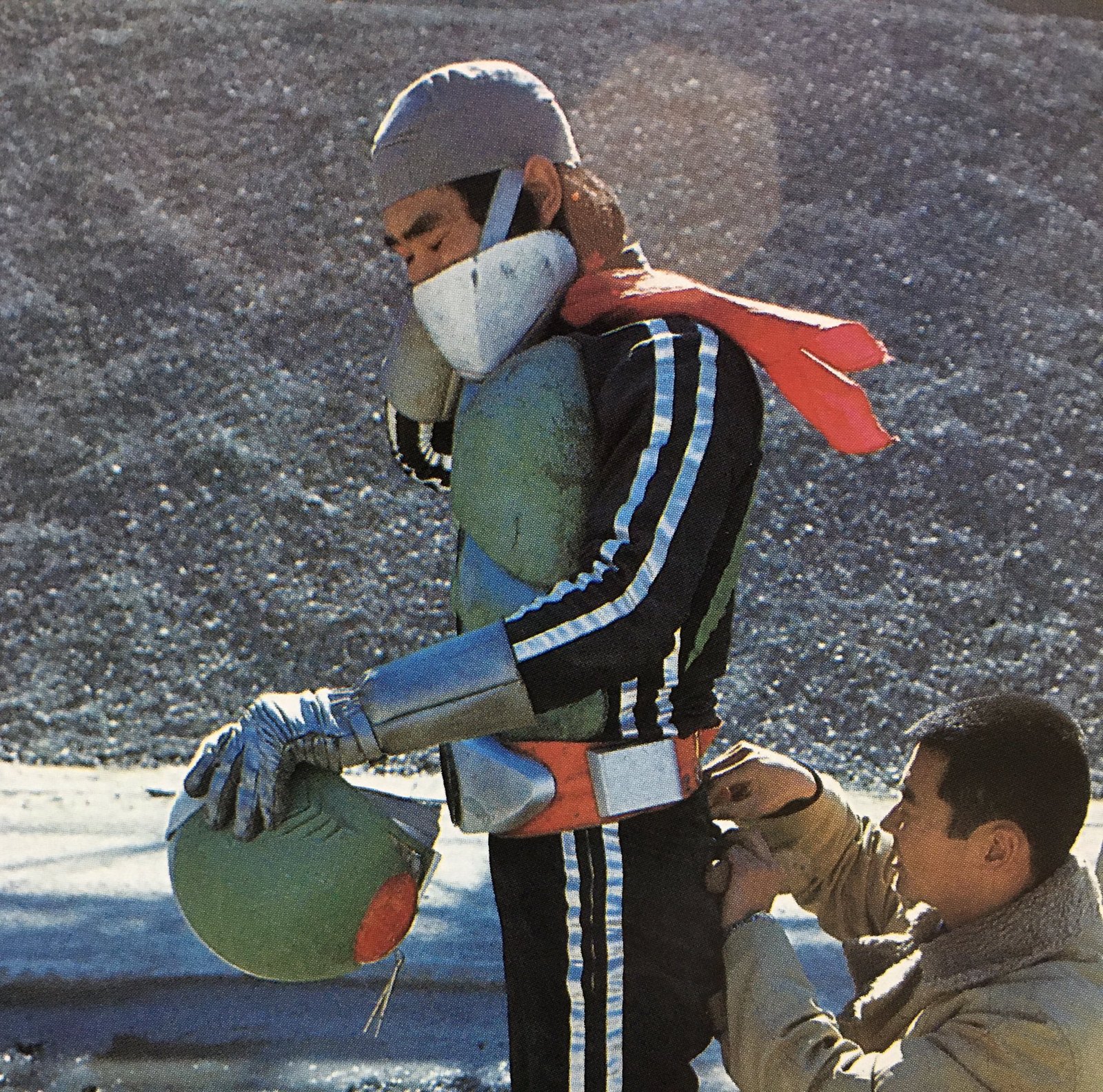
In episode 60 of Kamen Rider, Owl Man takes the Rider Kick, rolls down a slope about 10 meters long and explodes. Inside the suit was Hiroshi Namekawa of the Ohno Kenyukai, who said that the wings on his back cushioned the fall and spared him any injury. When he came to a stop, he lay for a moment unable to breathe or move.
Falling was part of the daily work of the Ohno Kenyukai, an action team founded in 1964 by the fight choreographer Kotaro Ohno. In Kamen Rider, the series that premiered in April 1971, its members designed the fights, shaped the transformation pose and the Rider Kick, and wore the suits of the hero, the monsters and the Shocker soldiers, a job that would later be called suit acting.
The Japan Action Club, or JAC, created by the actor Shinichi Chiba, supplied performers to the same production. The fights were led by Kazutoshi Takahashi, co-founder of the Ohno Kenyukai, whom the team called Kashira, the chief. At a talk show in July 2021 at the Toei Marunouchi cinema in Tokyo, the actor Hiroshi Fujioka, the original Rider, said that the series would not have existed without the group.
The Years of the Sword
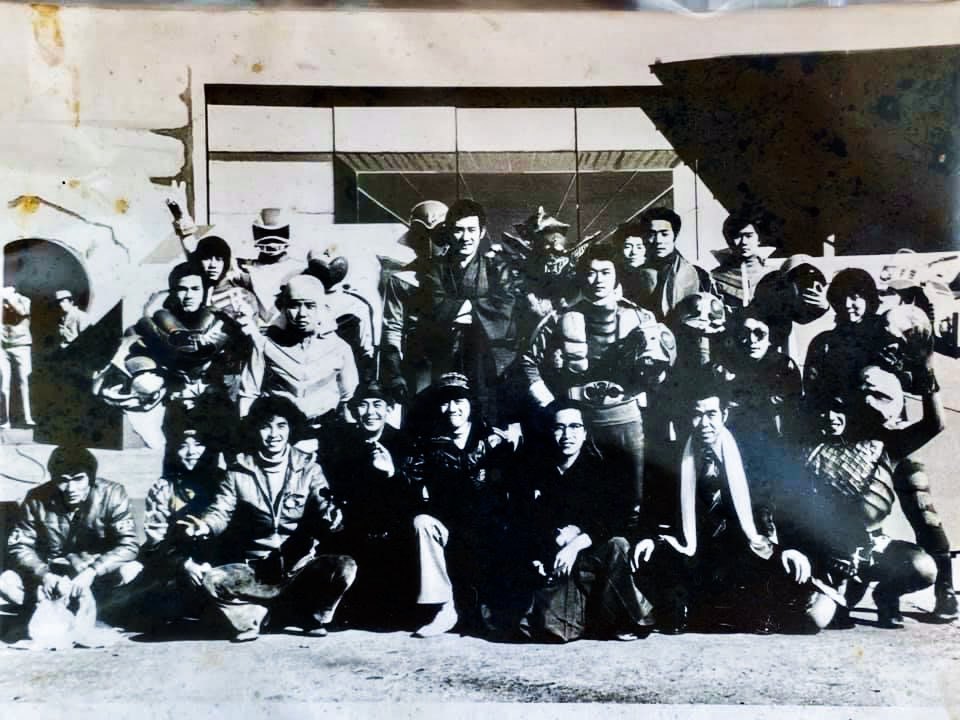
The origin of this work lies with Kotaro Ohno, who was born in Suginami, Tokyo, on June 6, 1933, passed through the Gekidan Himawari theater company and learned stage combat from Tatsuo Ouchi while still in high school. In 1964 he left the Ouchi Kenyukai, where the youngest members were hardly given any work, and opened his own team, with a dojo and a two-story office on the grounds of his house.
The team came from the sword fighting of period dramas, and its members’ movements kept that root. Takahashi, born in Asakusa in 1943, joined around the time of the founding and took over the choreography of the fights. Masaru Okada, from Saitama, joined in 1967 after turning down the invitation for a year. In January 2025, at an event with former members in Shibuya, he explained that he had refused because he wanted to be a star.
The team had already staged the combat of Nihon Kengekiden in 1968 and the contemporary action of Judo Itchokusen, a TBS series that aired from 1969, with Takahashi in charge of the action scenes. In that series Takeshi Sasaki, the future Rider No. 2, played Ukyo Kazamatsuri and spent a year working with the team. When Kamen Rider premiered in 1971, Takahashi was still busy with Judo Itchokusen, and Ohno personally choreographed the first fights.
Fujioka’s Accident
It was in that first year of filming that Hiroshi Fujioka, who played the protagonist Takeshi Hongo, suffered a serious injury, and the production separated the dramatic acting from the action. The actor appeared without the mask, and a member of the Ohno Kenyukai took over the suit after the transformation. Okada, who had played the monster Spider Man in the first episode, began wearing the Rider alongside Fumiya Nakamura. Asked how he took the assignment, he answered with a laugh: “The legs got shorter, didn’t they?”, in comparison with Fujioka’s time.
Nakamura, the main performer of Rider No. 2 inside the suit, came from modern theater, and Takahashi had been a child actor at Himawari. Tetsuya Nakayashiki and others rehearsed acting together with the fights, and several of them formed a troupe inside the team, the Gekidan Sei, with performances of its own.
Fujioka said he needed all his attention to act, and the low-visibility mask limited even an action actor like him. With two professionals in the role, the schedule became more flexible and the production began to write bolder scenes.
Sasaki even wore the suit behind the producer’s back, despite the order that the protagonist must not get hurt. He said that the hardest part began after the shout of “Henshin!” and that he wanted to go through it to feel the gratitude he owed the men of the Ohno Kenyukai. Watching the footage again with Okada, the two argued over who appeared in a scene: “That’s me”; “No, it’s me!”.
The Transformation Pose
With the split, the transformation became the moment when the drama actor handed over to the team member, and the scene called for a gesture the audience would recognize. Takahashi spent hours in front of the mirror looking for an elegant transformation pose and arrived at it by combining sword-fight strikes with traditional Japanese dance. Hayato Ichimonji, Rider No. 2, shouted “Henshin!”, opened both arms to the right and swept them in a semicircle until they stopped. According to Mynavi News, the broadcaster MBS wanted a clearer transformation, and a judo stance served as the reference.
Okada said in January 2025 that he showed the Kashira postures from Judo Itchokusen and that he chose among five or ten options. Asked how much of the pose was his own, he answered that all of it belonged to the boss and that his own part did not matter.
“This is exactly like a period drama!”
Producer Hirayama, on the poseThe pose served the same function as the seal shown in Mito Komon and the kabuki presentation gesture known as mie. In Kamen Rider V3, Takahashi drew inspiration from the yokozuna’s entrance into the sumo ring. The actor Hiroshi Miyauchi told Cinema Today in November 2025 that the pause in the middle of the gesture was his idea, so that he would stay on screen a second longer.
Nobuhiro Yamaguchi, in a chapter published by KADOKAWA in 2012, points to Kamen Rider Stronger, from 1975, as probably the first hero series to adopt the tsurane, the kabuki self-introduction speech.
“The sky calls, the earth calls, the people call! They call on me to defeat evil!”
Tsurane from Kamen Rider Stronger, 1975Super Sentai inherited that kind of staging in the same year, and the introduction to the camera became part of the genre.
The Birth of the Rider Kick
After the transformation came the finishing blow, which the script of the first episode described like this:
“Kamen Rider leaps high, draws a figure eight in the air to gather the maximum energy and comes down like a ball of fire”
Script of the first episode of Kamen Rider, 1971The Ohno Kenyukai turned the passage into an aerial kick launched from a trampoline, and Okada supposes the idea came from the Kashira, who imagined a strike delivered in the air because the Rider was a grasshopper.
The choreographer Masatsugu Takase observed in a 2013 book that the Rider was already using the kick as a finishing move two years before Bruce Lee, with Enter the Dragon, from 1973, popularized kick fighting. A kick delivered by a person also cost less than the rays of Ultraman, which required image compositing.
After Bruce Lee’s success, Takahashi wanted to update the style of the Rider’s fights. Until then the torso stayed almost parallel to the floor in ordinary kicks, and the star kicked with an upright torso, short and fast. The members began raising the leg while holding the window frames of the dojo, and some ended up with severe lower back pain.
A child died after jumping from a high place while trying to imitate the Rider, and the case was treated as a social problem. In episode 68, Fujioka, as Hongo, asked children not to imitate the scenes, in an appeal addressed to the audience of the series.
The Soldiers of Shocker
The finishing blow was dealt to the monster, but the fight began with the Shocker soldiers, who in the first episodes of Kamen Rider wore face paint and berets. The makeup took time, and the face had to be hidden so that a small number of actors could appear many times, which led to the all-black uniform that became established in the series. Attacking the Rider from every side, they prepared the audience for the duel with the monster.
A precursor appears in Magma Taishi, in the Hitomodoki, creatures dressed in black from head to toe who took on human forms. In Kamen Rider, the soldiers’ voices were added after filming and performed by the team itself. Shinichi Wakasa, who joined the group out of admiration for the series’ action scenes, said that almost all the soldiers’ voices in the 1970s came from the Ohno Kenyukai. According to him, the voice actor Nobuyuki Ishizuka also performed the voices of the Shocker Riders.
The Actor Behind the Mask
Voice mattered too for those acting inside the suits, and the members memorized their lines even with their faces covered by the mask. When he stumbled over the words, Nakayashiki asked to stop filming and repeat the take, at a time when film stock was expensive and some protested that nobody would see his mouth.
In episode 9 of Kamen Rider, the Rider played by Nakamura lays flowers on a dog’s grave, back turned to the camera, in a scene without dialogue. In episode 45, the same Rider defeats Namekujira, the slug monster played by Okada, in front of real gas tanks and leaves the frame without answering the children’s thanks.
Okada built the monsters’ movements from what each one had, such as a whip or a poison. Kawarasaki, who played many of them, said that the movements change depending on whether the villain should frighten or amuse, and that the role demands an actor’s sensitivity beyond mastery of the body.
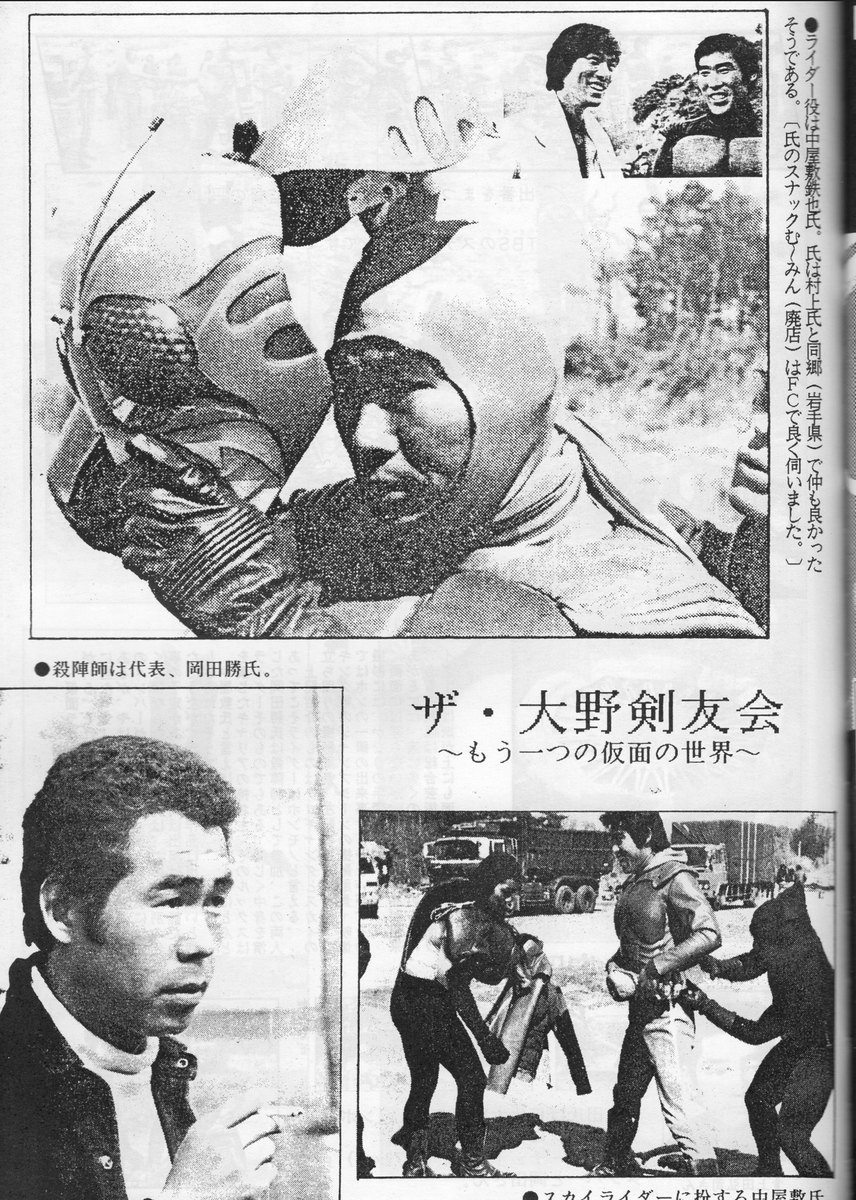
Nakayashiki remained the main Rider until Kamen Rider Super-1, in 1980, and Kawarasaki, General Shadow in Kamen Rider Stronger, said he seemed to have been born for the role. Michi Yamato, also of the team, said that Nakayashiki’s Rider was sensual, in the good sense, and seemed to envelop the enemy during the fight.
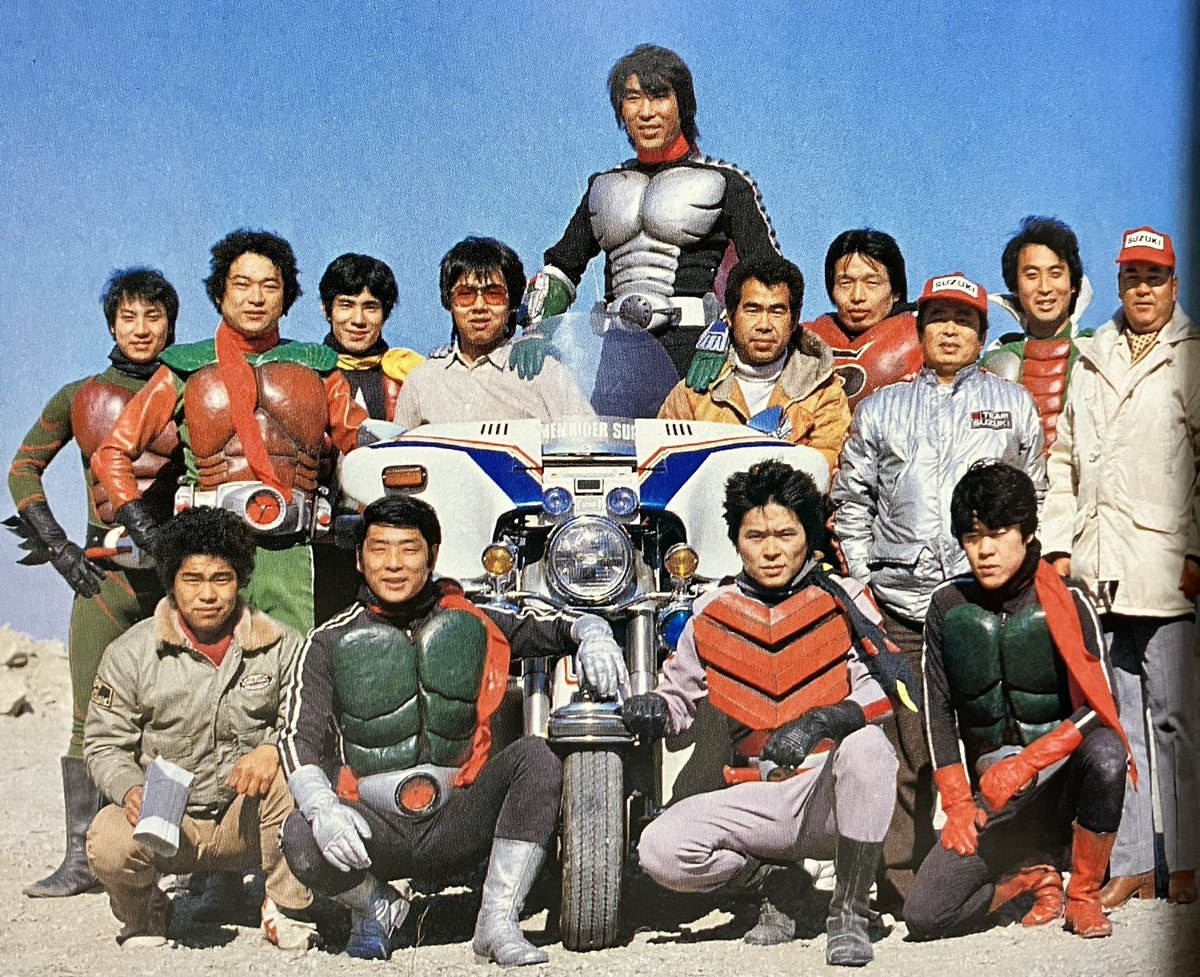
The Kanreki-sai is a gathering that honors tokusatsu veterans when they turn 60. On the stage of Shinjuku Loft Plus One, the organizer asked Nakayashiki to improvise a Rider on top of a cliff, at the end of a fight. With no sound or lighting, he moved his shoulders like someone catching his breath and turned around, and the audience, which had been chatting until then, fell silent.
Daily Training in the Dojo
That mastery of the body came from the dojo, where training took place every day, morning and evening, two to three hours per session. The days off were December 31 and January 1, and even on shooting days the members were told to return to the dojo at night. They began with the basic sword forms, moved on to contemporary action sequences, kicks and backward falls, and finished with Okada’s fights, repeated slowly and then at full speed.
The dojo had no air conditioning, nobody drank water during training and the fights were rehearsed barefoot on the wooden floor, until the skin of the soles came off and the feet bled. Kazuo Niibori, who would go on to play many of the red heroes of Super Sentai, vomited out of the second-floor window, toward the street, in his rookie days. The next morning Ohno showed up furious and demanded to know who had done it.
In the first months of Kamen Rider, the trampoline scenes went to Misumi and Mitsuo Haruta, of the JAC, who is already credited as Junichi Haruta. One shooting day of trampoline work was set aside for every two episodes, and Haruta said he jumped from morning to night. Later, athletes who had done artistic gymnastics in school joined the Ohno Kenyukai, among them Hiroshi Ueda, and the team began doing the jumps itself.
The manga artist Kenichi Muraeda, author of Kamen Rider SPIRITS, stated in a text published by Gendai Business in April 2023 that the JAC members absorbed the technique of the Ohno Kenyukai and improved on it. In another text of the same series, also from April 2023, Okada describes Takahashi as a boss who wanted to keep the work inside his own faction: an injury to a member of the group could be kept secret, which could not be asked of members of another team.
In the team’s hierarchy, newcomers could only hold the veterans’ masks during breaks in filming, and the piece never touched the ground, because it was treated as the face of the protagonist. Anyone who said “I can’t” was told to take off the suit, and someone else put it on.
“For us, the word ‘no’ did not exist”
Hiroshi Ueda, who did the action of Himitsu Sentai Gorenger, in 1975Risk Without Protective Gear
That discipline was put to the test on the shoots. Riders, monsters and soldiers rolled over gravel and ravines without protective gear, wearing only the suit, except in the parts where the costume required bulk, and they scraped their arms, legs and ribs. Nakayashiki considered the muscles visible under the tight fabric part of the performance.
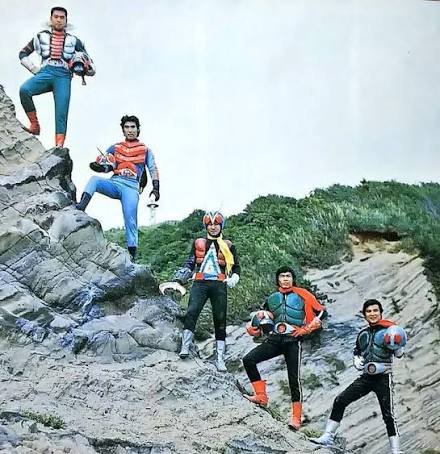
On the seven- or eight-meter bridge that appears in the end credits from episode 14, the soldiers fall into the sea one after another. Several of them, Okada among them, could not swim, and Okada said that from that height a fall landing on the seat was bearable. The columns of water that each fall raised replaced the explosions, which cost money. Kawarasaki jumped from a bridge at the Ogouchi dam, in Okutama, in the dead of winter, and had orders to fall on his back to raise plenty of water.
In episode 46, Okada, as the Rider, was dragged by a snowmobile on a snow-covered mountain. The jersey suit, which had replaced the leather one, was too thin for rolling through snow, and Okada said the pain was the same as being dragged over concrete.
In episode 97 there was a fight on the roof of a cable car cabin. Nakayashiki, as the Rider, faced Kawarasaki, who played the monster Ganikomori, and even lifted him onto his shoulders. A safety rope appears at the beginning of the sequence and was removed during filming because it got in the way. Nakayashiki said it was the only time, in all his work on the Kamen Rider series, that he saw a rope.
In episode 4 of Kamen Rider V3, the director asked Nakayashiki to climb in costume up a chimney about 50 meters high, with no railing. The only structure available was a lightning rod worn down by rain and wind, and he had to stand with one leg on each side of the opening, strike the pose and raise his arms. All the interviewees said they received no extra pay for danger, and Nakayashiki stated that the daily fee was the usual one, a few thousand yen. At the Shibuya event in 2025, he said that once he had accepted a job, he never considered refusing it.
The Live Shows
That willingness to take risks followed the team onto the stage, and the first Kamen Rider show took place from July 23 to 25, 1971 at Mirika Land, in Osaka, during an event of the broadcaster Mainichi Broadcasting. Ohno directed the performance with two Riders. While a Shocker monster caused chaos, the hero appeared on the roof of a neighboring building, and the swap of performers drew the children’s eyes from one point to another.
In 1972 the team began performing at the open-air theater of Korakuen park, today Tokyo Dome City Attractions, where Ohno took care of structure, script and direction. Roller coaster tracks ran over the stage, and Ohno used them for entrances in which the hero arrived aboard the cart or jumped from the tracks, onto a concrete floor with a mattress in the gap under the stage.
According to the newspaper Yomiuri Shimbun of April 30, 1972, six thousand people packed the roof terrace of a department store and forced the venue to limit entry for the first time since its opening. Kawarasaki traveled for more than a year through stores and supermarkets on weekends and signed more than two thousand times in a single day. In this phase the Nagasakiya sequence was born, a simple choreography that a temp worker from any region learned quickly.
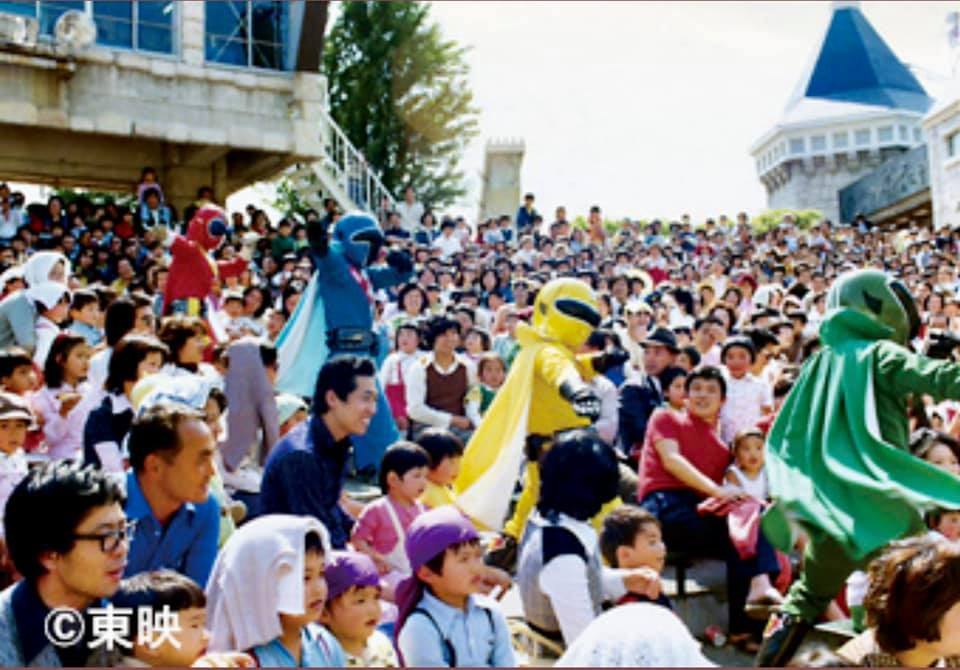
Kazuo Onaga, who now runs an events company, suffered a fall and hit his head on the concrete at a Kamen Rider X show in 1974, dressed as a soldier. He lost consciousness, got up without realizing it and fought the Rider until the end of the performance, and only then was taken to the hospital. Onaga also dove headfirst into the pond in the garden of the singer Hibari Misora’s house, in Aobadai, in a show commissioned for the birthday of her son, Kazuya Kato.
The Team After the Rider
Filming and the stage kept the team busy after Kamen Rider. It did the action of Chojin Barom-1 and Henshin Ninja Arashi, in 1972, of Inazuman, in 1973, and of Himitsu Sentai Gorenger, up to episode 66. Takahashi left in 1976, after disagreements with Ohno, who expelled him, and founded Big Action with former members of the group. The two reconciled around 1986, five years before Takahashi’s death, on November 11, 1991, at the age of 48.
In 1978, Toei sharply reduced its production of tokusatsu series, and the group began to serve other companies as well. In 1980, Ohno handed the representation to Okada and took the honorary presidency, a post in which he devoted himself to training new members. In 1985, the team became the company Ohno Kenyukai Action Studio, with Okada as director.
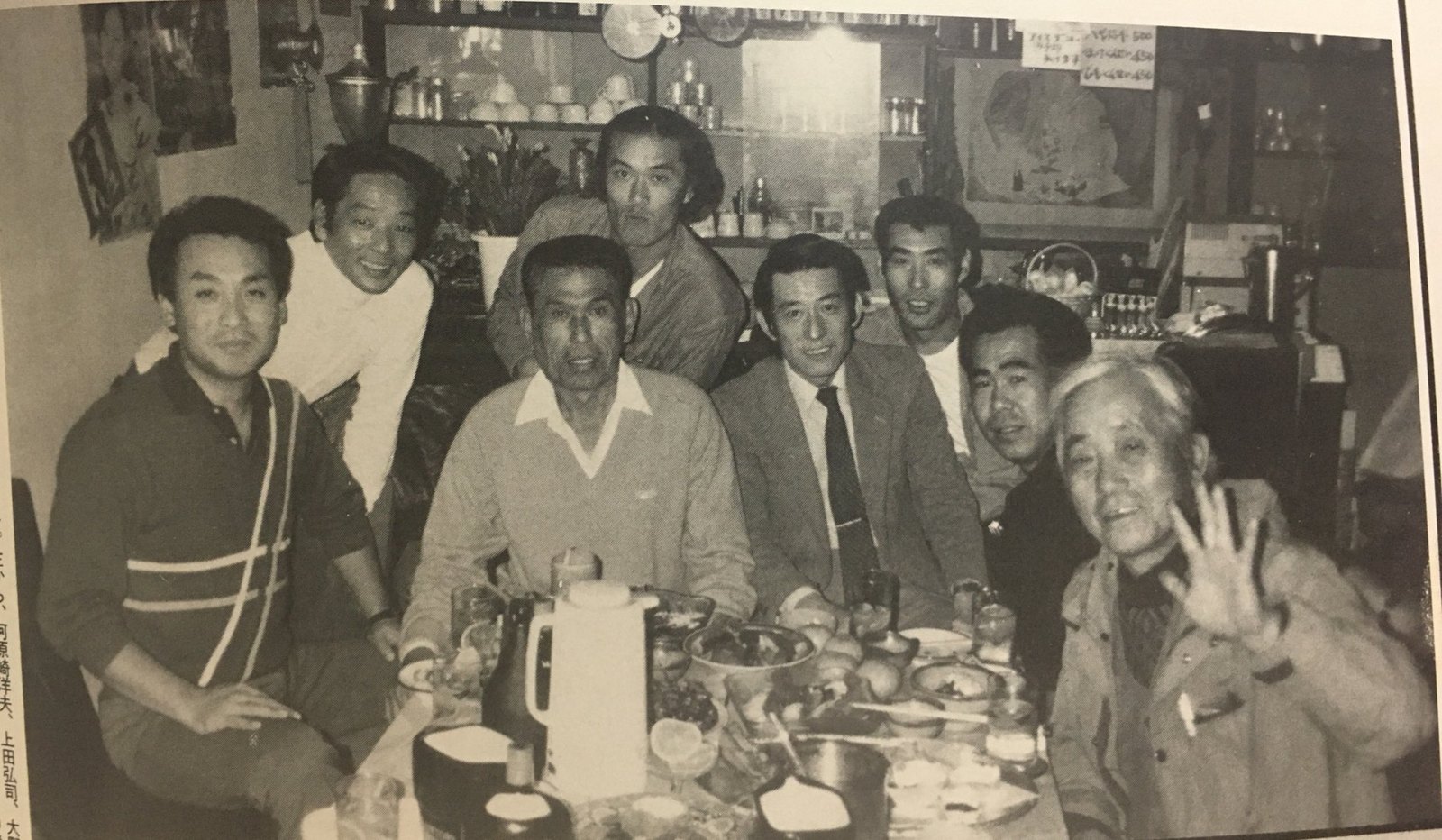
Kotaro Ohno died on October 30, 2009, at the age of 76, of acute cholecystitis, an inflammation of the gallbladder. The Ohno Kenyukai did not dissolve with the death of its founder and remains active as a company, coordinating fights for media, theater and attractions. The expanded edition of Ohno Kenyukai-den, edited by Okada, was published in 2023 by Sairyusha.
On January 25, 2025, the event Cho Ohno Kenyukai Matsuri filled LOFT9 Shibuya, in Tokyo, with fans from Taiwan, Hong Kong and the United States. Okada, Nakayashiki, Kawarasaki and Ueda took the stage, and each introduced himself with the identification cry of the hero he played.
Sources: book Ohno Kenyukai-den (“The Story of the Ohno Kenyukai”), supervised by Masaru Okada (1999; expanded edition 2023), Cinema Today (January 2025), Cinema Today (November 2025), Mynavi News (July 3, 2021), Mynavi News (July 20, 2021) and Gendai Business (April 21, 2023: text 1 and text 2).